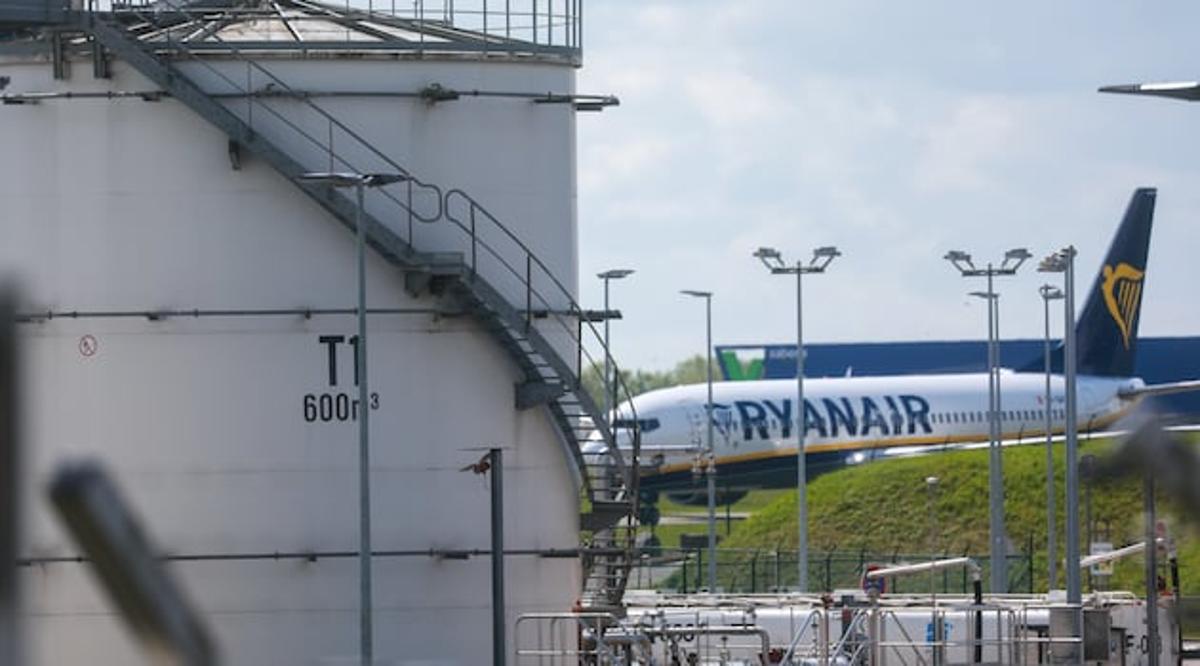
‘It’s a Pretty Substantial Disaster’: More Flight Cancellations Likely as Fuel Crisis Bites
Companies Mentioned
Why It Matters
Rising jet‑fuel costs force airlines to cut routes, raise fees and shift price risk to passengers, reshaping summer travel demand and profitability across the industry.
Key Takeaways
- •Lufthansa cancelled 20,000 short‑haul flights to curb fuel consumption
- •KLM grounded 150 flights, dropping under 1% of its schedule
- •European airlines hedged 60‑80% of fuel costs, mitigating price shock
- •Oil futures above $100/barrel push jet‑fuel prices above $2.50/gal
- •US airlines recoup 70‑80% of fuel hikes via fares by Q3
Pulse Analysis
The current jet‑fuel crunch stems from geopolitical tension in the Red Sea, where the potential closure of the Strait of Hormuz threatens crude supplies. With oil futures firmly above $100 per barrel, jet‑fuel prices have more than doubled, forcing European carriers to make rapid operational cuts. Lufthansa’s decision to cancel 20,000 short‑haul flights marks the first large‑scale response, while KLM’s grounding of 150 flights represents less than 1% of its schedule but signals a broader trend of cost‑driven capacity reductions.
Airlines are deploying a mix of hedging, fee hikes, and fare adjustments to shield margins. European operators have hedged roughly 60‑80% of their fuel exposure, a buffer that lessens immediate pain, whereas U.S. carriers like United plan to recover 70‑80% of fuel cost increases through higher fares by the third quarter. Meanwhile, American Airlines is adding a $10 baggage fee, and Air France is imposing a surcharge of $55‑$220 depending on class. These measures shift the burden to travelers, eroding the appeal of summer vacations and prompting passengers to reassess itineraries.
Regulators remain cautious; the EU transport commissioner has downplayed short‑term shortages while monitoring fuel stocks. Potential solutions include voluntary fuel‑sharing among member states and tactical tankering, but long‑term stability hinges on de‑escalation in the Gulf. If the Hormuz blockage persists, airlines may resort to more radical winter‑time cost‑cutting, and passengers can expect higher ticket prices and reduced service options well into the next travel season.
‘It’s a pretty substantial disaster’: More flight cancellations likely as fuel crisis bites
Comments
Want to join the conversation?
Loading comments...