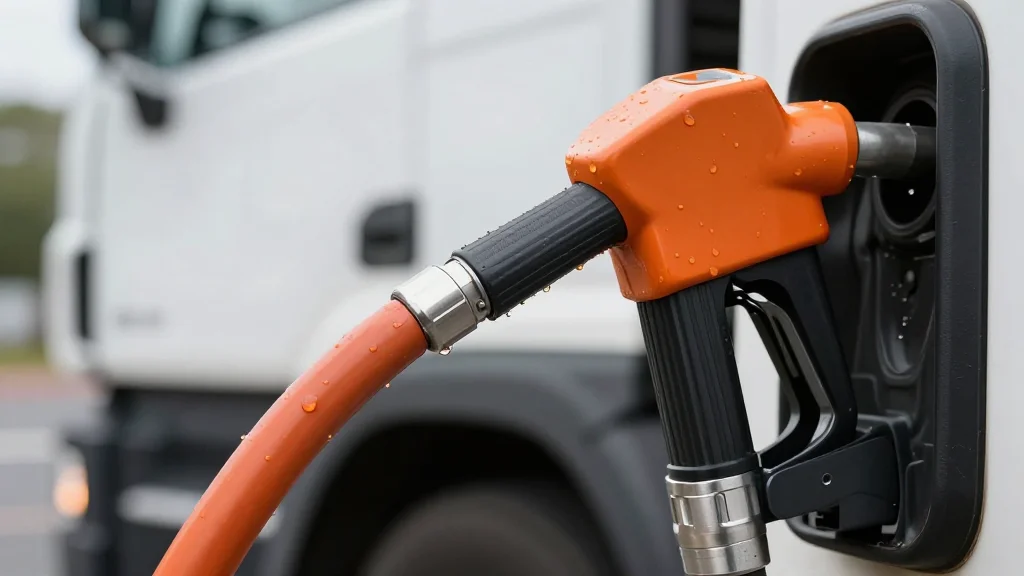
'It's Killing Everything.' California's Truckers Are Buckling Under Country's Priciest Diesel
Why It Matters
The fuel price shock threatens the viability of independent carriers and raises shipping costs for businesses and consumers, potentially dampening broader economic demand.
Key Takeaways
- •California diesel hit $7.75/gal, 35% above national average.
- •Small fleets face $1,000 tank cost, squeezing profit margins.
- •Major shippers add 3.5%‑8% fees to offset fuel surge.
- •Industry already stressed by freight recession, driver shortages, tariffs.
Pulse Analysis
California’s diesel market has become the most expensive in the United States, with prices hovering near $7.75 per gallon—a level that translates into a $1,000 fuel tank for a typical long‑haul rig. This surge, driven largely by geopolitical tensions from the Iran conflict and constrained refinery output, outpaces the national diesel average of $5.65. For independent operators who already operate thin margins, the cost increase erodes profitability and forces many to curtail routes, reduce crew hours, or consider early retirement, accelerating a consolidation trend that favors larger carriers with greater bargaining power.
The ripple effects extend beyond the trucking floor. National logistics giants—including FedEx, UPS, the U.S. Postal Service and e‑commerce behemoth Amazon—have announced supplemental fees ranging from 3.5% to 8% to cover the fuel surcharge. These added costs are ultimately passed to merchants and end‑consumers, inflating the price of goods across the supply chain. As freight rates climb, manufacturers may face higher input costs, prompting price adjustments that could suppress consumer spending, especially in price‑sensitive segments of the economy.
From a macroeconomic perspective, the trucking sector transports roughly 70% of U.S. freight, making it a critical conduit for economic activity. Persistent high fuel prices risk triggering a feedback loop: reduced freight volumes lower demand for raw materials, slowing production, and further weakening an economy already grappling with a lingering freight recession. Policymakers and industry leaders must monitor fuel price trajectories and explore mitigation strategies—such as accelerated adoption of alternative fuels or targeted subsidies—to preserve the health of the logistics network and safeguard broader economic stability.
'It's killing everything.' California's truckers are buckling under country's priciest diesel
Comments
Want to join the conversation?
Loading comments...