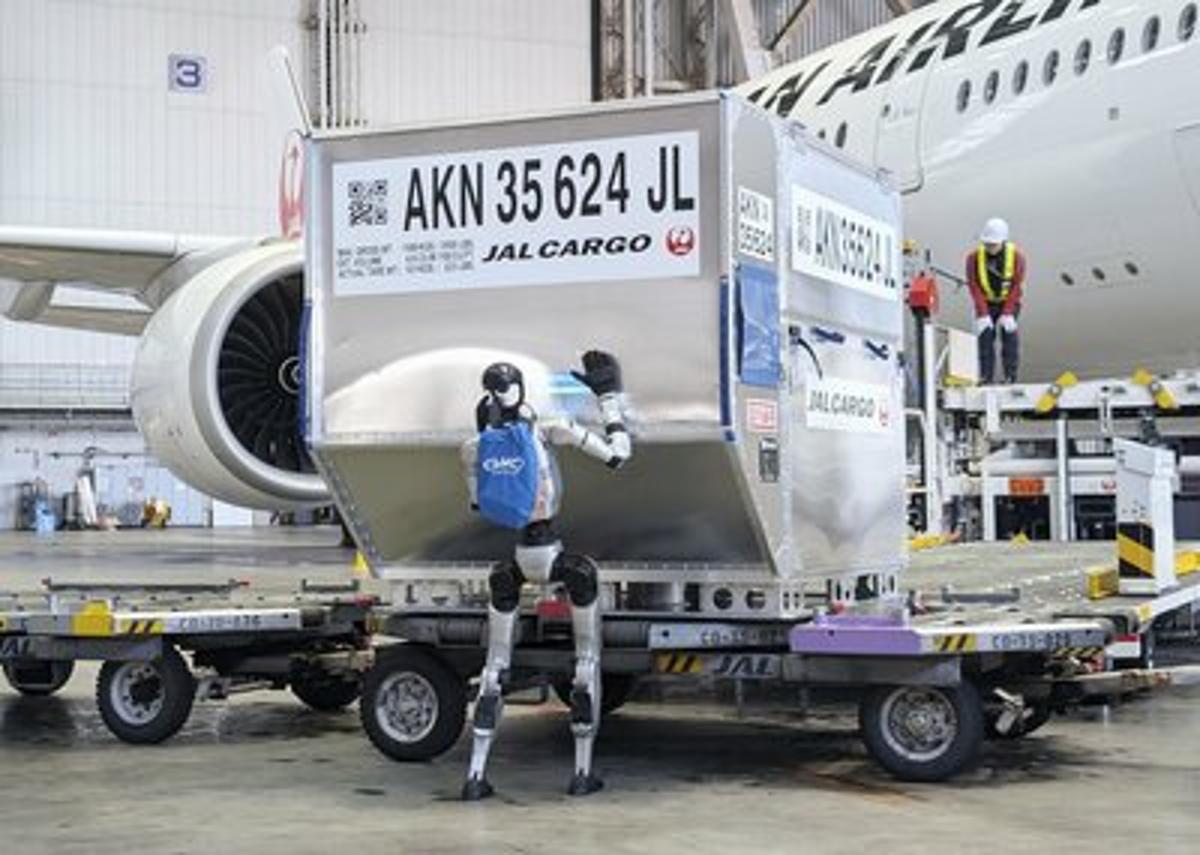
JAL, GMO to Test Using Humanoid Robots for Airport Ground Operations
Why It Matters
The partnership directly addresses Japan’s acute labor shortage in aviation logistics, promising cost savings and improved worker safety while setting a precedent for wider robotic adoption in the industry.
Key Takeaways
- •JAL and GMO start humanoid robot trial at Haneda
- •Robots will handle luggage for two‑to‑three hour shifts
- •Labor shortage drives automation in Japanese airport ground services
- •Project runs through 2028, may expand to cabin cleaning
- •China‑made bots aim to reduce physical strain on workers
Pulse Analysis
Japan’s aviation sector is confronting a perfect storm: soaring inbound tourism, an aging population, and a chronic shortage of ground‑handling personnel. Airlines have already automated many passenger‑facing processes, yet the back‑end tasks—baggage loading, cargo movement, and aircraft towing—remain labor‑intensive. By introducing humanoid robots at Haneda, JAL and GMO are testing a solution that could free up human workers for higher‑value duties while mitigating the risk of fatigue‑related injuries. The timing aligns with government incentives for AI and robotics, positioning the trial as both a commercial and policy‑driven experiment.
The robots selected for the pilot are Chinese‑manufactured units capable of continuous operation for two to three hours before requiring a recharge. Their design mimics human ergonomics, allowing them to navigate the crowded tarmac and push standard cargo containers. The partnership leverages GMO’s AI expertise and JAL Ground Service’s operational knowledge, creating a feedback loop that can rapidly refine the technology. If the trial demonstrates measurable labor‑efficiency—such as reduced handling time per bag or lower overtime costs—JAL could justify scaling the fleet across its domestic hubs, potentially extending the use case to cabin cleaning and aircraft interior servicing.
Beyond JAL, the experiment signals a broader shift in the global airport ecosystem. Competitors like ANA are already exploring autonomous vehicles, and manufacturers are racing to meet the demand for durable, safety‑certified humanoids. Successful deployment could trigger new standards for robot‑human collaboration, influencing regulatory frameworks and insurance models. For investors and industry observers, the Haneda trial offers a concrete benchmark of how quickly robotics can move from novelty to a cost‑effective, scalable component of airport operations.
JAL, GMO to test using humanoid robots for airport ground operations
Comments
Want to join the conversation?
Loading comments...