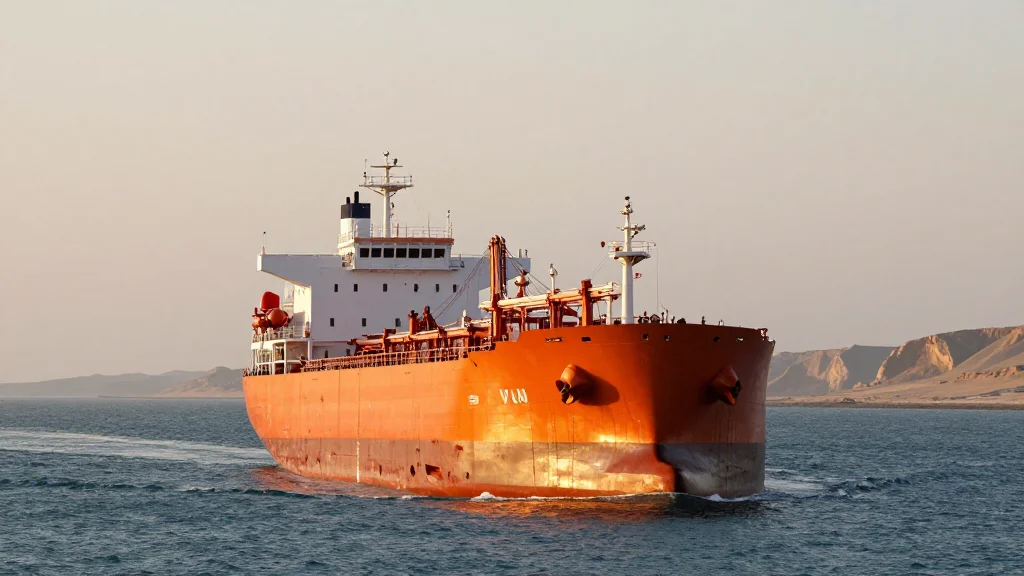
Japanese VLCC Exits Mideast Gulf After Talks with Iran
Companies Mentioned
Why It Matters
Restoring safe transit through Hormuz safeguards Japan’s primary crude supply route, which delivered 94% of its oil last year, and helps curb potential price spikes. The diplomatic breakthrough also shows Japan can leverage dialogue with Iran despite broader geopolitical tensions.
Key Takeaways
- •Idemitsu Maru cleared Hormuz after nearly two‑month delay.
- •Vessel carries ~2 million barrels (~$160 million) of Arab Light crude.
- •Expected arrival in Nagoya on 17 May restores supply flow.
- •Japan’s Gulf crude share was 94% of imports last year.
- •Tokyo’s talks with Tehran show diplomatic path to secure shipping lanes.
Pulse Analysis
The Strait of Hormuz has long been a chokepoint for global oil flows, and the recent escalation between the United States and Iran has amplified the risk of disruptions. Shipping lanes that once moved millions of barrels daily have seen heightened naval activity, insurance premiums, and rerouting costs. For Japan, a nation that imports the bulk of its petroleum from the Gulf, any blockage can translate quickly into refinery shutdowns and higher domestic fuel prices. The successful passage of a Japanese VLCC therefore carries weight far beyond a single cargo.
The Idemitsu Maru, owned by Japan’s Idemitsu Kosan, was loaded with about 2 million barrels of Arab Light crude at Saudi Arabia’s Juaymah terminal in early March. At an estimated $80 per barrel, the cargo is valued near $160 million, underscoring the financial stakes of a delayed delivery. Japan’s energy ministry has already tapped strategic reserves and increased imports from the United States to offset the bottleneck, but the stranded vessel highlighted the fragility of relying on a single maritime corridor for 94% of its crude intake. The tanker’s exit restores a critical flow and buys time for Japan to diversify its supply mix.
Tokyo’s diplomatic outreach to Tehran, culminating in a direct conversation between Prime Minister Takaichi and President Massoud Pezeshkian, signals a pragmatic approach to energy security. By securing a safe passage, Japan demonstrates that dialogue can yield tangible results even amid broader geopolitical friction. The episode may encourage other oil‑dependent nations to pursue similar back‑channel negotiations, potentially stabilizing the market and reducing the premium on Gulf‑sourced crude. Going forward, Japan is likely to continue bolstering domestic stockpiles and expanding alternative sourcing to mitigate future strait closures.
Japanese VLCC exits Mideast Gulf after talks with Iran
Comments
Want to join the conversation?
Loading comments...