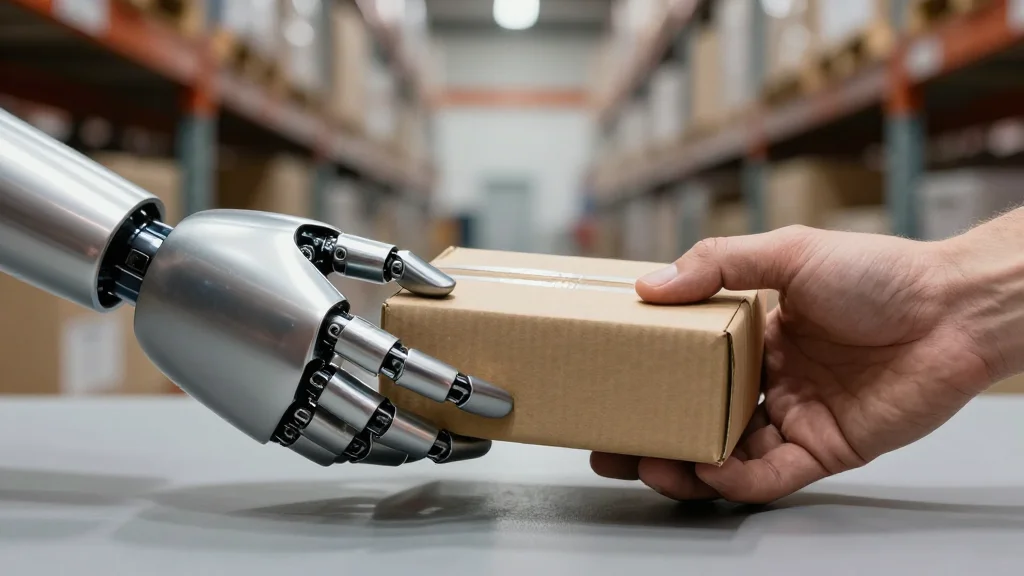
JD.com Says Robots Will Replace Its 700,000 Couriers
Companies Mentioned
Why It Matters
Replacing a workforce of this size could redefine China’s last‑mile delivery sector and set a benchmark for large‑scale employee reskilling as AI accelerates across industries.
Key Takeaways
- •JD.com plans to replace 700,000 couriers with delivery robots.
- •"Nirvana" program partners with 120 schools to retrain staff for robot maintenance.
- •JD vows not to fire workers replaced by automation, relying on reskilling.
- •China's gig workforce totals 320 million, raising stakes for large‑scale automation.
- •Successful reskilling will determine whether JD's labor model survives AI disruption.
Pulse Analysis
JD.com’s push toward fully autonomous deliveries reflects a broader trend among e‑commerce giants to cut costs and boost speed through robotics. The Chinese retailer has already piloted unmanned warehouses, drone drop‑offs and self‑driving vans, creating a logistics ecosystem that can operate with minimal human intervention. By positioning robots as the next step for its massive last‑mile network, JD aims to maintain its competitive edge against rivals such as Alibaba and Pinduoduo, while also showcasing China’s growing prowess in AI‑driven supply‑chain technology.
The "Nirvana" initiative underscores the logistical nightmare of upskilling 700,000 workers. Partnering with roughly 120 vocational schools, JD intends to teach former couriers to service the very machines that will replace them, a strategy that mirrors government‑backed reskilling drives across China. Yet the sheer scale raises doubts: robot‑maintenance roles are unlikely to match the current headcount, and the speed of AI deployment may outpace training capacity. Policymakers are watching closely, as the nation grapples with a gig economy that now encompasses about 40% of urban employment and a youth unemployment rate above 16%.
If JD succeeds, it could become a template for other labor‑intensive sectors facing AI disruption, demonstrating that proactive retraining can mitigate social fallout. Conversely, a failure would amplify concerns about mass job displacement in a market already strained by gig work growth. The outcome will influence not only China’s domestic labor policies but also global debates on how corporations balance efficiency gains with responsible workforce transition in the age of automation.
JD.com says robots will replace its 700,000 couriers
Comments
Want to join the conversation?
Loading comments...