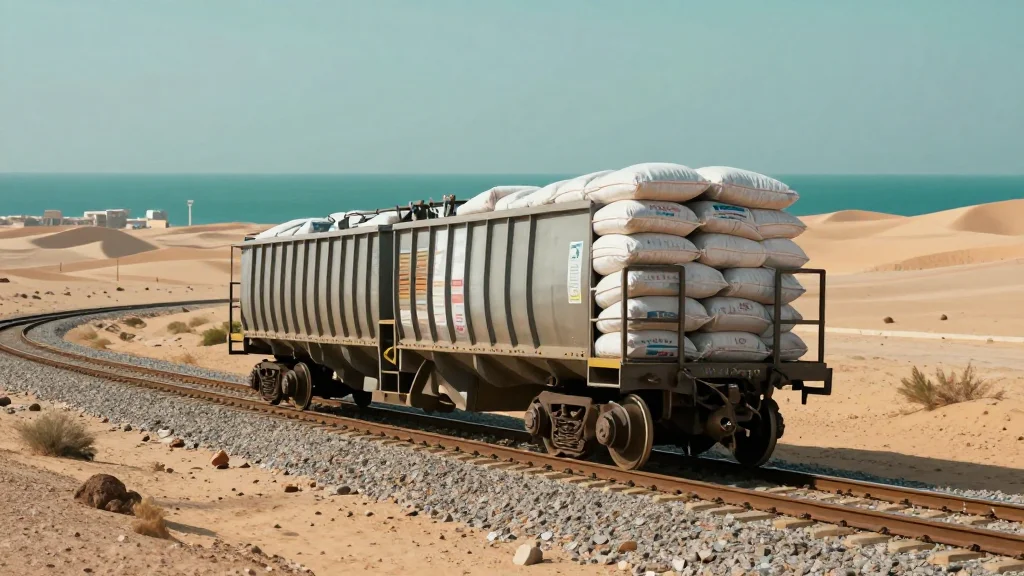
Jordan and UAE Form Joint Venture to Build Freight Railway
Companies Mentioned
Why It Matters
The line will slash logistics expenses for Jordan’s mining sector, enhancing global market access and creating thousands of jobs, while deepening UAE’s strategic foothold in Middle‑East infrastructure.
Key Takeaways
- •Joint venture worth $2.3 bn to build 360 km freight railway
- •Rail line will transport 16 million tonnes of phosphate annually
- •Connects Al‑Shidiya and Ghor Al‑Safi mines to Aqaba port
- •Etihad Rail leads construction; L’imad Holding provides financing
- •Project part of $5.5 bn Jordan‑UAE investment package
Pulse Analysis
Jordan’s mining industry, anchored by world‑class phosphate and potash deposits, has long struggled with high inland transport costs that erode profit margins. By linking Al‑Shidiya and Ghor Al‑Safi directly to the deep‑water port of Aqaba, the new railway promises to reduce freight rates by up to 30 percent, a figure that could translate into billions of dollars of savings over the project’s lifespan. Faster, more reliable shipments also position Jordan to meet rising global demand for fertilizer inputs, especially as agricultural markets rebound after recent supply shocks.
The partnership leverages the UAE’s growing expertise in large‑scale transport projects. Etihad Rail, already operating a 1,200‑km network across the Emirates, will apply its technical know‑how to the Jordanian terrain, while L’imad Holding supplies the sovereign‑wealth backing needed for the $2.3 bn rollout. For Abu Dhabi, the venture diversifies its investment portfolio beyond oil and gas, aligning with its Vision 2030 agenda to become a regional logistics hub. The joint‑venture structure also ensures shared risk and operational oversight, a model increasingly favored in cross‑border infrastructure deals.
Beyond immediate economic gains, the railway could reshape regional trade flows. By offering a cost‑effective corridor from inland mines to the Red Sea, Jordan may attract ancillary industries such as processing plants and export‑oriented logistics firms. The project is also expected to generate thousands of construction and permanent jobs, bolstering domestic employment. In the longer term, the line could serve as a backbone for future extensions toward neighboring countries, fostering greater connectivity across the Middle East and reinforcing the UAE’s strategic influence in the region’s supply‑chain architecture.
Jordan and UAE form joint venture to build freight railway
Comments
Want to join the conversation?
Loading comments...