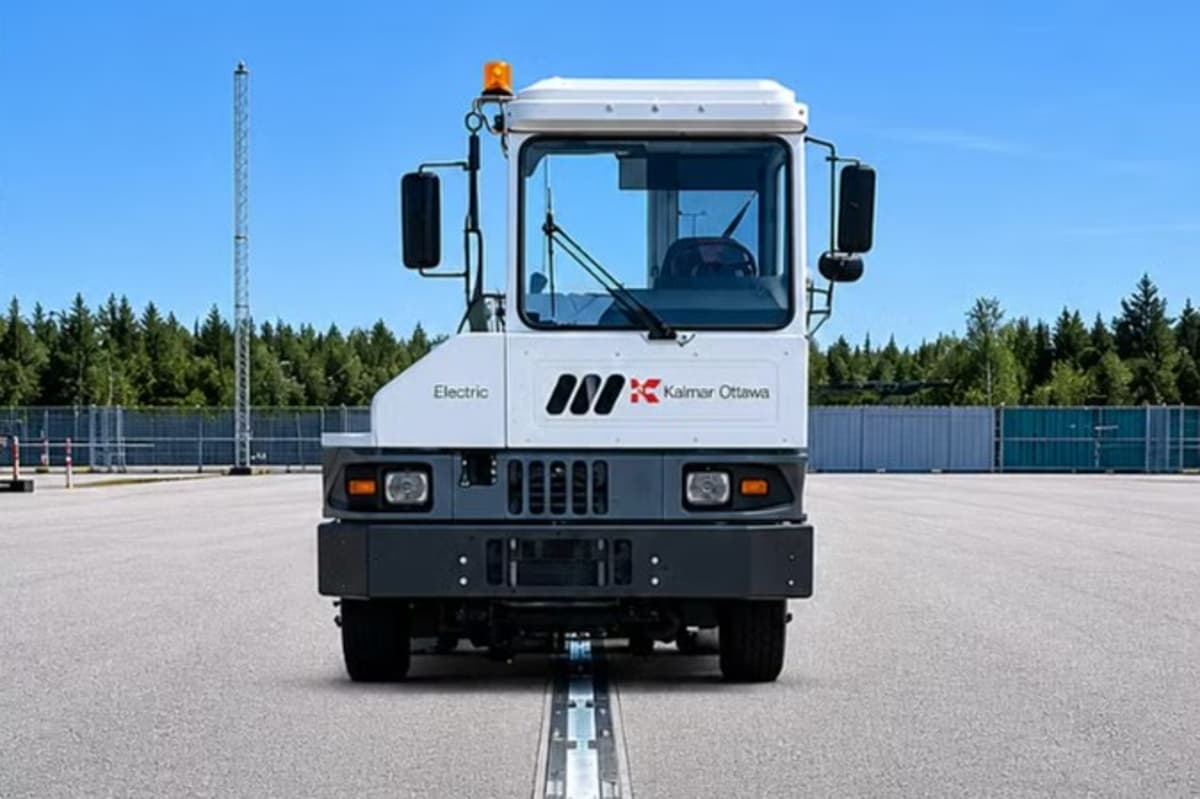
Kalmar and Elonroad Push Ahead with ‘Electric Road’ Project
Companies Mentioned
Why It Matters
Dynamic conductive charging could eliminate charging pauses for electric terminal tractors, dramatically improving productivity and energy efficiency in ports—a critical bottleneck for global supply chains. Demonstrating reliable, high‑power on‑the‑move charging positions Kalmar and Elonroad to set a new standard for electrified heavy‑duty logistics.
Key Takeaways
- •200‑metre conductive road installed at Kalmar Innovation Centre
- •Up to 300 kW delivered via physical rail‑to‑vehicle connection
- •Second test vehicle: Kalmar Ottawa T2 EV terminal tractor
- •Project funded by Swedish Energy Agency, final report due autumn 2026
- •Success could enable unlimited runtime for port heavy‑duty fleets
Pulse Analysis
Dynamic conductive charging is emerging as a pragmatic alternative to inductive wireless systems for heavy‑duty electric vehicles. By embedding a rail beneath the roadway and equipping trucks with a low‑profile collector, power can be transferred at rates comparable to fast‑charging stations—up to 300 kW—while the vehicle remains in motion. This approach sidesteps the efficiency losses and alignment challenges of magnetic resonance, offering a more deterministic energy flow that is especially valuable in high‑throughput environments like container terminals.
Kalmar and Elonroad’s pilot builds on a 200‑metre test lane at the Kalmar Innovation Centre, where a reach stacker has already demonstrated the concept. The latest phase introduces the Ottawa T2 EV terminal tractor, a workhorse of port operations, to assess charging efficiency, uptime gains, and integration with existing fleet management systems. Backed by the Swedish Energy Agency, the verification runs until June 2026, after which a comprehensive report will be released in autumn. The study aims to validate that the conductive rail can sustain continuous operation without compromising vehicle performance or safety.
If the trials confirm the promised benefits, the technology could reshape electrification strategies for ports worldwide. Operators would no longer need to schedule lengthy charging stops, reducing labor costs and improving vessel turnaround times. Moreover, the scalable nature of rail‑based infrastructure could be retrofitted to existing docks, accelerating the transition from diesel to electric haulage. While challenges remain—such as standardizing rail geometry and ensuring durability under harsh maritime conditions—the Kalmar‑Elonroad collaboration signals a credible path toward truly unlimited onboard energy for the logistics sector.
Kalmar and Elonroad push ahead with ‘Electric Road’ project
Comments
Want to join the conversation?
Loading comments...