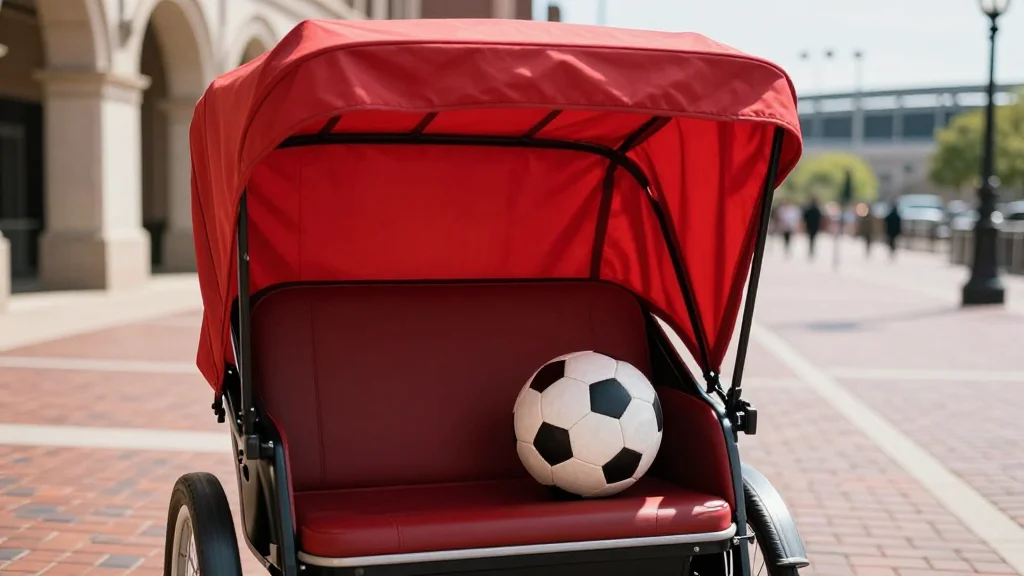
Kansas City Lifts Pedicab Ban at Country Club Plaza Ahead of World Cup

Companies Mentioned
Why It Matters
Lifting the pedicab ban aligns Kansas City with a growing national trend of integrating micro‑mobility into urban transit strategies, especially during large‑scale events. By allowing electric‑assist pedicabs in a high‑visibility district, the city can showcase sustainable transport options to an international audience, potentially attracting future tourism and investment. The decision also highlights how local policy can adapt to shifting market dynamics—horse‑drawn carriages have become a seasonal novelty, while electric pedicabs offer a year‑round, low‑emission alternative. If the rollout eases congestion and boosts Plaza commerce during the World Cup, other municipalities may look to Kansas City as a case study for balancing heritage preservation with modern mobility solutions.
Key Takeaways
- •City Council amended the ordinance to allow pedicabs in Country Club Plaza
- •E‑Z Pedicabs will operate electric‑assist tricycles, reducing travel time to ~15 minutes from downtown
- •Councilmembers cited the decline of horse‑drawn carriages as a reason for the change
- •Plaza owners, represented by Gillon Property Group, support the new micro‑mobility option
- •The change is timed for the FIFA World Cup, expected to bring thousands of visitors
Pulse Analysis
The council’s vote reflects a pragmatic shift toward micro‑mobility that many U.S. cities have been grappling with since the pandemic. While earlier bans were often justified on safety or legacy‑industry grounds, the rise of electric‑assist technology mitigates many of those concerns. Pedicabs can now travel at speeds compatible with traffic flow and use protected bike lanes, addressing the congestion arguments that originally motivated the restriction.
From an economic perspective, the decision leverages the World Cup as a catalyst for longer‑term tourism infrastructure. By positioning pedicabs as a premium, guided‑tour service, E‑Z Pedicabs can capture higher fare revenues and create ancillary jobs for drivers and maintenance staff. The move also signals to investors that Kansas City is open to innovative, low‑carbon transport solutions—a factor that could attract future funding for bike‑share expansions or autonomous shuttle pilots.
However, the success of the rollout will hinge on operational logistics and community acceptance. If pedicabs prove to be a nuisance on crowded sidewalks or fail to integrate smoothly with existing traffic patterns, opposition could re‑emerge, echoing the earlier carriage lobby. Continuous data collection during the tournament will be essential to demonstrate tangible benefits, such as reduced vehicle lane blockages and increased foot traffic for Plaza retailers. The outcome will likely influence whether Kansas City pursues broader micro‑mobility deregulation in other districts.
Kansas City Lifts Pedicab Ban at Country Club Plaza Ahead of World Cup
Comments
Want to join the conversation?
Loading comments...