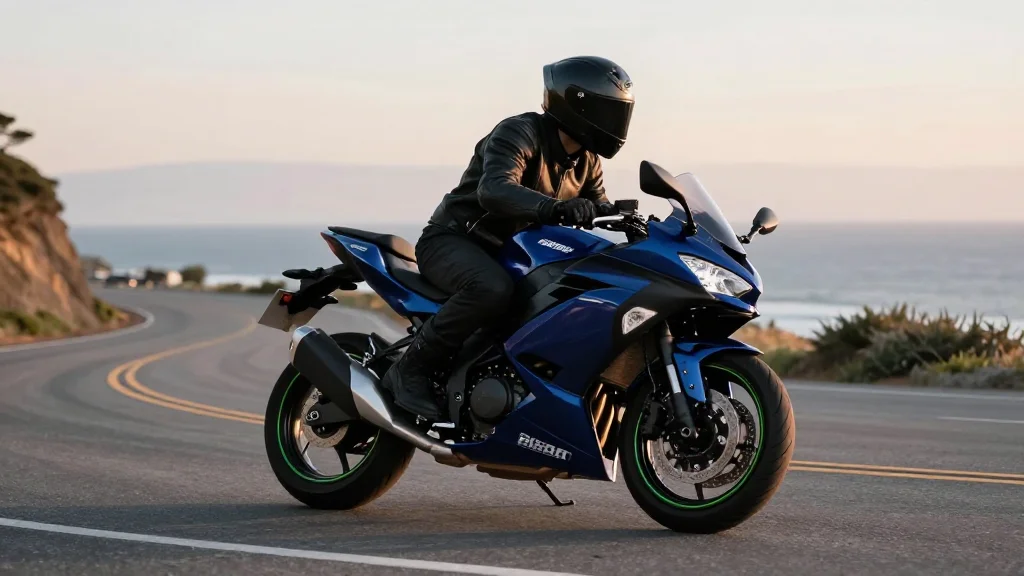
Kawasaki Brings Back the Ninja 300 to the USA After Nearly 10 Years
Why It Matters
The Ninja 300’s comeback gives Kawasaki a true entry‑level sport bike, expanding its rider‑acquisition funnel and appealing to cost‑conscious newcomers as regulatory pressure pushes manufacturers toward smaller, cleaner engines.
Key Takeaways
- •Kawasaki reintroduces Ninja 300 for 2027 model year
- •296 cc twin engine delivers 38.9 hp and 19.3 lb‑ft torque
- •Standard ABS added to entry‑level sports bike
- •Weight 388 lb and seat height 30.9 in target beginners
- •Minimal electronics contrast with industry’s high‑tech trend
Pulse Analysis
The resurgence of the Ninja 300 reflects a broader shift in the U.S. two‑wheel market toward affordable, low‑displacement motorcycles. After California’s Air Resources Board flagged a new EX300GT model, Kawasaki confirmed the bike’s return, signaling that regulators are nudging manufacturers to offer cleaner, fuel‑efficient options. For many new riders, price and simplicity outweigh the allure of high‑tech gadgets, making a 300‑cc platform an attractive entry point. Kawasaki’s decision taps into this demand, positioning the Ninja 300 as a cost‑effective gateway to sport riding while complying with tightening emissions standards.
Technically, the revived Ninja 300 is a near‑clone of its 2017 predecessor. Its 296 cc parallel‑twin produces 38.9 hp at 10,000 rpm, paired with a steel‑tube diamond frame, 37‑mm telescopic fork, and Uni‑Track rear shock—components that prioritize low weight (388 lb) and agile handling. The addition of standard ABS upgrades safety without adding complexity, and the refreshed LED lighting and larger windscreen modernize the bike’s appearance. Compared with the Ninja 400 and Ninja 500, the 300 offers a gentler power curve, lower seat height (30.9 in), and a more forgiving chassis, making it ideal for riders transitioning from commuter bikes to sport models.
From a business perspective, the Ninja 300 plugs a glaring gap in Kawasaki’s U.S. lineup, bridging the jump from entry‑level commuters to the higher‑displacement Ninja family. By re‑entering the sub‑350 cc segment, Kawasaki can capture market share from competitors like Honda’s CBR300R and Yamaha’s YZF‑R3, while also appealing to riders deterred by the cost and complexity of newer, electronics‑laden machines. The minimalist approach may also reduce production costs and simplify after‑sales support, boosting margins. As the industry balances performance with sustainability, Kawasaki’s strategic bet on a simple, reliable sport bike could set a template for other manufacturers seeking growth in the entry‑level market.
Kawasaki brings back the Ninja 300 to the USA after nearly 10 years
Comments
Want to join the conversation?
Loading comments...