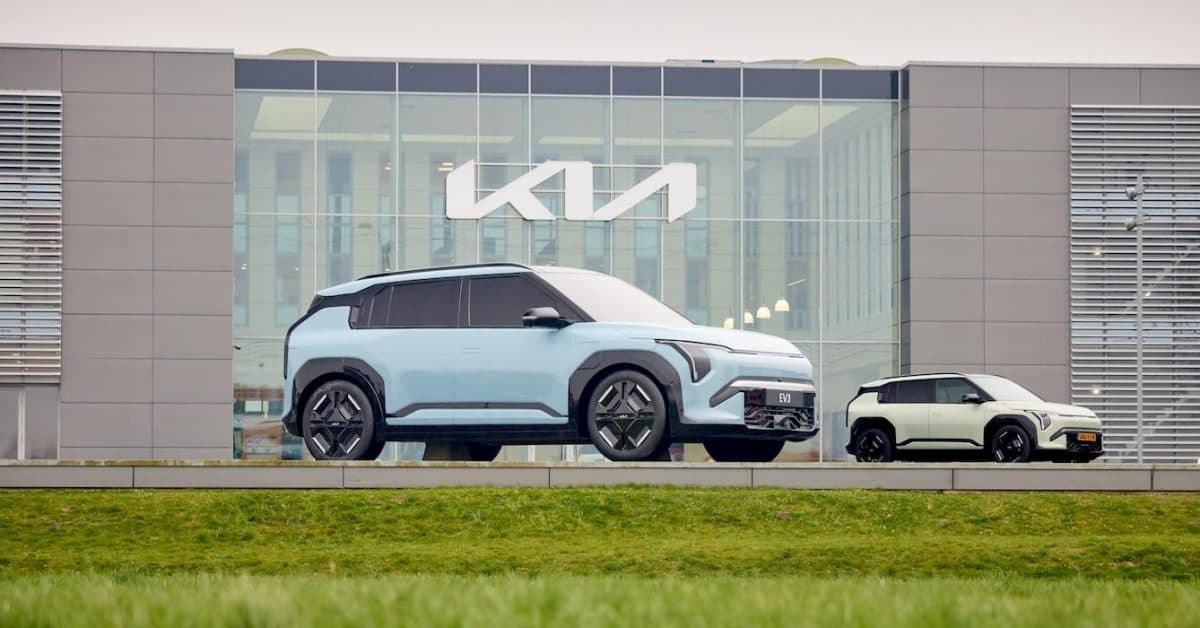
Kia’s EV Sales Surged 54% in Q1 with a Complete Lineup From Electric Sedans to Vans
Companies Mentioned
Why It Matters
Kia’s electrified growth proves a diversified EV and hybrid lineup can sustain profitability amid a shrinking overall auto market, positioning the brand as a rising contender in the global EV race.
Key Takeaways
- •Kia's Q1 EV sales rose 54% to 86,000 units
- •Global market share reached 4.1%, first time above 4%
- •Hybrid sales up 32% to 138,000 units, driven by new models
- •US focus on higher‑margin SUVs amid tariff pressures
- •Europe EV lineup expansion offsets supply disruptions from Hormuz blockade
Pulse Analysis
Kia Motor Corp. posted a record 779,741 vehicles sold in the first quarter of 2026, edging up 0.9% despite a 7.2% contraction in global auto demand. The bulk of the growth came from its eco‑friendly portfolio, with electric‑vehicle (EV) deliveries jumping 54% year‑over‑year to 86,000 units and hybrids climbing 32% to 138,000. This performance lifted Kia’s worldwide market share to 4.1%, crossing the four‑percent threshold for the first time. The results underscore how a diversified electrified lineup can offset broader market weakness.
In North America, Kia leaned on higher‑margin SUVs such as the Telluride and the upcoming Carnival to boost profitability, while postponing the launch of its EV2, EV4 and EV5 models until later in the year. European strategy shifted toward pure‑electric offerings, with the EV2 through EV5 and the PV5 positioned to capture demand amid stricter emissions standards. Korea benefited from renewed government subsidies, spurring sales of the EV3, EV5 and PV5. Meanwhile, supply chain turbulence caused by the Strait of Hormuz blockade forced Kia to reallocate inventory toward more stable regions, softening the impact of overseas flat sales.
The surge in Kia’s EV volume signals intensifying competition among mainstream manufacturers to claim market share in the fast‑growing electric segment. By delivering a full range of high‑volume EVs, Kia aims to rival incumbents such as Volkswagen and Hyundai, while its hybrid growth provides a bridge for markets still transitioning to full electrification. Analysts see the company’s ability to maintain growth despite tariff pressures and geopolitical disruptions as a testament to its flexible product strategy. If the current trajectory holds, Kia could become a top‑five global EV seller by the end of the decade.
Kia’s EV sales surged 54% in Q1 with a complete lineup from electric sedans to vans
Comments
Want to join the conversation?
Loading comments...