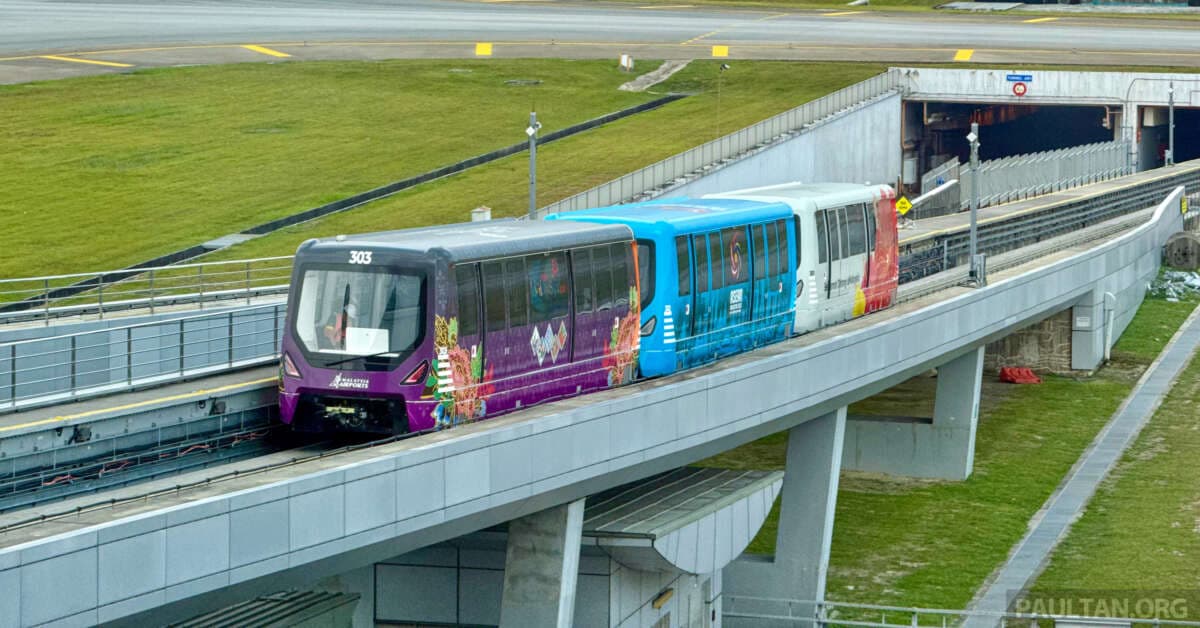
KLIA Aerotrain to Resume 24-Hour Running by End-May
Why It Matters
Restoring continuous aerotrain service boosts KLIA’s operational efficiency and passenger throughput, reinforcing its status as a Southeast Asian aviation hub.
Key Takeaways
- •24‑hour aerotrain service to resume by end‑May 2026.
- •Upgrade cost RM456 million (~$100 million) within RM742 million (~$163 million) project.
- •Over 6.55 million passengers transported since July 2025 restart.
- •Nightly maintenance shutdowns end, improving airport connectivity.
Pulse Analysis
The Kuala Lumpur International Airport (KLIA) has long relied on its intra‑terminal people mover to shuttle passengers between the main terminal and satellite facilities. After a catastrophic failure in March 2023 forced a complete shutdown, Malaysia Airports Holdings (MAHB) launched a comprehensive refurbishment that cost roughly RM456 million (about $100 million) and formed part of a larger RM742 million ($163 million) modernization drive. The upgrade introduced new train sets, upgraded power supplies, and advanced signalling, allowing travel times to drop below three minutes. Completion of system‑wide testing this month positions the aerotrain for full operational clearance.
Resuming uninterrupted 24‑hour service eliminates the nightly gaps that currently force travelers onto shuttle buses, reducing transfer times and congestion during peak overnight flights. For airlines, the guarantee of seamless terminal connectivity can translate into tighter turn‑around schedules and higher on‑time performance, a competitive edge in the crowded Southeast Asian market. Passengers benefit from a predictable, climate‑controlled ride, which is especially valuable given KLIA’s status as a major hub for both full‑service carriers and low‑cost airlines. The projected increase in throughput also supports ancillary revenue streams such as retail and parking.
The aerotrain’s revival signals a broader commitment by the Malaysian government and MAHB to upgrade critical transport assets. With APAD’s pending verification, the project sets a benchmark for future airport rail initiatives, including the planned Kuala Lumpur‑Seremban high‑speed link. Continuous operation will also feed into national tourism recovery efforts, as smoother airport experiences encourage higher visitor numbers. As regional rivals invest heavily in airport automation, KLIA’s restored people mover helps preserve its position as a gateway to ASEAN, while showcasing how targeted capital spending can quickly restore service reliability.
KLIA aerotrain to resume 24-hour running by end-May
Comments
Want to join the conversation?
Loading comments...