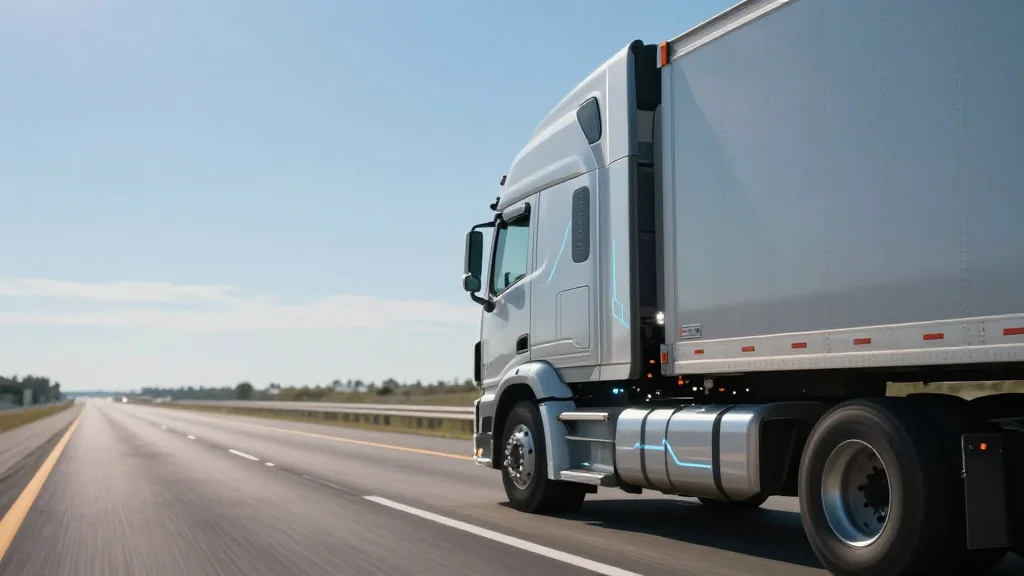
Kodiak AI and Roehl Transport Launch Driverless Freight Service Between Dallas and Houston

Companies Mentioned
Why It Matters
The Dallas‑Houston driverless freight service tackles two of the trucking industry's most pressing challenges: a shrinking driver pool and the need for greater operational efficiency. By removing the driver from the core driving task, carriers can potentially lower labor costs, improve asset utilization and reduce human error‑related accidents. Success on a high‑traffic corridor also provides a real‑world validation that could unlock broader regulatory acceptance, encouraging other carriers to adopt similar technology. Beyond immediate cost and safety benefits, the deployment signals a shift in how logistics networks may be structured. Autonomous trucks could enable more flexible routing, tighter delivery windows and dynamic load matching, reshaping the economics of long‑haul shipping. If the pilot proves scalable, it could accelerate investment in supporting infrastructure such as dedicated lanes, charging stations for electric autonomous rigs, and advanced traffic management systems, further entrenching automation in the supply chain.
Key Takeaways
- •Kodiak AI and Roehl Transport start four‑times‑weekly driverless freight runs between Dallas and Houston.
- •The route covers 240 miles on I‑45, a corridor handling ~2.5 million tons of freight annually.
- •Trucks operate under the “Kodiak Driver” system with a safety operator on board.
- •The pilot received approvals from Texas DOT and FMCSA, adhering to current autonomous vehicle regulations.
- •If successful, the model could be expanded to night runs and additional vehicle types within two years.
Pulse Analysis
Kodiak AI’s entry onto a major interstate marks a decisive moment for autonomous freight, moving the technology from isolated test tracks to the daily grind of commercial logistics. Historically, driverless trucking pilots have been confined to low‑traffic routes or limited to short‑haul segments, allowing companies to sidestep the complexities of dense traffic and variable weather. By confronting those variables head‑on, Kodiak is forcing the industry to confront the true cost‑benefit calculus of automation.
The partnership also reflects a strategic alignment of technology and operational expertise. Kodiak brings the software and sensor suite, while Roehl supplies a mature carrier network, existing customer relationships and the regulatory know‑how to navigate compliance. This division of labor reduces the risk for each party and could become a template for future collaborations, especially as carriers seek to avoid the massive capital outlay required to develop autonomous stacks in‑house.
From a market perspective, the pilot could catalyze a re‑pricing of autonomous trucking solutions. If the Dallas‑Houston runs demonstrate a clear reduction in per‑mile operating costs, investors may accelerate funding into competing platforms, intensifying competition and driving down technology prices. Conversely, any safety incident could trigger a regulatory backlash, slowing adoption. The next six months will be critical as performance data emerges, shaping both the competitive landscape and the policy environment for autonomous freight in the United States.
Kodiak AI and Roehl Transport Launch Driverless Freight Service Between Dallas and Houston
Comments
Want to join the conversation?
Loading comments...