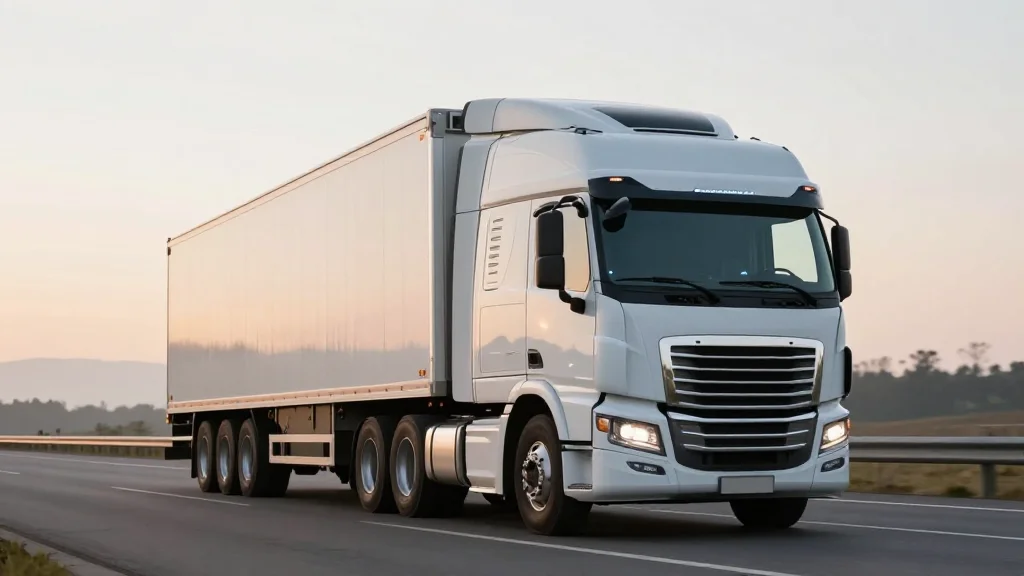
Kodiak AI, Roehl Transport Start First U.S. Commercial Autonomous Freight Service

Companies Mentioned
Why It Matters
The Kodiak‑Roehl partnership demonstrates that autonomous freight can move beyond test tracks into everyday commercial logistics, addressing two chronic industry challenges: driver scarcity and safety. By delivering a proven, safety‑validated service, the duo sets a benchmark that could accelerate regulatory acceptance and encourage other carriers to adopt driverless technology, reshaping cost structures and competitive dynamics across North America. If the Dallas‑Houston route scales as planned, the resulting efficiency gains could lower freight rates for shippers, reduce emissions per ton‑mile, and create a new standard for safety performance. The move also pressures traditional carriers to invest in similar technology or risk losing market share to early adopters that can promise faster, safer deliveries.
Key Takeaways
- •Kodiak AI and Roehl Transport began a four‑roundtrip‑per‑week autonomous freight service between Dallas and Houston
- •Kodiak Driver earned a VERA safety score of 98/100, tied for the highest in a 1,000‑fleet evaluation
- •More than 85 % of U.S. truck crashes are attributed to human error, highlighting safety potential of autonomy
- •Kodiak has deployed 20 self‑driving trucks for Atlas Energy in the Permian Basin as of end‑2025
- •The partnership aims for fully driverless operations on the route by the end of 2026
Pulse Analysis
Kodiak’s entry into commercial freight marks a watershed for autonomous trucking, moving the technology from isolated pilots to a repeatable, revenue‑generating service. The collaboration leverages Roehl’s reputation for safety to mitigate one of the biggest adoption barriers: public and regulator trust. By pairing a high VERA score with a real‑world schedule, the duo creates a data set that can inform industry‑wide safety standards and insurance underwriting, potentially lowering premiums for autonomous fleets.
Historically, autonomous vehicle rollouts have stumbled on scaling challenges—hardware supply constraints, integration complexity, and regulatory ambiguity. Kodiak’s recent hardware partnership with Bosch and compute partnership with Nvidia directly address the supply‑chain bottleneck, while the Dallas‑Houston corridor provides a controlled environment for refining the technology under real traffic conditions. If the service meets its on‑time and safety targets, it could catalyze a cascade of similar agreements, prompting larger carriers to negotiate bulk hardware deals and accelerate fleet conversions.
From a market perspective, the move pressures incumbents to accelerate their own autonomous programs or risk obsolescence. While Tesla’s Semi and Waymo’s freight pilots generate buzz, they lack a regular, publicly documented schedule that can be benchmarked against traditional operations. Kodiak’s transparent reporting of round‑trip frequency, safety scores and future driverless milestones offers a clear competitive narrative. Investors will likely watch the end‑2026 driverless transition closely; success could unlock a new valuation tier for autonomous trucking firms, while setbacks could reinforce skepticism about near‑term profitability. In any case, the Dallas‑Houston service sets a practical precedent that will shape the next wave of freight automation.
Kodiak AI, Roehl Transport Start First U.S. Commercial Autonomous Freight Service
Comments
Want to join the conversation?
Loading comments...