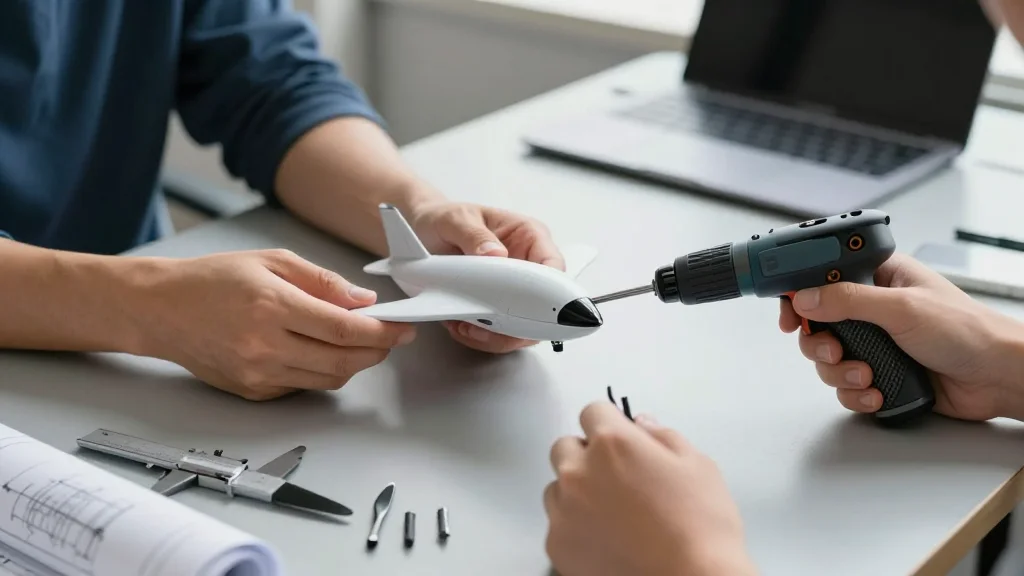
Korean University Students Invited to Build UAM Aircraft and Plan Vertiports of the Future
Companies Mentioned
Why It Matters
The Olympiad cultivates home‑grown talent and accelerates Korea’s urban air‑mobility ecosystem, linking academic innovation directly to future industry growth.
Key Takeaways
- •66 million won (~$50k) prize fuels student UAM prototypes
- •Ten university teams per category compete in aircraft and vertiport design
- •Ministry and agencies provide technical support and real‑world testing facilities
- •Finals slated for October at Gimcheon Drone Certification Center
- •Initiative aims to bridge academic research with commercial UAM industry growth
Pulse Analysis
Urban air mobility (UAM) is rapidly emerging as a cornerstone of next‑generation transportation, with cities worldwide exploring electric vertical take‑off and landing (eVTOL) solutions to alleviate congestion. South Korea, already a leader in aerospace and smart‑city initiatives, is leveraging its strong research universities to accelerate this shift. By launching the 2026 National University Student UAM Olympiad, the government signals a strategic commitment to nurture a pipeline of engineers, designers, and regulators who can translate cutting‑edge concepts into market‑ready products.
The competition’s breadth—spanning aircraft creation, spatial data, radio‑wave environments, vertiport planning, social acceptability, regulatory innovation, and airport utilization—mirrors the multidisciplinary challenges of commercial UAM deployment. Participants receive hands‑on support from agencies such as the Korea Transportation Safety Authority and the Korea Airports Corporation, allowing them to move beyond theoretical models to prototype fabrication and vertiport mock‑ups. This collaborative framework not only sharpens technical skills but also fosters early industry‑government partnerships, essential for scaling eVTOL operations and ensuring safety standards keep pace with rapid innovation.
Beyond talent development, the Olympiad addresses a critical bottleneck: vertiport infrastructure. By tasking students with site selection, design, and operational planning, the program generates a repository of viable vertiport concepts that can be evaluated for real‑world implementation. Coupled with regulatory innovation challenges, the initiative helps shape policies that will govern future air‑space usage. As global investors pour capital into UAM startups, Korea’s proactive approach positions it to attract commercial projects, drive domestic supply chains, and potentially export its vertiport designs to other emerging markets.
Korean university students invited to build UAM aircraft and plan vertiports of the future
Comments
Want to join the conversation?
Loading comments...