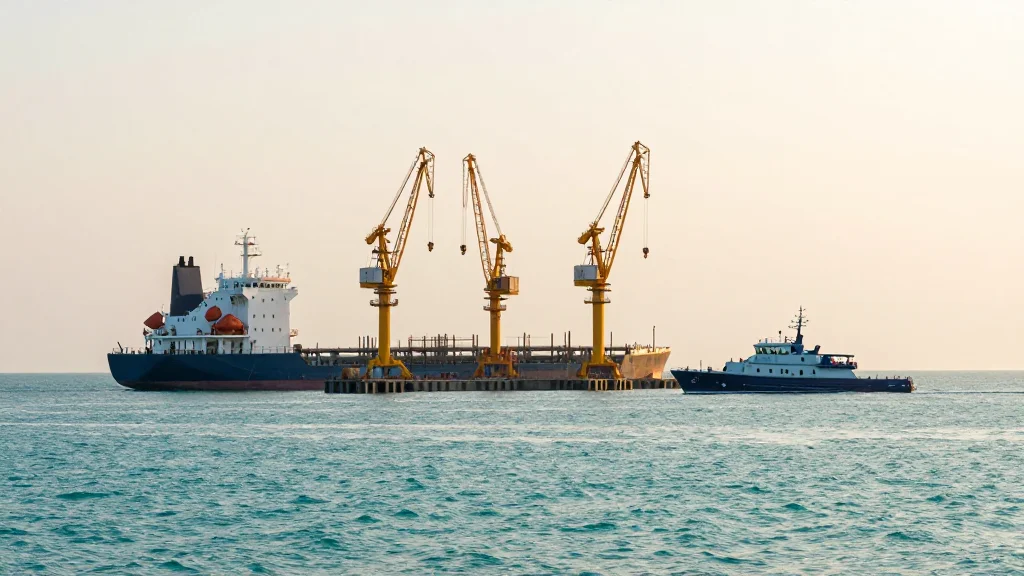
Kuwait Blames Iran for Failed Attack on Bubiyan Island, Threatening Chinese‑Funded Port

Why It Matters
The Bubiyan Island incident highlights how geopolitical rivalries can directly threaten critical transportation infrastructure. As the Mubarak Al Kabeer Port is poised to become a linchpin for Gulf trade, any disruption could reverberate through global supply chains, raising freight costs and affecting energy markets already strained by the Iran‑U.S. conflict. Moreover, the episode underscores China's deepening involvement in Middle Eastern logistics, making the port a flashpoint where regional power struggles intersect with global trade interests. For shipping companies, insurers, and investors, the security of Gulf ports is a key risk factor. An attack on Bubiyan would force a re‑evaluation of route planning, cargo insurance premiums, and the strategic diversification of port usage across the region. The incident also signals to multinational firms that infrastructure projects tied to major powers can become collateral in regional disputes, prompting a reassessment of geopolitical risk in capital allocation.
Key Takeaways
- •Kuwait detained four Iranian nationals, alleged Revolutionary Guard operatives, after a failed infiltration of Bubiyan Island on May 1.
- •Two additional suspects escaped during the incident.
- •Bubiyan Island hosts the under‑construction Mubarak Al Kabeer Port, a Chinese‑funded deep‑water hub expected to handle millions of TEUs annually.
- •Iran's Foreign Minister Abbas Araqchi warned of "foolish gamble" against Iran, framing the incident as part of broader regional hostilities.
- •Disruption to the port could force carriers to reroute, raising freight costs and impacting global oil supply amid existing Iran‑U.S. tensions.
Pulse Analysis
The Bubiyan episode is a textbook case of infrastructure becoming a proxy battlefield. China’s Belt and Road projects have turned ports like Mubarak Al Kabeer into strategic assets that attract both investment and adversarial attention. Tehran’s alleged attempt to sabotage the port reflects a calculated move to undermine a Chinese‑backed venture that could diminish Iran’s leverage over Gulf shipping routes. Historically, Iran has used asymmetric tactics—missiles, drones, and covert infiltrations—to pressure neighboring states, but targeting a Chinese‑financed port raises the stakes, potentially drawing Beijing into the diplomatic fray.
From a market perspective, the incident could accelerate a shift in cargo flows. Shipping lines may pre‑emptively increase capacity at alternative Gulf hubs such as Jebel Ali or Dammam, driving up utilization rates and freight premiums. Insurance underwriters are likely to reassess risk models for the Persian Gulf, incorporating a higher probability of war‑related losses. In the longer term, the event may prompt Gulf states to diversify port investments, seeking partners beyond China to mitigate the risk of being caught in great‑power rivalries.
Strategically, Kuwait’s swift public accusation serves a dual purpose: it signals resolve to domestic audiences and warns Iran that any aggression will be met with international scrutiny. The move also aligns Kuwait with U.S. and Saudi interests, potentially unlocking security assistance and intelligence sharing. For China, protecting its port investment may involve diplomatic pressure on Tehran or increased naval presence, echoing its broader approach to safeguarding maritime assets in contested waters. The outcome of this standoff will likely shape the calculus of future infrastructure projects in the Gulf, where the convergence of trade, security, and geopolitics is increasingly inseparable.
Kuwait Blames Iran for Failed Attack on Bubiyan Island, Threatening Chinese‑Funded Port
Comments
Want to join the conversation?
Loading comments...