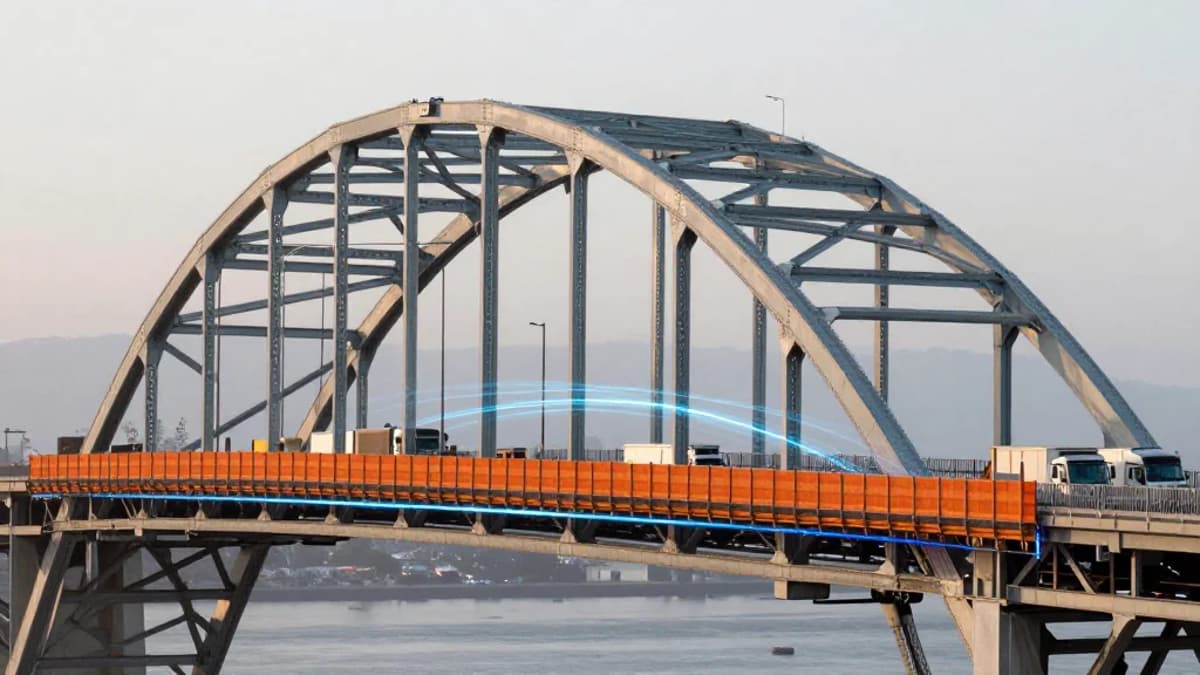
LA Terminals to Extend Gates to Mitigate Disruption During Bridge Closure
•March 10, 2026
0
Why It Matters
The extended gate hours protect the LA‑Long Beach port’s throughput, preventing costly bottlenecks that could ripple through national supply chains and raise freight rates.
Key Takeaways
- •Vincent Thomas Bridge closure starts March 23, 2026.
- •Bridge handles 53,000 vehicles daily, 3,400 trucks.
- •Port extends gate hours, adds weekend operations.
- •Redecking expected to finish November 2028.
- •Caltrans plans full closure after partial reopening.
Pulse Analysis
The Vincent Thomas Bridge is a critical artery for the Los Angeles‑Long Beach port complex, linking the San Pedro channel to the interstate network. Each day, more than 53,000 vehicles cross the span, including roughly 3,400 heavy‑duty trucks that deliver containers, automobiles, and bulk goods. Its 63‑year‑old structure is slated for a comprehensive redecking, a project that will span two years and temporarily restrict traffic flow. The closure underscores the vulnerability of coastal logistics to infrastructure constraints.
Port operators responded by extending gate operating hours and adding weekend shifts, a strategy designed to absorb the reduced bridge capacity. By keeping inbound and outbound truck lanes open longer, terminals hope to smooth peak‑hour congestion and maintain berth utilization rates. The plan also includes real‑time traffic monitoring and coordinated dispatch with trucking firms to prioritize high‑value cargo. Early simulations suggest that these measures could shave up to 15 percent off expected dwell‑time increases, preserving the port’s competitive edge.
Industry analysts view the mitigation effort as a bellwether for how major gateways will handle future infrastructure projects. Prolonged disruptions could trigger freight‑rate spikes and force shippers to reroute cargo to alternative West Coast ports, eroding market share. By proactively adjusting gate schedules, the LA‑Long Beach complex demonstrates resilience, potentially setting a template for other ports facing bridge or rail upgrades. Continued collaboration between Caltrans, terminal operators, and logistics providers will be essential to keep supply‑chain throughput stable through the November 2028 full closure.
LA terminals to extend gates to mitigate disruption during bridge closure
0
Comments
Want to join the conversation?
Loading comments...