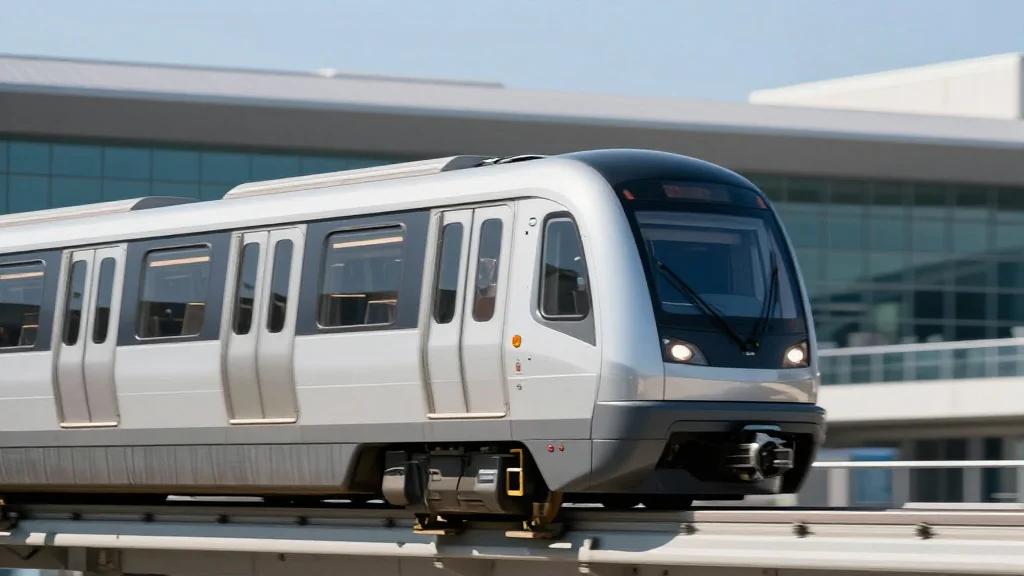
LAX's Long-Awaited Train to Hit the Rails as Testing Begins
Why It Matters
The APM is critical to easing terminal bottlenecks at LAX, especially with the World Cup expected to boost international arrivals. Successful testing will validate a multi‑billion investment and set a benchmark for airport‑linked transit projects nationwide.
Key Takeaways
- •Empty trains will run for a 60‑day test starting Monday.
- •Project cost $5.5 billion; $36 million claim adds dispute risk.
- •System targets reduced terminal congestion before the 2026 FIFA World Cup.
- •LINXS contractor disputes have already cost hundreds of millions in settlements.
- •Passenger service will follow reliability, integration, and volunteer feedback phases.
Pulse Analysis
The Automated People Mover (APM) at LAX represents one of the most ambitious airport‑centric rail projects in the United States. Initiated in 2019, the 2.25‑mile electric guideway was designed to link terminals, parking structures, and curbside areas, cutting the notorious horseshoe‑shaped traffic loop. Although the original 2023 opening slipped, the $5.5 billion investment remains on track to demonstrate how large‑scale infrastructure can be retrofitted into a busy airport environment. The upcoming 60‑day empty‑train trial will simulate full‑capacity schedules, allowing engineers to fine‑tune signaling, power, and platform door operations before passengers board.
From an operational perspective, the APM is poised to alleviate congestion during peak travel periods and the upcoming 2026 FIFA World Cup, which will draw an estimated 1 million additional visitors to Los Angeles. By providing a reliable, high‑frequency link between terminals, the system reduces reliance on road shuttles and curbside drop‑offs, potentially trimming average transfer times by up to 15 minutes. This efficiency gain not only improves the passenger experience but also enhances the airport’s capacity to handle surges without expanding runway or gate inventory, a critical advantage for a hub already operating near its limits.
However, the project’s timeline has been hampered by legal and financial friction with the primary contractor, LAX Integrated Express Solutions (LINXS). Disputes over a $36 million electrical maintenance claim and broader scope‑of‑work disagreements have already cost the agency hundreds of millions in settlements. These challenges underscore the importance of robust contract management and risk mitigation in public‑private infrastructure ventures. As the APM moves through reliability testing, integration with elevators and stations, and volunteer feedback phases, its successful launch could serve as a template for future airport transit upgrades across the country.
LAX's long-awaited train to hit the rails as testing begins
Comments
Want to join the conversation?
Loading comments...