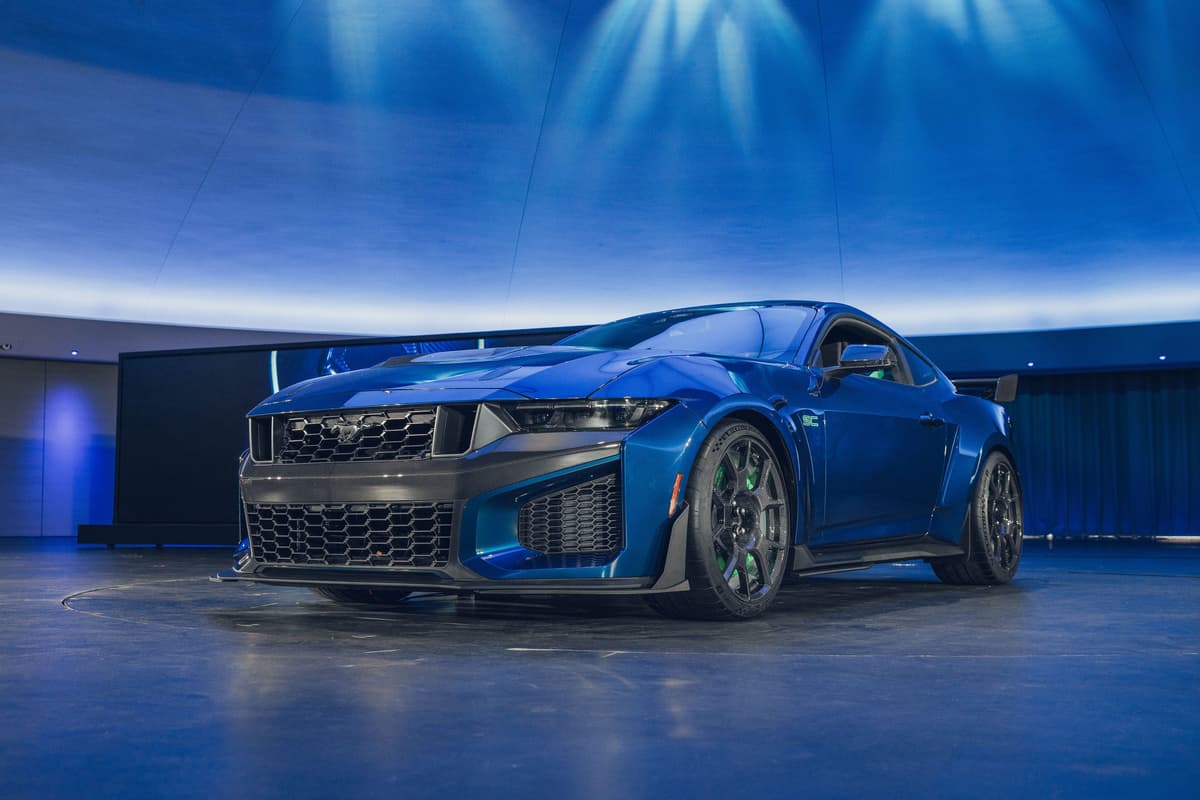
Leaked: Ford Mustang Dark Horse SC Could Start Well over $100K
•March 9, 2026
0
Companies Mentioned
Why It Matters
The steep pricing could reshape the high‑performance muscle segment, testing buyer willingness to pay supercar‑level premiums for a domestic brand. It also positions Ford against European rivals in the $100k+ performance market.
Key Takeaways
- •Dark Horse SC base price $108,485.
- •Track Pack raises price to $144,985.
- •Special Edition costs $175,965.
- •Price up $30k versus 2022 Shelby GT500.
- •Power output undisclosed, likely 760‑815 hp.
Pulse Analysis
The Mustang Dark Horse SC marks a decisive shift for Ford, abandoning the storied Shelby badge in favor of a standalone performance identity. By leveraging the iconic 5.2‑liter supercharged V8, the automaker aims to blend classic muscle heritage with modern hyper‑car technology. This rebranding aligns with a broader industry trend where legacy manufacturers create halo models that transcend traditional segment boundaries, targeting affluent enthusiasts who value both heritage and cutting‑edge engineering.
Pricing disclosures suggest Ford is positioning the Dark Horse SC as a true ultra‑performance offering rather than a conventional muscle car. At a base price north of $108,000, the vehicle competes directly with European exotics such as the Porsche 911 Turbo and the BMW M8, both of which sit in the $120,000‑$150,000 range. The optional Track Pack and Special Edition push the price toward $176,000, underscoring Ford’s confidence in the car’s track‑ready credentials and its willingness to extract premium margins from a niche buyer pool. This aggressive pricing could alienate traditional Mustang fans but may attract a new demographic seeking American muscle with supercar‑level exclusivity.
The lack of official horsepower figures adds intrigue, but industry estimates place output between 760 and 815 hp, potentially surpassing the outgoing GT500. If Ford delivers on that promise, the Dark Horse SC could become a benchmark for domestic performance, influencing future product strategies across the segment. However, sales success will hinge on whether enthusiasts accept the premium price tag in exchange for raw power, advanced aerodynamics, and bespoke interior appointments. Ford’s gamble reflects a broader shift toward higher‑margin, low‑volume models that reinforce brand prestige while navigating tightening emissions regulations and evolving consumer expectations.
Leaked: Ford Mustang Dark Horse SC Could Start Well over $100K
0
Comments
Want to join the conversation?
Loading comments...