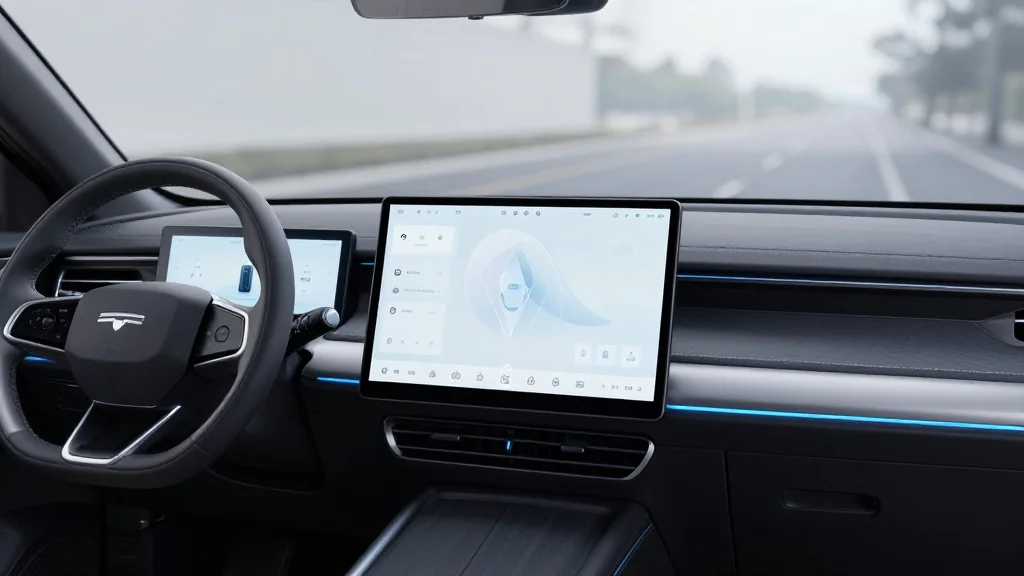
LG Electronics Stock Jumped 24% in a Day After Unveiling Google-Based Car Tech that Cuts Automaker Costs
Companies Mentioned
Why It Matters
The cost‑saving hardware could accelerate OEM adoption of Android Automotive, expanding LG’s revenue beyond traditional components and reinforcing its role in the evolving car‑software ecosystem.
Key Takeaways
- •Single‑chip design powers multiple vehicle displays, reducing hardware spend
- •Android Automotive market projected to reach $2.14 billion by 2035
- •LG now offers screens, processors, and OS integration to automakers
- •Shares surged to about 279,500 won (~$215) after the announcement
Pulse Analysis
The automotive sector is rapidly embracing Android Automotive as a common software foundation, allowing manufacturers to sidestep the costly development of proprietary infotainment stacks. LG Electronics leverages this trend by bundling its market‑leading display panels with a single system‑on‑chip that can manage several screens of varying aspect ratios. By eliminating the need for separate processors per display, the architecture promises significant bill‑of‑materials savings and simplifies integration for OEMs seeking a unified hardware‑software solution.
For legacy automakers, the new LG offering addresses a critical pain point: the expense and complexity of scaling multi‑display cabins. Brands such as Volvo, GM and Ford already run Android Automotive, but they must source displays, processors and the OS from multiple suppliers. LG’s end‑to‑end package reduces vendor management overhead and aligns with the industry’s move toward over‑the‑air updates, Google services integration and, increasingly, AI assistants like Gemini. Compared with Tesla’s closed ecosystem, this open‑platform approach could broaden consumer choice and accelerate the rollout of advanced driver‑facing applications.
Investors reacted sharply, pushing LG’s stock to roughly 279,500 won (about $215) per share, reflecting confidence that the software‑hardware synergy will unlock new revenue streams. While the Android Automotive market is still modest—valued at $895.6 million in 2025—it is expected to more than double by 2035, offering a sizable growth runway. Success will hinge on LG converting the technology showcase into long‑term contracts and scaling production without eroding margins, a challenge that will be closely watched by analysts tracking the convergence of consumer electronics and automotive manufacturing.
LG Electronics stock jumped 24% in a day after unveiling Google-based car tech that cuts automaker costs
Comments
Want to join the conversation?
Loading comments...