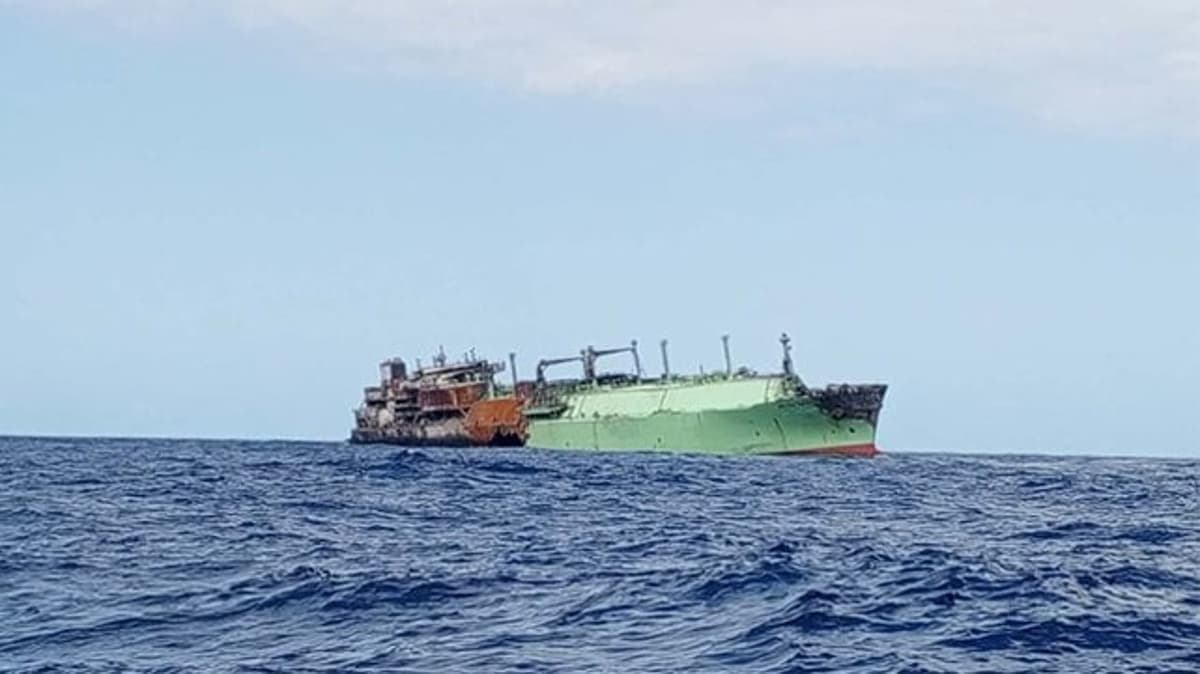
Libya Again Warns That Wreck of Arctic Metagaz Is Drifting Out of Control
Companies Mentioned
Why It Matters
The uncontrolled drift threatens Mediterranean shipping lanes and coastal ecosystems, while the legal tug‑of‑war between Libya, Russia, and the IMO highlights gaps in global wreck‑removal protocols.
Key Takeaways
- •Arctic Metagaz towline snapped near 120 nm north of Benghazi
- •Wreck holds ~1,000 tons of fuel and trapped natural gas
- •EU sanctions on Russian vessels impede salvage operations
- •Libya seeks international team; Russia denies responsibility
- •IMO urged to coordinate Mediterranean salvage effort
Pulse Analysis
The Arctic Metagaz incident underscores how geopolitical conflict can quickly evolve into a maritime safety crisis. After a suspected Ukrainian drone detonated the vessel in the Mediterranean, the ship’s hull was torn apart, yet its internal compartments kept it buoyant. Now drifting off Libya’s coast, the wreck carries roughly 1,000 tons of fuel and residual LNG, creating a dual threat of a potential spill and a floating hazard for commercial traffic that traverses one of the world’s busiest sea lanes.
Salvage operations are mired in a web of technical, legal, and political challenges. Libya’s Ports and Maritime Transport Authority has deployed a series of tugs, but adverse weather broke the towline and the lead tug now faces mechanical failures. Compounding the difficulty, EU sanctions on Russian energy shipping restrict access to specialized equipment and crews, while Russia maintains that the responsibility lies with the flag state’s abandonment procedures. The emergency committee is pressing for rapid legal action under the Nairobi Wreck Removal Convention and MARPOL, and has appealed to the International Maritime Organization for coordinated assistance.
For the broader maritime community, the drifting Arctic Metagaz serves as a cautionary tale about the need for robust, pre‑emptive wreck‑removal frameworks. The incident threatens not only shipping schedules but also coastal environments in Libya, Malta, and Italy, where a spill could impact tourism and fisheries. It also highlights the strategic importance of multinational salvage agreements that can bypass sanctions when public safety is at stake. As the situation unfolds, stakeholders are watching closely for any shift in diplomatic responsibility that could set a precedent for future maritime emergencies involving sanctioned vessels.
Libya Again Warns That Wreck of Arctic Metagaz is Drifting Out of Control
Comments
Want to join the conversation?
Loading comments...