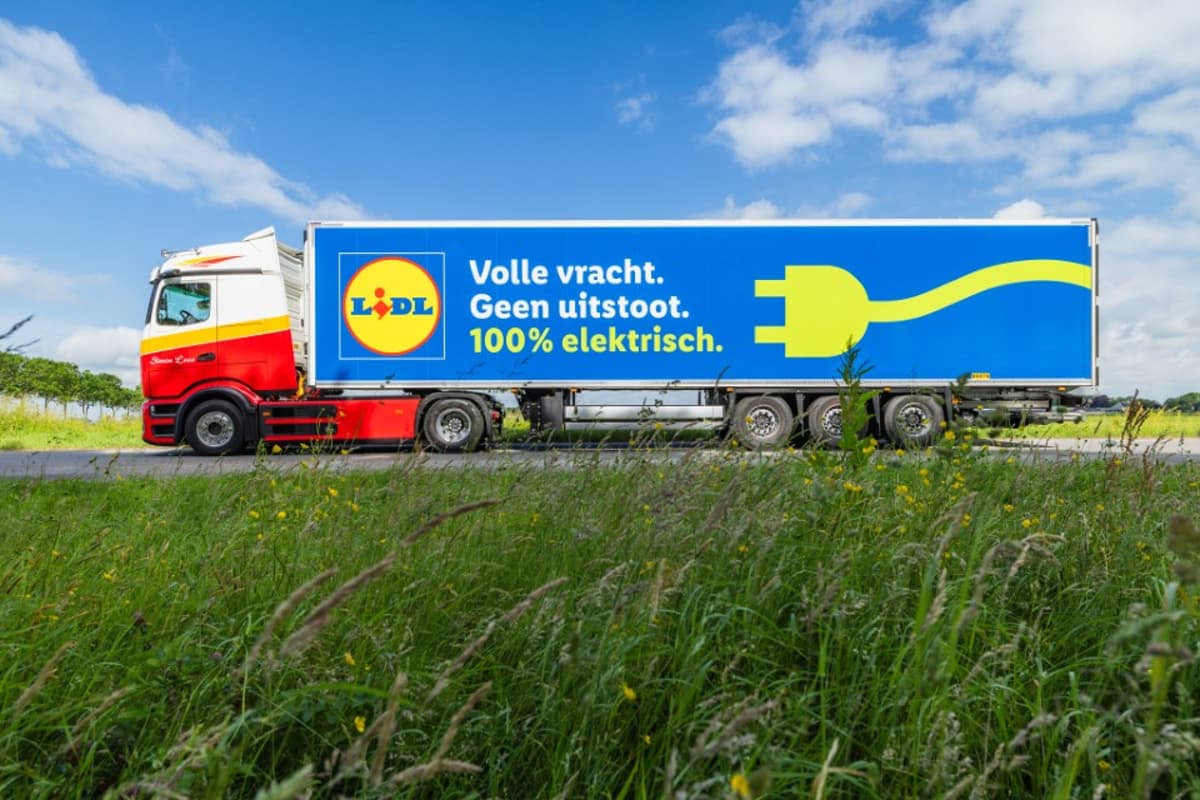
Lidl Netherlands Claims a Scoop: The First Retailer to Supply Its Stores Entirely with Electric Vehicles
Companies Mentioned
Why It Matters
Electrifying the delivery network cuts operating costs and shields Lidl from fuel price spikes, giving it a pricing advantage, while setting a benchmark for large‑scale retail logistics decarbonisation in Europe.
Key Takeaways
- •Lidl aims for 100% electric deliveries in Netherlands by 2027
- •Fast‑charging hub in Almere powers fleet for North Holland, Flevoland
- •Target shift saves costs before 2025 Dutch truck toll
- •Electric fleet helps maintain low grocery prices for consumers
- •First global retailer with fully electric store supply chain
Pulse Analysis
Lidl's decision to electrify its entire Dutch delivery network by 2027 reflects a broader shift in retail logistics toward sustainable, low‑carbon operations. While many grocers have piloted electric vans, Lidl is scaling the model across an entire regional supply chain, leveraging a purpose‑built fast‑charging plaza at its Almere hub. This infrastructure not only ensures vehicle uptime but also demonstrates how strategic capital investment can accelerate fleet conversion without sacrificing service levels, a critical factor for high‑frequency grocery deliveries.
From a financial perspective, the move directly tackles two cost pressures facing retailers: volatile fuel prices and the imminent Dutch truck toll slated for July 2025. Electric vehicles benefit from lower per‑kilometre energy costs and reduced toll rates, translating into measurable savings on Lidl's logistics budget. By passing these efficiencies onto shoppers, Lidl reinforces its value‑price proposition, a core competitive edge in the discount segment. The early achievement also provides a hedge against future regulatory tightening on emissions, positioning the chain favorably in ESG assessments.
Industry observers see Lidl's rollout as a potential template for other European retailers seeking to meet aggressive climate targets while preserving thin margins. The success hinges on reliable charging infrastructure, battery performance in cold climates, and coordinated planning with distribution centres. As governments incentivise clean transport and consumers demand greener supply chains, the scalability of Lidl's model could accelerate the transition to fully electric freight across the sector, reshaping cost structures and sustainability benchmarks.
Lidl Netherlands claims a scoop: the first retailer to supply its stores entirely with electric vehicles
Comments
Want to join the conversation?
Loading comments...