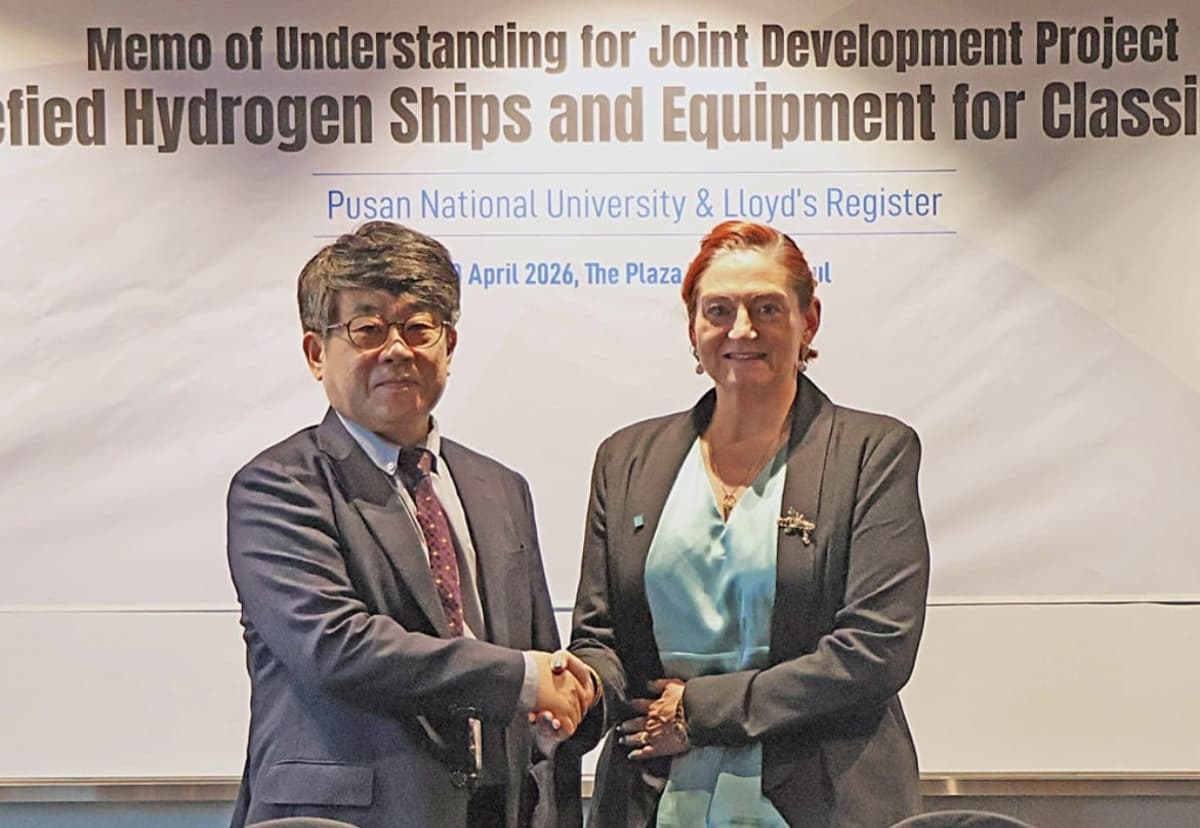
Lloyd’s Register, South Korean Uni to Set up Global Certification Framework for Liquid Hydrogen Shipping
Why It Matters
A unified certification pathway de‑risks investment and speeds the adoption of liquid‑hydrogen propulsion, a cornerstone of maritime decarbonisation. Regulators, shipyards and owners gain a clear benchmark to bring hydrogen vessels from concept to market.
Key Takeaways
- •First global certification body for liquid hydrogen maritime transport.
- •LR and PNU will test cryogenic tanks, piping, and structural loads.
- •Framework aims to reduce design‑stage uncertainty for shipbuilders.
- •Expected to shape future class rules and international regulations.
- •Accelerates deployment of hydrogen‑fuelled vessels for decarbonisation.
Pulse Analysis
The maritime sector is racing to replace bunker fuel with zero‑carbon alternatives, and liquid hydrogen has emerged as a promising candidate for long‑haul vessels. Yet the technology’s cryogenic nature introduces unique engineering challenges that have stalled many projects. By pairing Lloyd’s Register’s classification expertise with Pusan National University’s cutting‑edge cryogenic research, the new framework offers a rigorous, science‑based assessment of storage tanks, piping, and structural loads, delivering the confidence shipbuilders need to move beyond feasibility studies.
Beyond technical validation, the certification regime promises to streamline regulatory approval. Historically, shipowners have navigated a patchwork of national standards, leading to costly redesigns and delayed timelines. The joint performance‑evaluation protocol will produce standardized test methodologies that can be incorporated into future class rules, giving regulators a clear reference point. This harmonization reduces the risk premium on hydrogen projects, making financing more attractive and encouraging early‑stage investment in vessel construction and retrofitting.
In the broader context of global decarbonisation, the initiative could catalyze a wave of hydrogen‑fuelled shipping assets. As governments tighten emissions targets and investors prioritize ESG criteria, a transparent certification pathway becomes a market differentiator. Shipyards that adopt the framework early will likely secure contracts faster, while charterers gain assurance of safety and reliability. Ultimately, the LR‑PNU collaboration not only fills a critical standards gap but also signals that the industry is moving from experimental pilots to scalable, commercial operations.
Lloyd’s Register, South Korean uni to set up global certification framework for liquid hydrogen shipping
Comments
Want to join the conversation?
Loading comments...