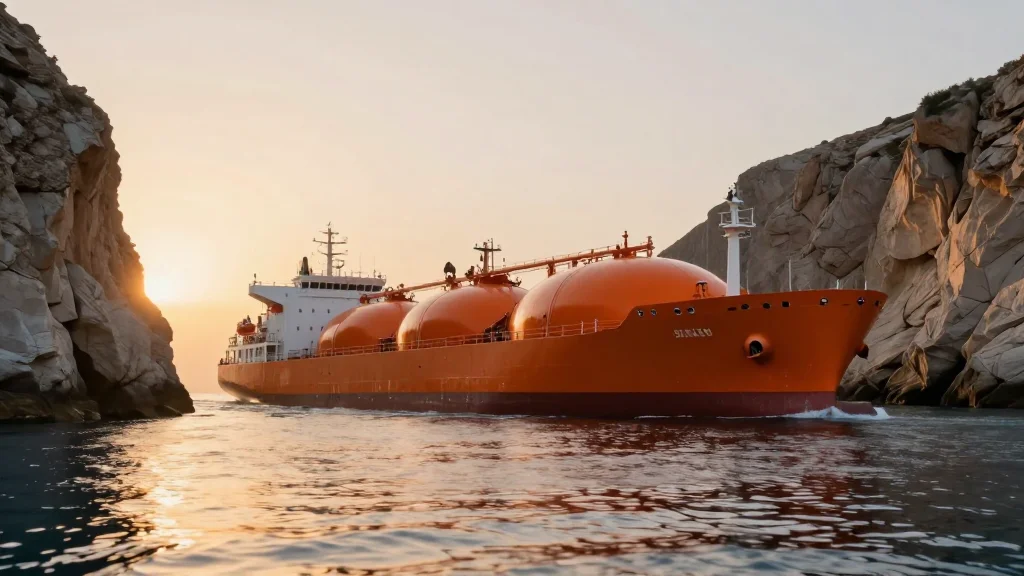
LNG Ships Move Toward Hormuz After Iran Says Strait Is Open
Companies Mentioned
Why It Matters
Resuming LNG flows through Hormuz could ease tight global gas markets and lower soaring Asian spot prices, while also testing geopolitical risk premiums on shipping insurance.
Key Takeaways
- •Two empty Abu Dhabi LNG tankers near Hormuz, first east‑side transit.
- •Three Qatari‑loaded LNG vessels also moving toward strait after closure.
- •Closure removed ~20% of global LNG supply, lifting Asian spot prices.
- •Fifteen loaded LNG ships could cross; insurers’ stance will dictate timing.
- •QatarEnergy plant damage may delay restart, limiting near‑term price relief
Pulse Analysis
The Strait of Hormuz has long been a chokepoint for energy shipments, handling a sizable share of the world’s oil and liquefied natural gas. Since late February, U.S. and Israeli strikes on Iran forced the waterway into a de‑facto closure, truncating about 20 % of global LNG volumes and pushing Asian spot prices to multi‑year highs. The disruption highlighted the fragility of supply chains that rely on narrow maritime corridors and amplified the premium placed on alternative routes such as the Cape of Good Hope.
Bloomberg’s ship‑tracking data now show two empty LNG carriers owned by Abu Dhabi National Oil Co. lingering near the Fujairah anchorage, alongside three Qatari‑laden vessels heading toward Hormuz. If they proceed, these ships would constitute the first east‑side transits since the conflict began, a move enabled by Iran’s declaration of a ten‑day cease‑fire and a “coordinated route” for commercial traffic. However, the actual crossing hinges on insurers’ willingness to underwrite risk amid lingering threats of a U.S. naval blockade and potential Iranian restrictions on vessels from hostile nations.
The next few days could see up to 15 loaded LNG tankers attempt the passage, but market dynamics will be shaped by QatarEnergy’s ability to restart its Ras Laffan complex, which suffered roughly 17 % damage in recent attacks. A partial restart would likely trigger a modest pull‑back in spot prices, while a prolonged outage could keep the market tight. Traders and downstream buyers are therefore watching both the geopolitical environment and the insurance landscape closely, as any delay in Hormuz transits would sustain elevated gas premiums across Europe and Asia.
LNG ships move toward Hormuz after Iran says Strait is open
Comments
Want to join the conversation?
Loading comments...