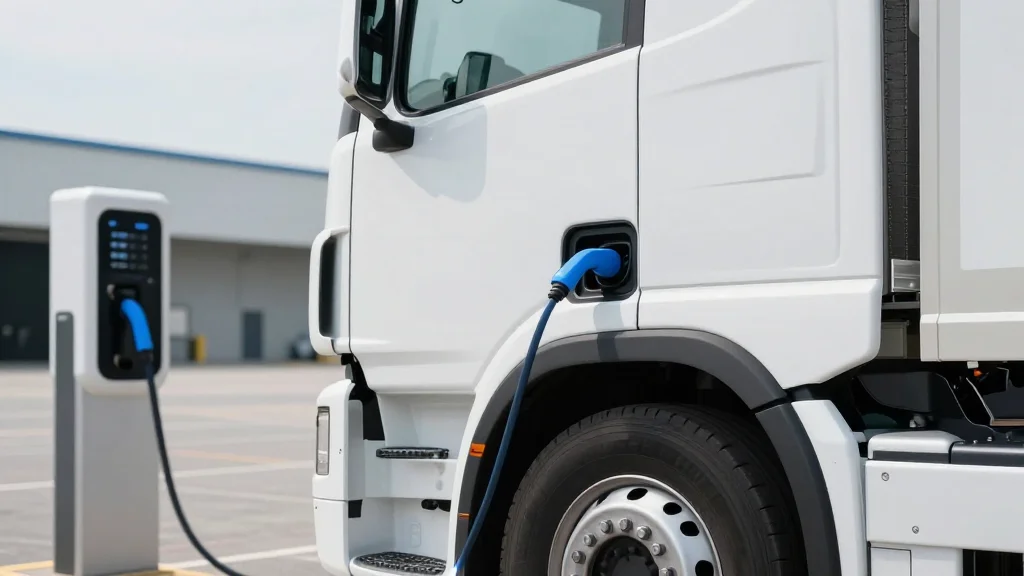
Logisteed and REXEV Team Up to Accelerate Electric Truck Adoption

Why It Matters
The Logisteed‑REXEV partnership addresses a critical bottleneck in the transition to electric freight: the lack of real‑world performance data that can convince fleet managers to invest in new technology. By combining software‑driven route optimization with proven electric powertrains, the collaboration could lower perceived risk and accelerate capital allocation toward zero‑emission trucks. This is especially relevant as governments tighten emissions standards and logistics companies seek to meet sustainability targets while maintaining cost competitiveness. If the joint demonstrations prove successful, they could set a benchmark for future collaborations between logistics platforms and EV manufacturers, fostering an ecosystem where data, hardware, and infrastructure evolve together. The ripple effect may extend beyond trucking, influencing policy decisions, financing structures, and the broader supply chain’s carbon footprint.
Key Takeaways
- •Logisteed and REXEV announce a joint effort to accelerate electric truck adoption.
- •Collaboration will conduct field trials to assess range, charging needs, and total cost of ownership.
- •Partnership merges Logisteed’s logistics software with REXEV’s electric powertrain technology.
- •Demonstrations aim to provide data that could unlock financing and scaling for EV trucks.
- •Results expected later this year, potentially shaping industry standards for zero‑emission freight.
Pulse Analysis
The Logisteed‑REXEV alliance exemplifies a strategic shift from isolated technology pilots to integrated, data‑centric solutions. Historically, EV truck rollouts have been hampered by fragmented efforts—manufacturers develop hardware while logistics firms grapple with software and operational constraints. By aligning a route‑optimization platform with an electric drivetrain, the partnership tackles both sides of the equation, offering a clearer value proposition to fleet operators.
From a market perspective, this collaboration could catalyze a virtuous cycle: successful trials generate performance metrics, which in turn attract financing and policy support, prompting manufacturers to scale production and reduce unit costs. The timing aligns with tightening emissions regulations in key markets such as the EU and Japan, where carriers face escalating penalties for diesel‑fuelled fleets. If Logisteed and REXEV can demonstrate that electric trucks meet or exceed conventional performance benchmarks, they will likely become reference points for other logistics platforms seeking similar integrations.
Looking forward, the partnership may inspire a new wave of cross‑industry consortia, where software firms, battery providers, and vehicle manufacturers co‑develop solutions tailored to specific logistics use cases. Such ecosystems could accelerate the standardization of charging infrastructure, data protocols, and fleet management tools, ultimately lowering barriers for smaller carriers to adopt electric trucks. The success—or failure—of these demonstrations will be a bellwether for the broader electrification agenda in freight transport.
Logisteed and REXEV Team Up to Accelerate Electric Truck Adoption
Comments
Want to join the conversation?
Loading comments...