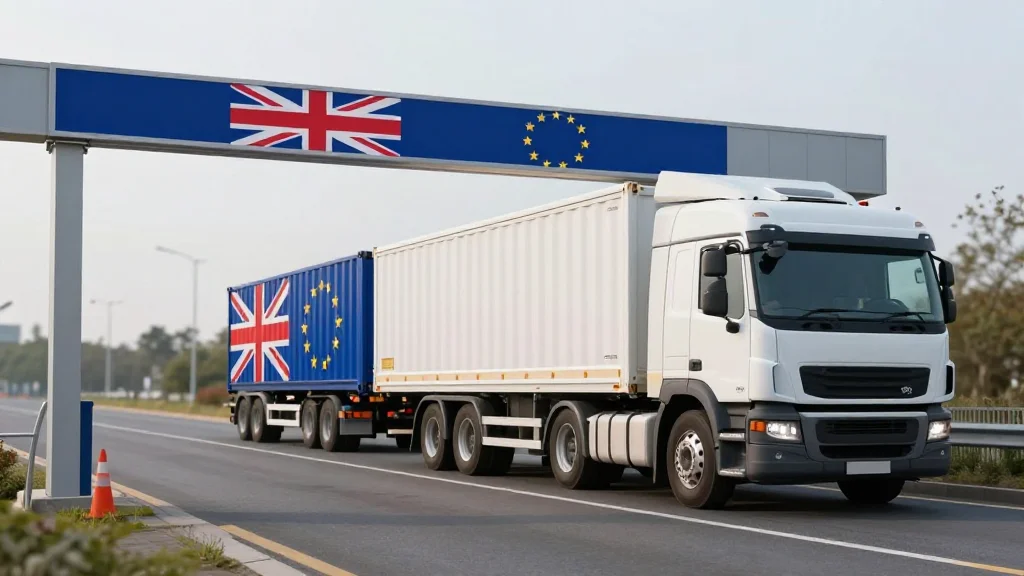
Logistics UK Calls for Greater European Alignment
Why It Matters
Easing customs and regulatory friction will cut costs, accelerate trade flows, and bolster the UK’s economic recovery by leveraging its largest trading partner, the EU.
Key Takeaways
- •European Partnership Bill grants powers on SPS and emissions trading.
- •Logistics UK cites Brexit red tape raising border costs and delays.
- •Faster customs clearance could increase UK‑EU trade volumes.
- •Industry urges government to prioritize customs alignment for growth.
Pulse Analysis
The United Kingdom’s logistics sector has been navigating a complex post‑Brexit landscape, where increased paperwork and divergent regulatory regimes have eroded the efficiency that once underpinned seamless trade with the European Union. Freight forwarders, carriers, and warehousing firms report higher operational expenses and longer lead times, prompting concerns that the UK could lose its competitive edge in a market where speed and cost‑effectiveness are paramount. As the EU remains the UK’s top trading partner, any friction at the border reverberates through supply chains, affecting manufacturers, retailers, and ultimately consumers.
The European Partnership Bill, unveiled in the recent King’s Speech, introduces a framework of powers aimed at harmonising key regulatory areas such as sanitary‑phytosanitary (SPS) measures and emissions trading. By granting the government authority to align these standards with EU counterparts and to negotiate future treaties, the legislation seeks to reduce duplicative compliance requirements. Analysts anticipate that streamlined SPS protocols will lower inspection delays for agricultural and food products, while coordinated emissions trading could simplify reporting for carbon‑intensive freight operations, delivering measurable cost savings.
Logistics UK’s call for deeper customs alignment reflects a broader industry consensus that regulatory convergence is essential for unlocking growth. A more unified customs regime would enable faster clearance, reduce administrative overhead, and encourage investment in cross‑border logistics infrastructure. In the longer term, such alignment could stimulate trade volumes, support job creation in the transport sector, and contribute to the UK’s GDP growth. Stakeholders are watching closely to see how quickly the government translates the Bill’s powers into actionable policy, recognizing that timely implementation will be critical to restoring the UK’s position as a gateway to Europe.
Logistics UK calls for greater European alignment
Comments
Want to join the conversation?
Loading comments...