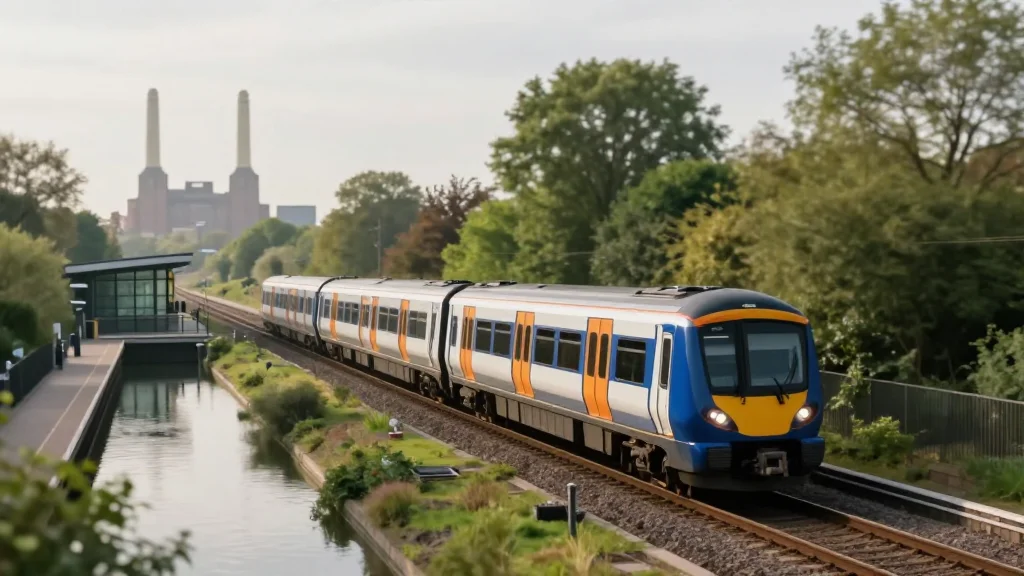
London Just Got a Step Closer to Getting a New Overground Train Line
Why It Matters
The WLO will dramatically improve west‑London connectivity, targeting deprived postcodes and catalysing housing, employment and economic growth. Its success could set a template for future Overground expansions across the capital.
Key Takeaways
- •£6.65 m pledged for design and consultation phase
- •Line to run up to six trains per hour
- •Expected annual ridership exceeds 11 million passengers
- •Project cost estimated £430‑610 million, economic boost £300 million
- •New stations at Lionel Road, Old Oak Common Lane
Pulse Analysis
London’s transport agenda has long eyed the West London Orbital as a missing link in the capital’s orbital network. The recent £6.65 million commitment marks the first concrete step beyond feasibility studies, allowing Transport for London, the Old Oak & Park Royal Development Corporation and the boroughs of Barnet, Brent, Ealing and Hounslow to commission detailed designs, model integration with existing rail services and assess environmental impacts. By repurposing a freight line idle since 1902, the project leverages dormant infrastructure, reducing land acquisition costs while delivering a modern, high‑frequency Overground service.
Beyond the engineering feat, the WLO promises a transformative socioeconomic ripple effect. Forecasts suggest more than 11 million annual passengers, translating into reduced car dependency and lower emissions across west London. The line is positioned to unlock thousands of new homes, directly addressing the region’s housing shortage, and to stimulate job creation in historically under‑invested neighborhoods such as Harlesden and Neasden. Economic modelling predicts a £300 million boost in the first ten years, echoing the growth spurred by the Elizabeth line in its early phases.
Strategically, the WLO reinforces TfL’s broader ambition to expand the Overground footprint, complementing parallel proposals like the takeover of Great Northern services in north London. A successful rollout could accelerate naming and branding initiatives that celebrate local heritage, while also setting a precedent for public‑private funding collaborations on large‑scale rail projects. As London seeks to balance capacity, sustainability and equity, the West London Orbital stands out as a pivotal piece of the city’s future mobility puzzle.
London just got a step closer to getting a new Overground train line
Comments
Want to join the conversation?
Loading comments...