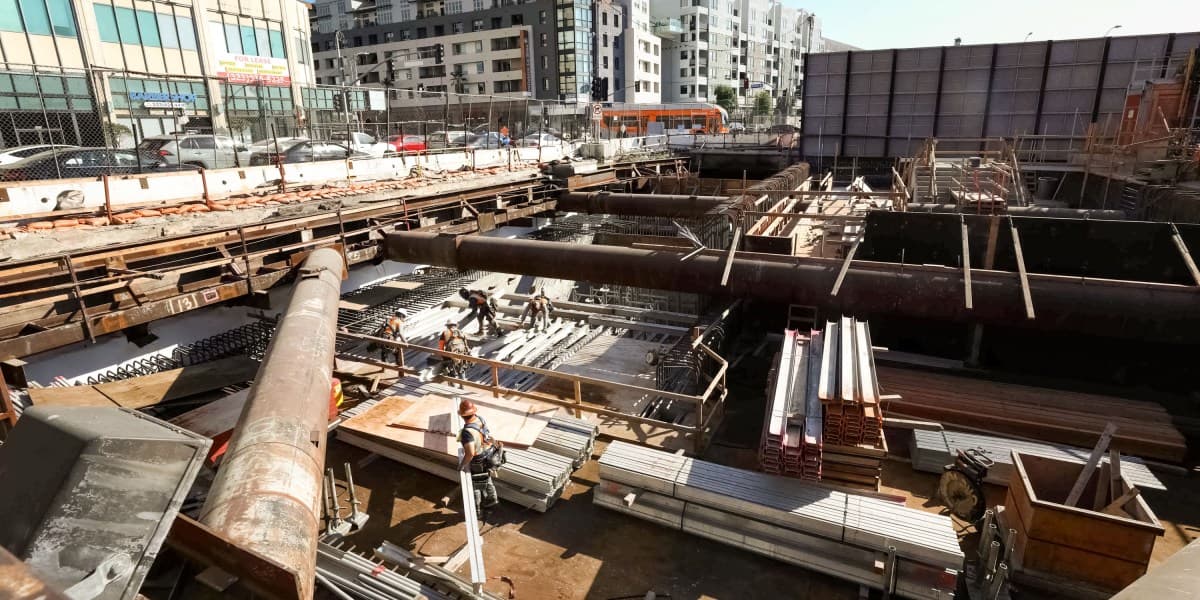
Los Angeles Is Finally Going Underground
Why It Matters
The extension brings high‑capacity rail to a densely populated east‑west corridor, offering a credible alternative to congested freeways and laying groundwork for transit‑oriented development. Its successful completion proves that technically complex, high‑cost subway projects are feasible in Los Angeles, influencing future infrastructure planning.
Key Takeaways
- •Four‑mile D Line extension opens three new Wilshire stations
- •Earth‑pressure‑balance TBM mitigated methane hazards, digging 50 ft/day
- •Project cost nearly $4 billion, exceeding schedule and budget
- •Travel time cuts to 25 minutes, replacing hour‑long drives
- •Expected to catalyze transit‑oriented housing and walkability
Pulse Analysis
Los Angeles has long been defined by its sprawling freeway network, but the city’s transit story dates back to a once‑renowned rail system that fell into disuse. Over the past three decades, officials have pursued a piecemeal revival, culminating in the D Line’s new Wilshire segment. By linking downtown to the Pacific‑side Miracle Mile, the extension fills a critical east‑west gap, offering commuters a reliable alternative to the notoriously congested 10‑mile stretch that previously demanded an hour‑long drive.
The engineering feat behind the project is as notable as its urban impact. The ground beneath Miracle Mile is saturated with tar and methane, a volatile mix that halted earlier subway plans after a 1985 explosion. Modern earth‑pressure‑balance tunnel‑boring machines (TBMs) now safely excavate through this hazardous soil, advancing roughly 50 feet per day while installing precast, gasketed concrete liners that seal out gas and water. Despite these advances, the segment’s $4 billion price tag and delayed timeline underscore the financial and logistical challenges of building subways in a car‑centric metropolis.
Looking ahead, the D Line extension could serve as a catalyst for transit‑oriented development, encouraging higher‑density housing, retail, and pedestrian‑friendly streetscapes around the new stations. If ridership meets projections, the reduced travel time may alleviate pressure on nearby freeways, contributing to lower emissions and improved air quality. Moreover, the project’s success may embolden policymakers to green‑light additional underground ventures, gradually reshaping Los Angeles into a more balanced, multimodal urban environment.
Los Angeles is finally going underground
Comments
Want to join the conversation?
Loading comments...