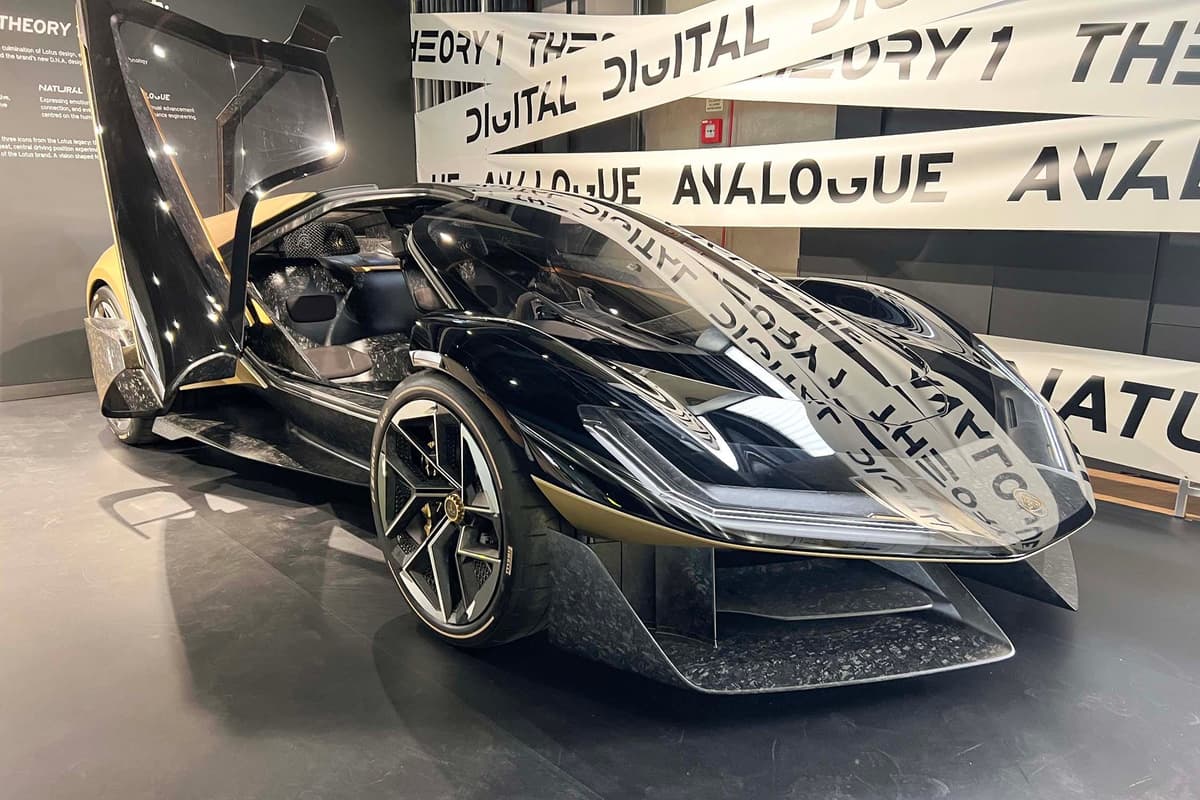
Lotus's Edgy, Wedgy Theory 1 Was in the Spotlight at Milan Design Week
Companies Mentioned
Why It Matters
By presenting Theory 1 at a high‑visibility cultural event, Lotus can broaden its appeal beyond hardcore enthusiasts and reinforce its reputation for cutting‑edge design, potentially attracting new customers in the premium EV segment. The move also signals a shift in automotive marketing toward experiential, design‑centric platforms.
Key Takeaways
- •Lotus showcased Theory 1 concept at Milan Design Week 2026
- •Exhibit highlighted Lotus’s motorsport heritage with vintage footage and gear
- •Theory 1 features forged‑carbon body, smoked‑glass cockpit, 3D‑printed interior
- •VP Ben Payne aims to attract new audiences beyond auto shows
- •Design Week’s artistic setting lets Lotus emphasize design over performance
Pulse Analysis
Milan Design Week has evolved from a furniture fair into a global showcase where fashion, architecture and now automotive design intersect. The 2026 edition attracted heavyweight brands such as Kia, Hyundai, Mini and Range Rover, but Lotus stood out by turning a narrow Tortona street into an immersive narrative of its racing pedigree. By swapping traditional car‑show lighting for aggressive yellow‑black projections and vintage footage, Lotus leveraged the festival’s artistic vibe to position its brand as a cultural, not just mechanical, force.
The Theory 1 concept, first unveiled in 2024, embodies Lotus’s pivot toward electrified performance without abandoning its signature lightweight ethos. Its forged‑carbon chassis, smoked‑glass cockpit and fully 3D‑printed interior illustrate how additive manufacturing can reduce weight while allowing bespoke styling. The wedge‑shaped silhouette, reminiscent of 1970s race cars, signals a design language that blends nostalgia with futuristic minimalism—an approach that resonates with both collectors and younger eco‑conscious buyers seeking distinctive EVs.
Strategically, the exhibit serves as a low‑cost, high‑impact marketing experiment. By engaging design‑centric visitors who may not attend a conventional auto show, Lotus can seed brand awareness among affluent, trend‑driven consumers. The museum‑style display of wheels, dashboards and driver’s seats reinforces the company’s engineering heritage, potentially translating into increased interest for upcoming production models. As the premium EV market tightens, such experiential activations could become a vital differentiator for niche manufacturers aiming to punch above their size.
Lotus's Edgy, Wedgy Theory 1 Was in the Spotlight at Milan Design Week
Comments
Want to join the conversation?
Loading comments...