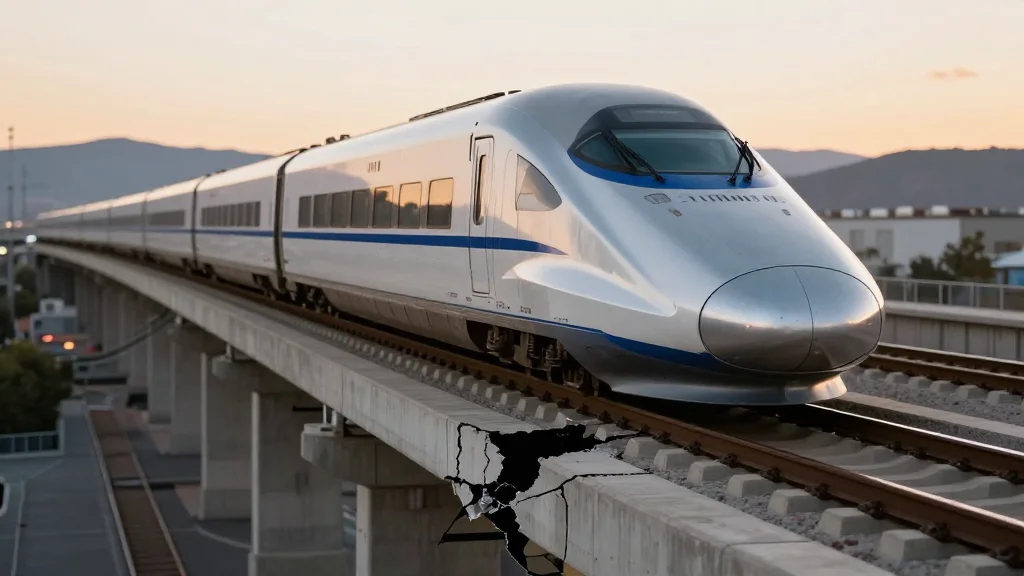
Lou Thompson: California HSR ‘Has Reached a Dead End’ –– Commentary
Companies Mentioned
Why It Matters
The project's spiraling costs and funding shortfalls jeopardize California’s transportation agenda and risk billions of taxpayer dollars on an unviable megaproject, reshaping regional mobility planning.
Key Takeaways
- •Phase I cost now $231 billion, up from $33.8 billion
- •Optimized plan estimates $126 billion, relies on questionable savings
- •Funding gaps $91‑196 billion; state bond insufficient
- •Federal ARRA funds rescinded; no lawsuit pursued
- •Cap and Invest provides $1 billion annually, inadequate
Pulse Analysis
The California High‑Speed Rail (HSR) saga illustrates how megaproject optimism can clash with fiscal reality. When the 2008 business plan promised a 2‑hour‑40‑minute San Francisco‑to‑Los Angeles ride for $33.8 billion, it set expectations that later estimates—now $231 billion—cannot meet. This cost explosion reflects a broader pattern of under‑scoped planning, where early political enthusiasm eclipses rigorous engineering and financial analysis. As a result, the state now faces a funding chasm of $91‑$196 billion, a gap that traditional bond issuances and speculative federal grants cannot bridge.
Thompson’s critique underscores the fragility of the current financing framework. The original model relied on a one‑time state bond covering roughly a third of costs, an unrealistic federal share tied to programs that never materialized, and private capital that remains hesitant without proven demand. Even the recent $1 billion annual infusion from the Cap and Invest program falls short, leaving the Merced‑to‑Bakersfield segment unlikely to finish by 2032. The withdrawal of ARRA funds and the Authority’s decision not to sue the Federal Railroad Administration signal diminishing confidence in the project’s business case, further eroding investor appetite.
For policymakers and industry observers, the California HSR cautionary tale offers actionable lessons. Independent, early‑stage cost‑benefit studies become essential to prevent over‑promising and under‑delivering. Staging construction into clearly defined, financially self‑sustaining phases can mitigate risk, while transparent stakeholder engagement can curb the influence of parties with limited “skin in the game.” As other states contemplate high‑speed rail, California’s experience warns that without realistic budgeting, stable funding streams, and disciplined scope management, even the most visionary infrastructure projects can stall indefinitely.
Lou Thompson: California HSR ‘Has Reached a Dead End’ –– Commentary
Comments
Want to join the conversation?
Loading comments...