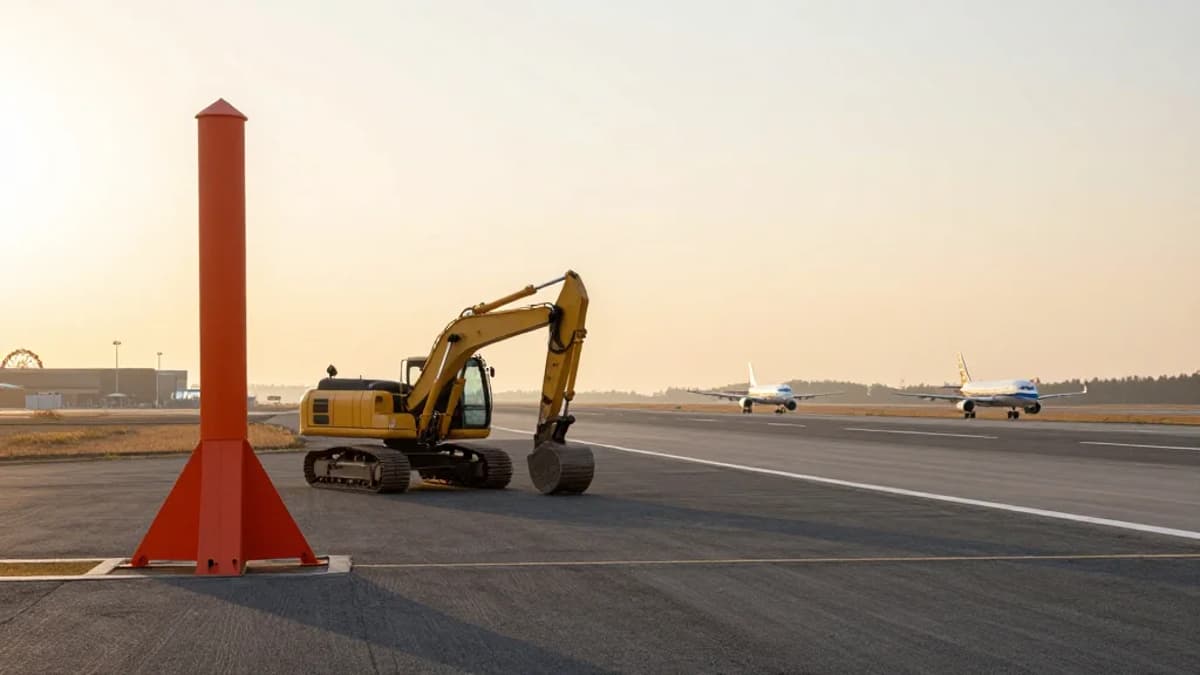
Louis Armstrong Airport to Begin Work on $27.1 Million Runway Rehabilitation Project
•March 2, 2026
0
Why It Matters
The investment secures critical infrastructure, ensuring MSY can accommodate future traffic growth while maintaining safety standards. It also demonstrates effective federal‑local partnership in airport modernization.
Key Takeaways
- •$27.1 M runway rehab funded by FAA AIP
- •Runway 2/20 closed eight months starting March 2
- •All flights diverted to east‑west Runway 11/29
- •Full-depth reconstruction of two 7,001‑ft center panels
- •Project aims to boost safety, reliability, future growth
Pulse Analysis
The $27.1 million runway rehabilitation at Louis Armstrong Airport reflects a broader push to modernize legacy airfield assets across the United States. Funded largely by the Federal Aviation Administration’s Airport Improvement Program, the project targets the 7,001‑foot Runway 2/20, a critical north‑south corridor for MSY. By replacing the keel structure, updating in‑pavement lighting, and resealing joints, the airport addresses wear that can compromise load‑bearing capacity and pilot visibility, aligning the facility with contemporary safety benchmarks.
Operationally, the eight‑month closure forces all commercial traffic onto the east‑west Runway 11/29. While this shift may increase localized aircraft noise for neighborhoods such as Kenner, the airport has assured airlines that flight schedules will remain unchanged. The temporary reroute also provides a live case study in runway redundancy planning, illustrating how airports can maintain service continuity during major capital projects. Stakeholders are closely monitoring noise mitigation measures and community outreach efforts to balance operational needs with resident concerns.
Strategically, the rehabilitation positions MSY for sustained growth in passenger volumes and cargo throughput. A modernized runway enhances runway availability, reduces maintenance‑related delays, and improves overall airfield efficiency—key factors for airlines evaluating hub suitability. Moreover, the project signals to investors and regional developers that New Orleans is committed to maintaining world‑class aviation infrastructure, a prerequisite for attracting new routes and fostering economic development in the Gulf Coast corridor.
Louis Armstrong Airport to Begin Work on $27.1 Million Runway Rehabilitation Project
0
Comments
Want to join the conversation?
Loading comments...