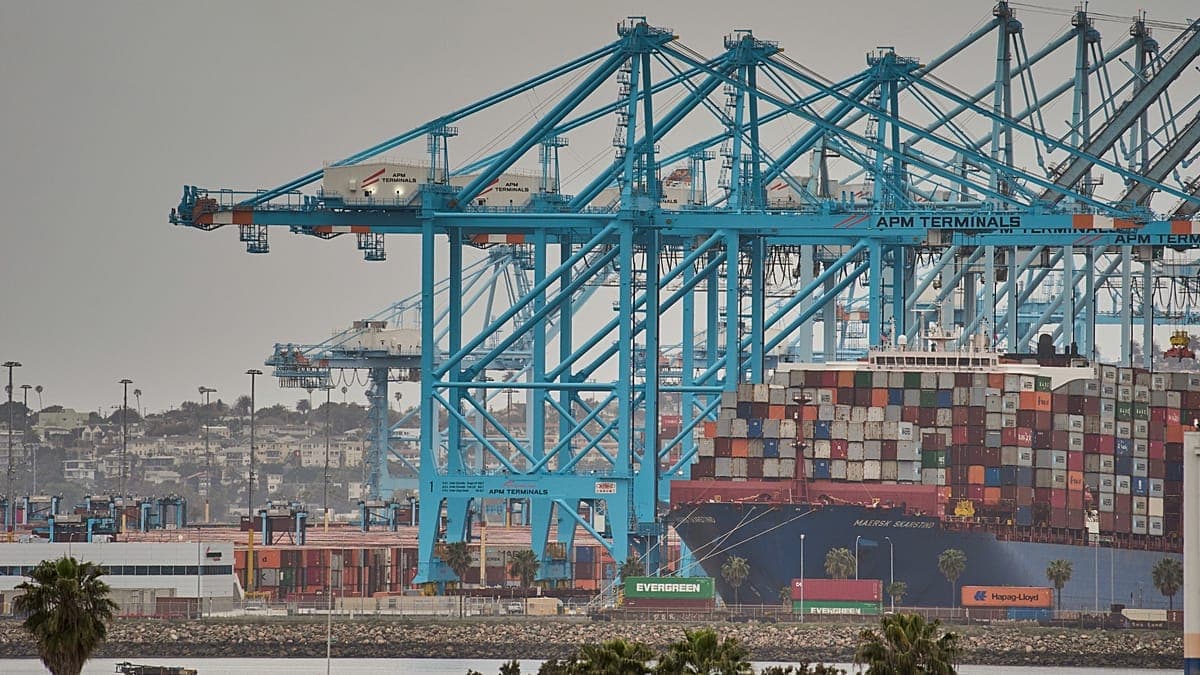
Maersk Profit Falls Sharply as Firm Keeps Forecast Despite Hormuz Uncertainty
Why It Matters
The earnings plunge highlights how geopolitical tension and oversupply can compress margins in a high‑demand shipping market, signaling risk for investors and shippers alike.
Key Takeaways
- •Q1 net profit fell to $100 million, 12× lower YoY
- •Revenue slipped 2.6% to $13 billion despite 9.3% volume rise
- •Maersk kept 2026 outlook, expecting 2‑4% container demand growth
- •Hormuz traffic near standstill, raising insurance and fuel costs
- •Oversupply and new vessels keep ocean freight rates under pressure
Pulse Analysis
Maersk’s first‑quarter earnings illustrate how geopolitical risk can quickly erode profitability even in a market with strong demand. Net profit collapsed to $100 million, a twelve‑fold drop from the same period last year, while revenue slipped 2.6% to just under $13 billion. The decline was driven primarily by weaker ocean freight rates, despite a 9.3% increase in total volumes. The company attributes the rate pressure to excess capacity and the lingering uncertainty surrounding the Strait of Hormuz, where traffic has been reduced to near‑standstill levels following the February conflict.
The Hormuz disruption is only one piece of a broader stress test for the container sector. Hundreds of vessels are stranded in the Persian Gulf, inflating fuel consumption and insurance premiums; German carrier Hapag‑Lloyd estimates $60 million in weekly losses from the same route. Simultaneously, a wave of new ship deliveries is expanding global fleet capacity, squeezing spot rates further. These dynamics force operators to balance volume growth against margin compression, prompting many to defer new orders or seek alliances to better manage the oversupply cycle.
Looking ahead, Maersk has left its 2026 guidance unchanged, forecasting 2‑4% growth in global container demand. The firm’s confidence rests on resilient regional demand and its diversified logistics platform, which can offset ocean‑segment volatility. However, investors should monitor the pace of Hormuz reopening and the evolution of fuel‑price hedges, as both factors will shape cost structures. Companies that can leverage digital freight solutions and optimize network routing are likely to preserve earnings margins, while those heavily reliant on spot freight may continue to feel the strain of a crowded market.
Maersk profit falls sharply as firm keeps forecast despite Hormuz uncertainty
Comments
Want to join the conversation?
Loading comments...