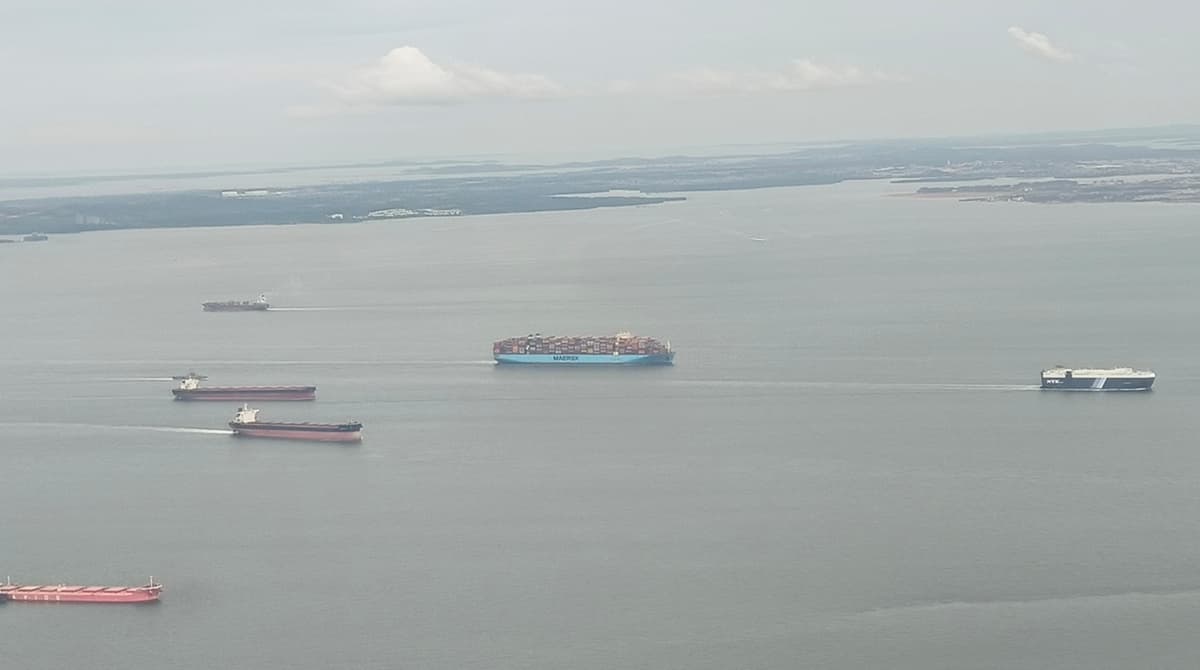
Malacca Strait Vessel Traffic at Record Levels in 2025
Why It Matters
The record traffic underscores the Malacca Strait’s growing role as the world’s busiest maritime corridor, influencing global trade flows, shipping costs, and regional security dynamics. It also pressures littoral states to bolster navigation safety and infrastructure.
Key Takeaways
- •2025 saw 102,525 vessel transits, first time over 100k.
- •Traffic up 8.72% year‑on‑year for ships over 300 gt.
- •Container ships average 74 daily transits, topping other categories.
- •Deep‑draught VLCCs/ULCVs doubled in ten years, now 28 daily.
- •Indonesia‑US defence pact raises security focus on the strait.
Pulse Analysis
The Malacca Strait’s 2025 traffic surge reflects a broader shift in global shipping routes as carriers seek alternatives to the now‑closed Strait of Hormuz. With 102,525 transits, the waterway eclipsed its 2004 volume of 63,636 and now handles over 280 vessel reports daily, driven by robust demand for containerized goods and energy shipments. This growth is not merely statistical; it signals a re‑balancing of trade flows toward Southeast Asian chokepoints, where efficiency and reliability have become paramount for manufacturers and retailers worldwide.
Security considerations are equally pivotal. The strait’s narrowest point, a mere 1.7 miles, has historically attracted piracy, prompting coordinated patrols and the establishment of ReCAAP. The recent Indonesia‑US defence cooperation agreement adds a strategic layer, reinforcing maritime domain awareness and deterrence capabilities. Singapore’s firm stance on freedom of navigation, refusing to negotiate toll concessions with Iran, further cements the region’s commitment to open trade lanes, reassuring shippers of predictable passage despite geopolitical volatility.
Looking ahead, the sustained traffic increase will test the strait’s capacity and regulatory frameworks. Authorities may consider expanding vessel traffic services, investing in digital monitoring, and revisiting toll structures to fund infrastructure upgrades. For shipowners, the trend translates to tighter scheduling windows and potential cost pressures, while exporters benefit from a more reliable conduit to European and American markets. Monitoring these dynamics will be essential for stakeholders aiming to navigate the evolving maritime landscape effectively.
Malacca Strait vessel traffic at record levels in 2025
Comments
Want to join the conversation?
Loading comments...