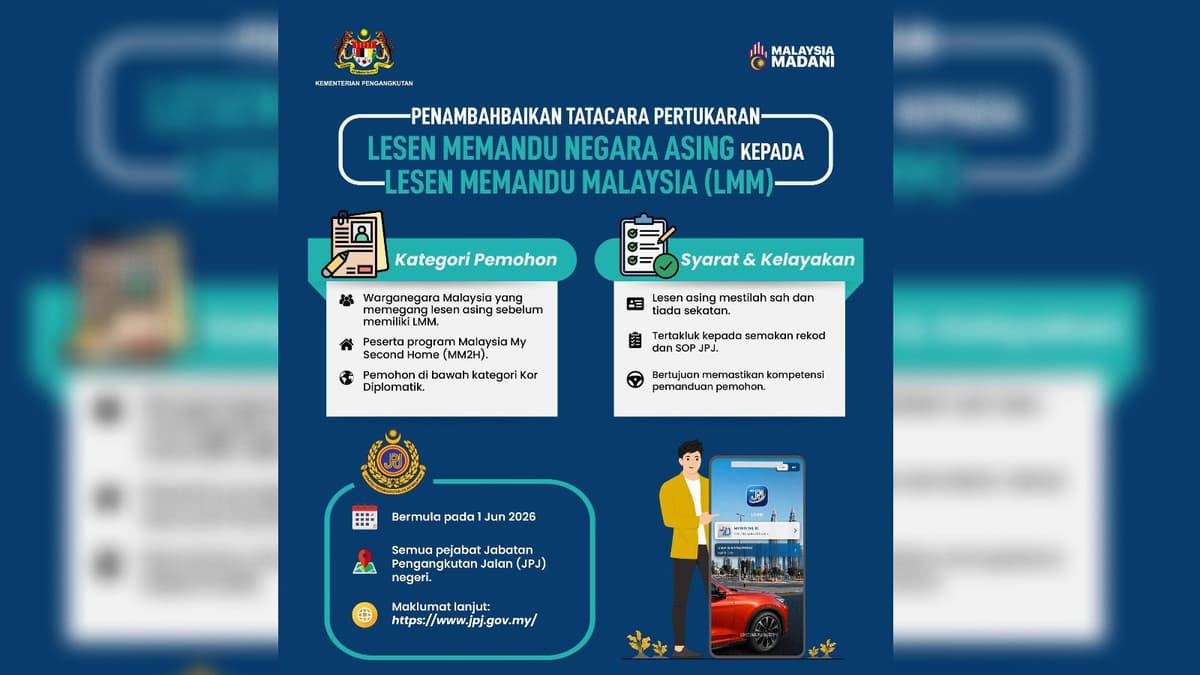
Malaysia to Ease Foreign Driving Licence Conversion Process for Citizens From 1 June 2026
Why It Matters
The broader conversion pathway eases mobility for overseas Malaysians, supporting business travel and expatriate workforce while preserving road safety standards. It also aligns Malaysia’s licensing framework with regional best practices, potentially boosting cross‑border economic activity.
Key Takeaways
- •All Malaysian citizens with valid foreign licences can convert to LMM
- •Conversion process opens on 1 June 2026 at all state JPJ offices
- •Eligibility expands beyond MM2H, diplomats, and pre‑LMM holders
- •Applicants must pass record checks and follow JPJ SOPs
- •Fee schedule and details will be posted on JPJ website
Pulse Analysis
Malaysia’s decision to streamline foreign licence conversion reflects a growing recognition of its diaspora’s contribution to the economy. Over 1.5 million Malaysians live abroad, many of whom maintain professional ties or own businesses back home. Previously, only a narrow slice of this population—those who obtained a foreign licence before a local one, MM2H participants, or diplomats—could swap their documents. By opening the pathway to all citizens with valid foreign licences, the government removes a bureaucratic hurdle that often forces expatriates to either retain foreign permits or undergo costly re‑testing.
The policy also underscores JPJ’s commitment to road safety while facilitating mobility. Applicants will still undergo record verification and must adhere to JPJ’s standard operating procedures, ensuring that conversion does not dilute driving competency standards. Nationwide availability at state transport offices means that Malaysians returning from overseas assignments can quickly obtain a local licence, smoothing the transition for professionals in finance, engineering, and technology sectors who frequently travel between Kuala Lumpur and global hubs. This alignment of licensing with international norms may also improve Malaysia’s standing in ASEAN’s push for harmonized transport regulations.
Economically, the move could stimulate consumer spending on vehicle registration, insurance, and related services as more expatriates re‑enter the domestic market. Other Southeast Asian nations, such as Singapore and Thailand, have already adopted liberal licence conversion policies to attract talent and tourism. Malaysia’s updated framework positions it competitively, potentially encouraging skilled Malaysians abroad to consider repatriation or increased domestic investment, thereby supporting broader growth objectives amid global economic headwinds.
Malaysia to ease foreign driving licence conversion process for citizens from 1 June 2026
Comments
Want to join the conversation?
Loading comments...