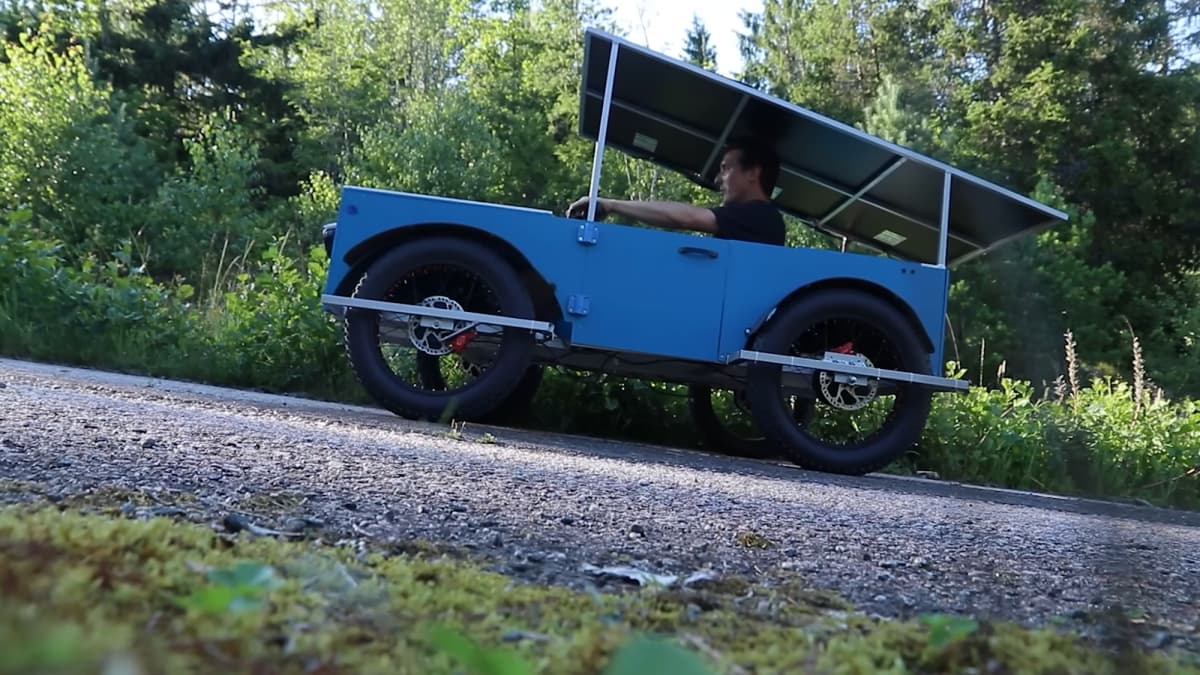
Man Builds Solar-Powered Car From E-Bikes that Can Hit 30 Mph
Why It Matters
The build proves that affordable, solar‑assisted transportation is feasible for hobbyists, highlighting a potential niche for low‑speed, eco‑friendly vehicles as battery and solar costs continue to fall.
Key Takeaways
- •Two e‑bike hub motors provide 1,000 W each, enabling 4‑WD
- •Solar array generates 300 W, feeding a 48‑V battery pack
- •Vehicle can travel ~20 mi on solar alone, up to 62 mi total
- •Top speed reaches nearly 30 mph, comparable to low‑speed EVs
- •DIY approach shows affordable path for personal solar mobility
Pulse Analysis
Solar‑powered cars have long been a tantalizing vision, but high‑cost panels and heavy battery packs have kept them out of reach for most consumers. Recent advances in photovoltaic efficiency and the plummeting price of lithium‑ion cells have begun to shift that equation, especially for lightweight, short‑range applications. Hobbyist engineers are now experimenting with modular designs that blend off‑the‑shelf components, turning the concept of a solar commuter from a futuristic prototype into a backyard project.
Simon Sörensen’s vehicle epitomizes this emerging DIY ethos. By salvaging two e‑bike drivetrains, each equipped with a 1,000 W hub motor, he created a versatile four‑wheel‑drive system that can toggle between front, rear or all‑wheel propulsion. A compact solar array delivering roughly 300 W feeds a 48‑volt battery, granting the car a solar‑only range of about 20 miles and a total range near 62 miles under bright conditions. The steel‑tube frame, paired with Ackermann steering geometry borrowed from high‑performance racing, enables precise handling while keeping weight low enough to achieve a top speed close to 30 mph—fast enough for urban streets yet safe for a hobbyist build.
The broader implication is a growing market for low‑speed, solar‑assisted micro‑vehicles that can serve campus shuttles, last‑mile delivery, or personal recreation. As component prices continue to decline, similar builds could scale into small‑batch commercial products, offering a carbon‑neutral alternative to gasoline scooters. Moreover, the open‑source nature of such projects accelerates community innovation, potentially spurring new standards for solar integration in lightweight mobility solutions. This grassroots momentum may well influence larger manufacturers to consider modular, solar‑ready platforms for future urban transport.
Man builds solar-powered car from e-bikes that can hit 30 mph
Comments
Want to join the conversation?
Loading comments...