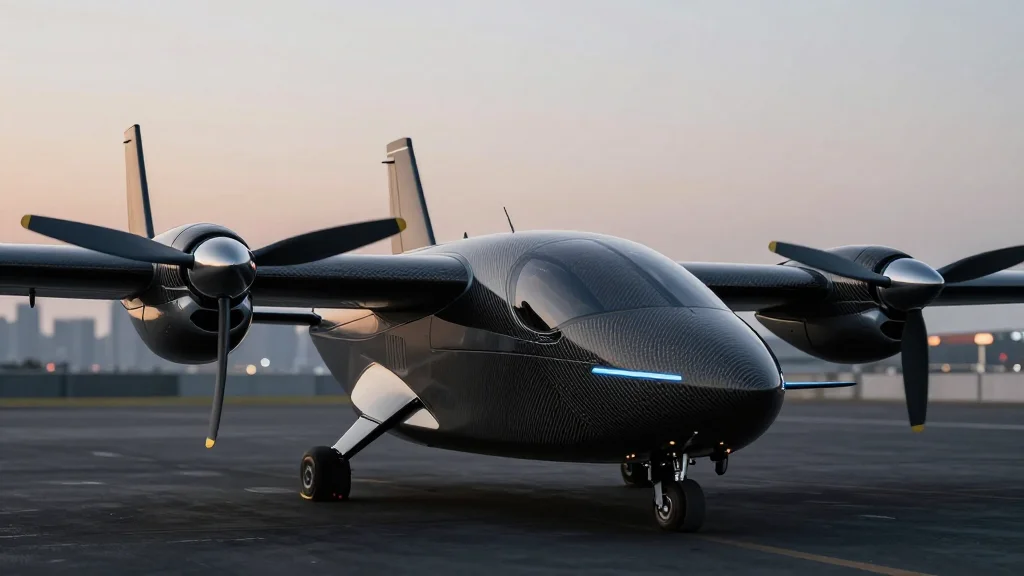
Marshall Aerospace Tests Flight Control Characteristics of Horizon Aircraft’s Cavorite X7
Companies Mentioned
Why It Matters
A validated 6‑DOF model accelerates certification and reduces development risk for hybrid‑electric VTOLs, positioning the Cavorite X7 for commercial air‑taxi and military applications.
Key Takeaways
- •Marshall Aerospace delivered a 6-DOF flight model for Horizon's X7
- •Model integrates aerodynamics, propulsion, and mass data for control system design
- •Enables Horizon to predict and optimize X7 response to pilot inputs
- •Supports certification path for hybrid‑electric VTOL in commercial and military markets
Pulse Analysis
The Cavorite X7 represents Horizon Aircraft’s push into hybrid‑electric vertical take‑off and landing (VTOL) platforms that promise lower emissions and quieter operations for urban air mobility and tactical missions. By marrying electric propulsion with conventional turbine power, the X7 aims to deliver the range and payload needed for short‑haul passenger services and rapid‑response military logistics. Industry analysts see such hybrid configurations as a transitional step toward fully electric air taxis, offering a practical balance of performance, infrastructure compatibility, and regulatory acceptance.
Marshall Aerospace’s contribution centers on a six‑degrees‑of‑freedom (6‑DOF) flight dynamics model that captures the X7’s aerodynamic surfaces, propulsion thrust vectors, and mass distribution. The model feeds into Horizon’s safety‑critical control system, allowing engineers to simulate how the aircraft reacts to pilot commands across the entire flight envelope. This high‑fidelity simulation reduces the need for costly flight‑test iterations, accelerates the certification timeline, and provides a quantitative basis for control‑law tuning, stability augmentation, and fault‑tolerant design.
The partnership signals growing collaboration between emerging air‑mobility firms and established aerospace service providers. A validated flight model not only smooths the path to certification with regulators such as the FAA and EASA but also reassures investors that the X7 can meet stringent safety standards required for commercial air‑taxi operations and defense contracts. As cities explore air‑taxi corridors and militaries evaluate rapid‑deployment platforms, the Cavorite X7’s progress could set a benchmark for hybrid‑electric VTOL performance, influencing future design standards and market adoption rates.
Marshall Aerospace tests flight control characteristics of Horizon Aircraft’s Cavorite X7
Comments
Want to join the conversation?
Loading comments...