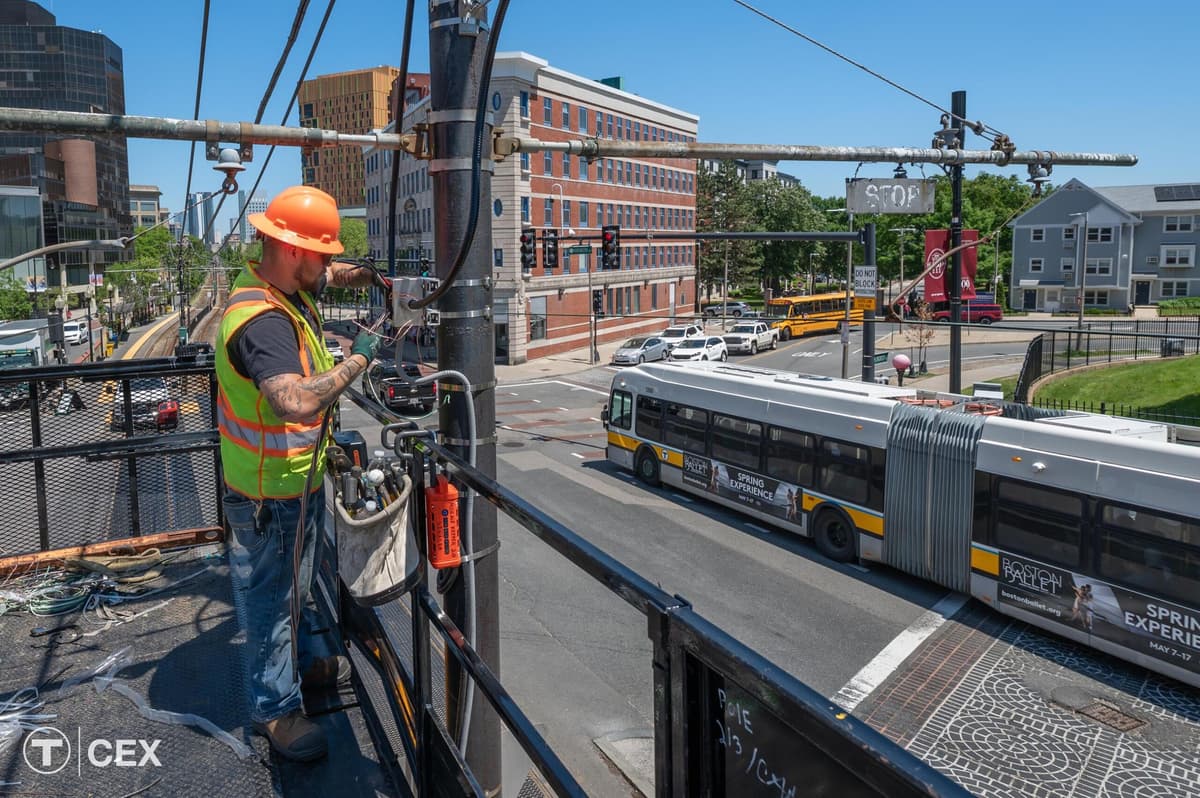
MBTA Completes GLTPS Work on Green Line E Branch
Why It Matters
Completing GLTPS adds a critical safety layer to Boston’s light‑rail network, improving reliability and protecting riders. The upgrade positions the MBTA alongside global transit standards for train protection.
Key Takeaways
- •GLTPS anchors installed across B, C, E branches.
- •Final wayside infrastructure completed after spring outages.
- •E‑branch service restored June 6, Symphony station remains closed.
- •Upgrades include elevators, life‑safety, signal and power work.
- •Project enhances collision avoidance and speed enforcement on Green Line.
Pulse Analysis
The Massachusetts Bay Transportation Authority’s Green Line Train Protection System (GLTPS) represents a pivotal upgrade to Boston’s light‑rail network. By continuously monitoring train speed and location, the system can issue real‑time warnings and, in its second phase, enforce speed limits to prevent overruns and collisions. This technology aligns the MBTA with modern European and Asian commuter rail standards, where automatic train protection is commonplace. Deploying GLTPS across the Green Line’s B, C, and E branches not only addresses long‑standing safety concerns but also lays the groundwork for future automation and more reliable headways.
The latest milestone was the completion of wayside anchor installation on the E‑branch, finalized after a seven‑day outage that halted trolley service between Government Center and Health Street. Service resumed on June 6, though Symphony Station remains closed for an estimated three‑year renovation that adds elevators and upgraded life‑safety systems. Concurrently, MBTA crews performed crossover track repairs at Heath Street, refreshed power distribution, inspected tunnels, and replaced fencing at the Museum of Fine Arts station. These coordinated efforts minimized disruption while delivering critical infrastructure that supports the GLTPS hardware.
From a business perspective, the GLTPS rollout reduces the risk of costly accidents and service delays, translating into higher rider confidence and potentially increased farebox revenue. For the transit industry, the project serves as a case study in retrofitting legacy light‑rail lines with advanced protection technology without extensive line shutdowns. As the second phase—full speed enforcement—rolls out, the MBTA can expect tighter schedule adherence and lower maintenance wear, reinforcing its commitment to a safer, more dependable urban mobility system.
MBTA Completes GLTPS Work on Green Line E Branch
Comments
Want to join the conversation?
Loading comments...