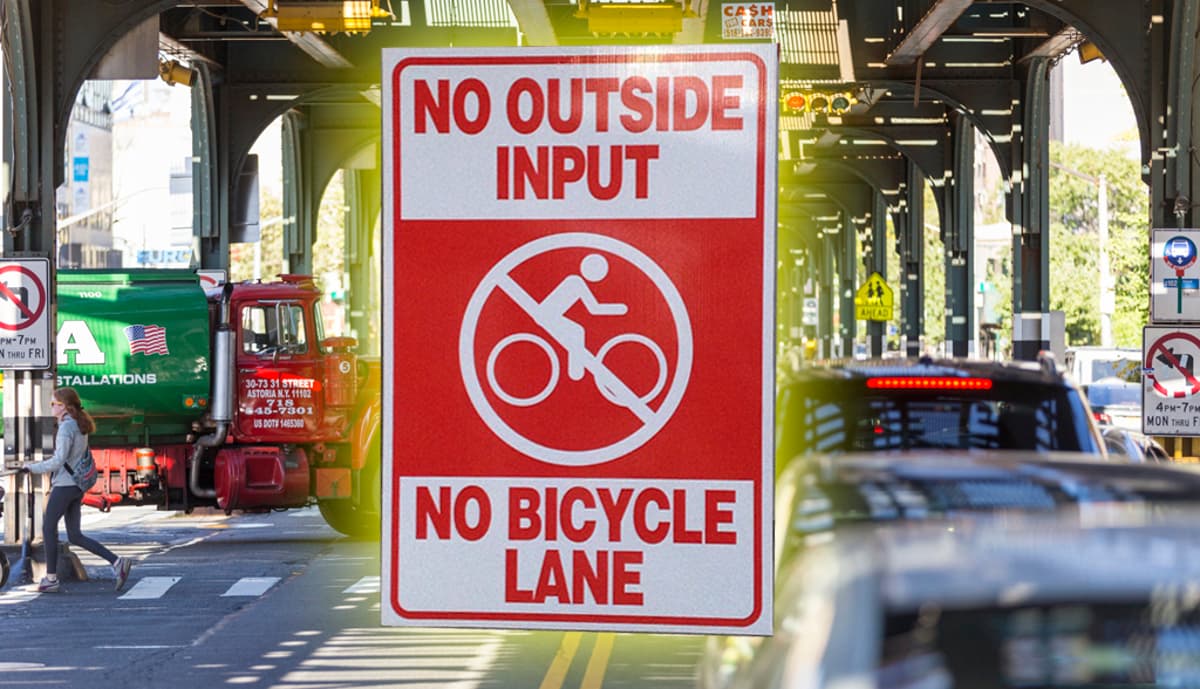
Meet the NIMBY’s Toxic Cousin: The NOMS (Not On My Street)
Key Takeaways
- •Rohmer labels anti‑bike opposition as NOMS, a car‑first ideology.
- •Study of D.C. public comments reveals ‘static scarcity’ and blame inversion.
- •Evidence shows bike lanes rarely increase congestion, contrary to NOMS claims.
- •Car‑supremacist attitudes persist across political lines, hindering equitable street design.
- •Policy shift requires disempowering vocal minorities and broader community engagement.
Pulse Analysis
The NOMS framework reframes a familiar NIMBY backlash into a transportation‑specific phenomenon, highlighting how everyday residents weaponize misconceptions about street capacity. Rohmer’s analysis of four years of D.C. public testimony uncovers two recurring logical fallacies: "static scarcity," which treats road space as a fixed commodity, and "blame inversion," which holds non‑drivers responsible for traffic problems they actually cause. By cataloguing these patterns, the study provides a diagnostic tool for planners to anticipate and address resistance before it stalls projects.
Empirical research consistently shows that adding protected bike lanes does not increase overall congestion; in many cases, traffic flow improves as drivers shift to alternative modes. Yet high‑profile figures such as USDOT Secretary Sean Duffy continue to cite unfounded fears, reinforcing a car‑supremacist narrative that privileges drivers over pedestrians and cyclists. This ideological bias is not confined to a single party or region—it surfaces in liberal and conservative communities alike, reflecting a deeper cultural attachment to automobile dominance that shapes policy decisions and funding allocations.
To break the NOMS cycle, policymakers must redesign community engagement processes. Rather than granting disproportionate influence to vocal, car‑centric minorities, agencies should broaden participation, ensuring that the majority of street users—cyclists, transit riders, pedestrians—have a meaningful voice. Strategies may include targeted outreach, transparent data sharing on congestion impacts, and pilot projects that demonstrate safety and mobility benefits. By confronting car‑supremacist attitudes as a moral and social issue, cities can accelerate the transition toward equitable, multimodal streets that align with climate objectives and public health priorities.
Meet the NIMBY’s Toxic Cousin: the NOMS (Not On My Street)
Comments
Want to join the conversation?