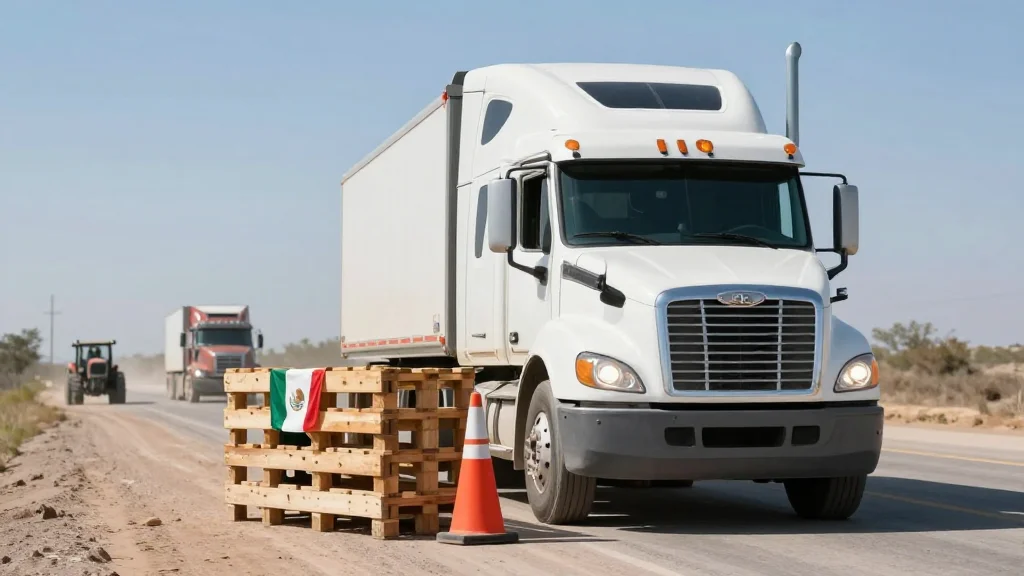
Mexico Freight Disruption Lingers as Truckers’ Strike Fractures
Why It Matters
The disruption threatens domestic supply chains and cross‑border trade, potentially raising freight costs and delaying deliveries across North America. Resolving the security and cost grievances is critical to restoring Mexico’s role as a vital corridor for U.S. imports and exports.
Key Takeaways
- •Blockades hit Mexico–Toluca, Veracruz, Guanajuato corridors.
- •Cargo theft causes 7+ billion pesos annual losses.
- •Diesel taxes and insecurity fuel protest demands.
- •Negotiations stalled; strike may extend indefinitely.
- •US tender reject index rising, tightening cross‑border capacity.
Pulse Analysis
The trucker and farmer walkout that began on Monday has quickly morphed into a logistics crisis across Mexico. Blockades on the Mexico‑Toluca toll plaza, Federal Highway 136, and routes in Guanajuato and Morelos have paralyzed traffic for hours, choking the country’s primary freight hub around Mexico City. Protesters cite a surge in cargo theft—over 6,200 reported robberies in 2025—and rising diesel taxes as existential threats to their businesses. With an estimated 7 billion pesos lost annually to theft, the security vacuum is a core driver of the unrest.
The movement shows early signs of fragmentation. While the National Association of Transporters (ANTAC) has pressed for talks, allied groups such as CANACAR have distanced themselves, warning that prolonged closures raise costs and jeopardize perishable goods. Negotiations with President Claudia Sheinbaum remain inconclusive, and some factions have temporarily lifted blockades pending dialogue. Analysts warn that without concrete security measures and tax relief, the strike could linger indefinitely, inflating freight rates and disrupting supply chains that connect central manufacturing hubs to ports and U.S. border crossings.
Cross‑border ramifications are already materializing. SONAR’s Outbound Tender Reject Index in the United States has climbed to 13‑14 percent, indicating tighter truckload capacity just as Mexican corridors falter. In Laredo, tender rejections are up 37 percent year‑over‑year, pushing more loads onto the spot market and amplifying cost volatility for shippers reliant on north‑south trade lanes. If the Mexican blockade persists, U.S. carriers may face additional bottlenecks, prompting higher freight premiums and longer transit times for goods moving between the two economies.
Mexico freight disruption lingers as truckers’ strike fractures
Comments
Want to join the conversation?
Loading comments...