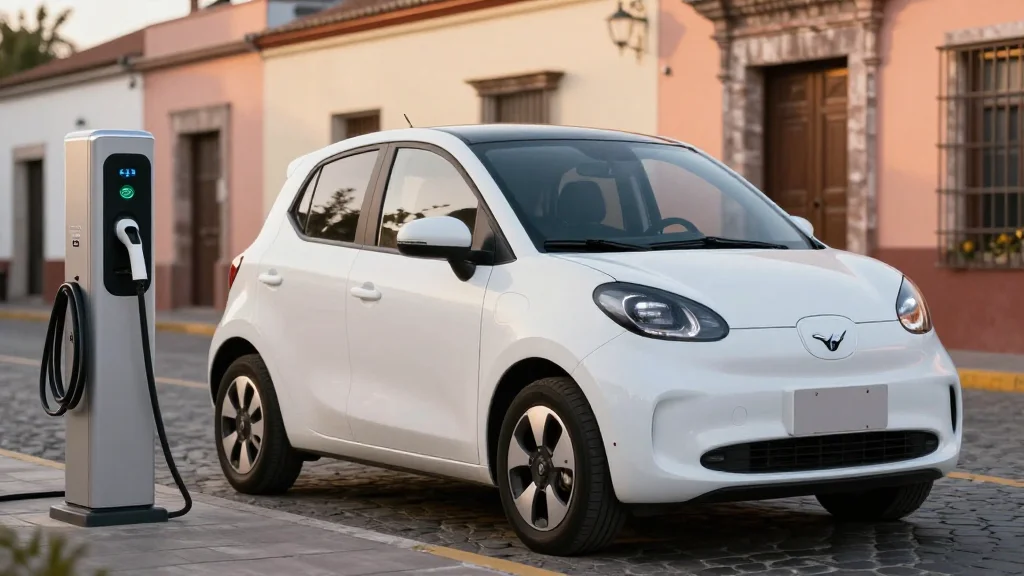
Mexico Launches Olinia Uno, First Home‑Grown EV Priced at $8,500

Why It Matters
The Olinia Uno signals a strategic pivot for Mexico’s automotive industry, moving from low‑cost assembly of foreign brands toward indigenous design and production of electric vehicles. By offering a sub‑$9,000 EV tailored to urban commuters, the project could democratize electric mobility for a market where 70 % of the population lives in cities and daily trips are typically under 30 km. Success would validate Mexico’s Plan México objectives, boost domestic supply chains, and reduce reliance on imported Chinese EVs that currently dominate the region’s affordable segment. Regionally, the launch could spur neighboring Latin American countries to invest in home‑grown EV platforms, creating a new competitive bloc that challenges both legacy automakers and Chinese entrants. The government‑backed model also raises questions about trade policy, especially as the United States tightens restrictions on Chinese‑designed vehicles. Mexico’s ability to export the Olinia—or a derivative cargo version—could reshape North American EV trade flows and influence future tariff negotiations.
Key Takeaways
- •President Claudia Sheinbaum unveiled Olinia Uno, Mexico’s first domestically designed EV, priced at 150,000 pesos (~$8,500).
- •The six‑passenger mini‑car offers a 125 km (77 mi) range, 50 km/h top speed, and 14.7 kWh battery.
- •Operating cost is about 49 cents per kilometer, promising annual fuel savings of roughly $2,700 per owner.
- •Project Olinia aims for 2,000 public chargers in Mexico City, State of Mexico and Puebla before the 2026 World Cup.
- •Domestic content stands at 50 % now, with a target of 75 % by 2030, supporting Mexico’s Plan México supply‑chain goals.
Pulse Analysis
Mexico’s Olinia Uno is more than a symbolic showcase; it is a test case for a government‑led, cost‑focused EV strategy that could rewrite the economics of electric mobility in emerging markets. Historically, low‑cost EV adoption has been hampered by high upfront prices and limited charging infrastructure. By pricing the Olinia below $9,000 and leveraging existing household outlets for charging, the program directly addresses both barriers. The projected operating cost of $0.49 per kilometer is competitive even against subsidized gasoline vehicles, suggesting a clear value proposition for price‑sensitive urban commuters.
The initiative also reflects a broader shift in Mexico’s industrial policy. For decades, the country has been a manufacturing base for foreign automakers, contributing to a trade surplus but offering limited technological spillovers. Olinia’s 50 % domestic parts content, backed by a 25‑million‑peso research fund, indicates a deliberate move to capture higher‑value segments of the supply chain. If the 75 % domestic content goal is met, Mexico could develop a self‑sustaining EV component ecosystem, reducing exposure to external supply shocks and tariffs.
However, the project faces headwinds. Scaling production to meet national demand will require substantial capital investment in tooling, workforce training, and battery sourcing—areas where China currently holds a decisive advantage. Moreover, the U.S. political climate, with proposed bans on Chinese‑designed cars, could either open a niche for a Mexican‑made EV or create new trade frictions if the Olinia seeks export markets beyond Latin America. The next 12‑month window, culminating in the pilot fleet rollout and the post‑World Cup cargo variant, will be critical in determining whether Olinia can transition from a government‑backed prototype to a commercially viable competitor in the global EV arena.
Mexico Launches Olinia Uno, First Home‑Grown EV Priced at $8,500
Comments
Want to join the conversation?
Loading comments...