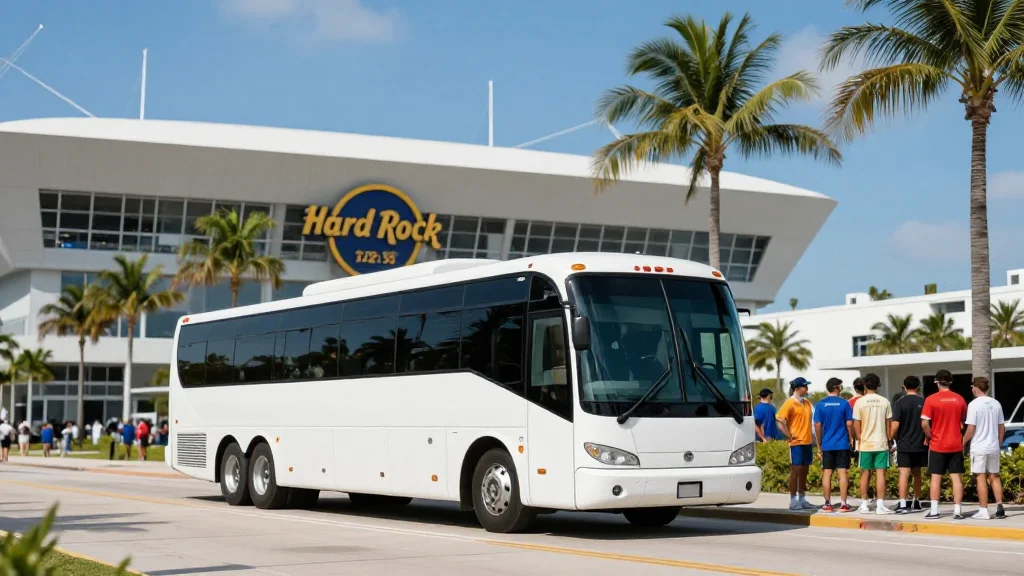
Miami‑Dade Rolls Out Free Shuttle Service for FIFA World Cup Matches

Companies Mentioned
Why It Matters
The shuttle service directly addresses the logistical challenge of moving hundreds of thousands of fans while limiting congestion on Miami’s already strained road network. By offering a zero‑fare, ticket‑validated option, the county reduces reliance on personal vehicles, which can lower emissions and improve air quality during a high‑profile international event. Moreover, the initiative showcases how local governments can rapidly mobilize existing transit assets to meet extraordinary demand, setting a precedent for future large‑scale events across the United States. Beyond the immediate World Cup context, the program highlights the potential for public‑private partnerships—such as the coordination with Brightline and Broward Transit—to create seamless, cross‑jurisdictional mobility solutions. Successful execution could encourage other municipalities to adopt similar models, fostering a more resilient and adaptable transportation ecosystem nationwide.
Key Takeaways
- •Free shuttle service operates on seven World Cup match days from June 15 to July 18.
- •Four Miami‑Dade hubs and one Broward hub serve verified ticket holders without pre‑booking in Miami‑Dade.
- •Broward County requires pre‑booking and charges a $2 fare per shuttle trip.
- •Parking at Hard Rock Stadium can exceed $249 per spot, making the free shuttles a cost‑effective alternative.
- •Estimated 600,000+ attendees expected for the Miami‑area World Cup matches.
Pulse Analysis
Miami‑Dade’s decision to launch a free, ticket‑validated shuttle network reflects a broader shift toward event‑centric mobility planning. Historically, major sporting events have relied on temporary park‑and‑ride lots and police‑directed traffic, often resulting in gridlock and public frustration. By integrating existing rail, bus, and intercity rail services, the county sidesteps the need for costly, short‑lived infrastructure while still delivering a high‑capacity solution. This approach aligns with the growing emphasis on multimodal connectivity championed by the Federal Transit Administration, which encourages agencies to maximize the utility of legacy assets.
From a competitive standpoint, the Miami‑Dade model could pressure neighboring jurisdictions—particularly those also hosting World Cup matches—to match or exceed the service level. Broward’s $2 fare, while modest, introduces a pricing differential that may influence rider preferences and inter‑county negotiations. If ridership data shows a significant modal shift away from private cars, policymakers could justify expanding free‑shuttle programs for other large events, potentially reshaping funding allocations toward transit operations rather than parking infrastructure.
Looking ahead, the success metrics—ridership counts, traffic speed improvements, and emissions reductions—will be scrutinized by both local officials and national transportation bodies. Positive outcomes could accelerate the adoption of similar demand‑responsive transit models for future mega‑events, including the 2026 World Cup matches slated for other U.S. cities. Conversely, any operational hiccups, such as overcrowding or scheduling gaps, may temper enthusiasm and prompt a reevaluation of free‑service viability. The Miami‑Dade shuttle experiment thus serves as a real‑time laboratory for balancing fan experience, fiscal responsibility, and sustainable mobility.
Miami‑Dade Rolls Out Free Shuttle Service for FIFA World Cup Matches
Comments
Want to join the conversation?
Loading comments...