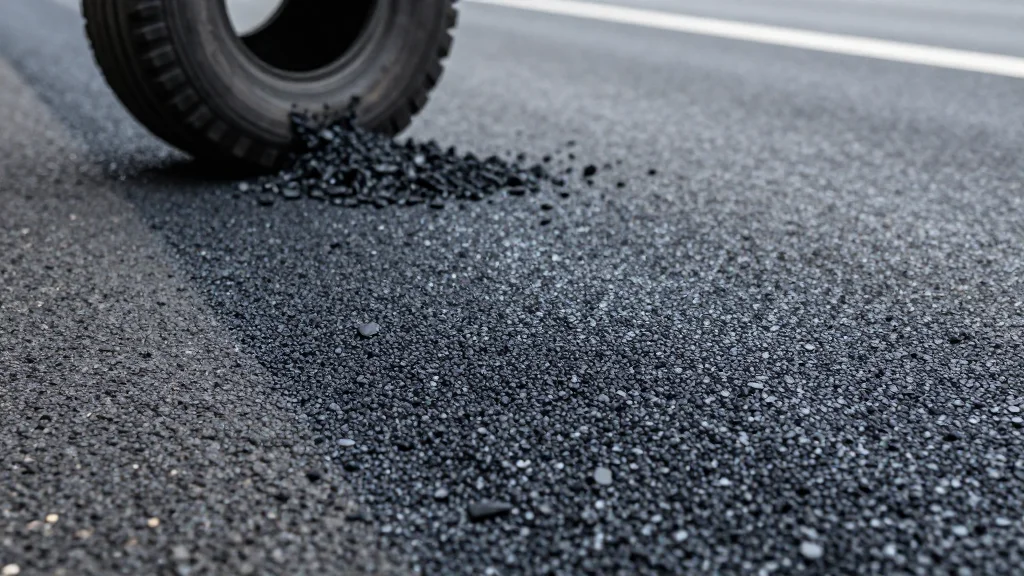
Michigan Tech Turns Scrap Tires Into Longer‑Lasting Roads, Cutting Waste and Repair Costs

Why It Matters
Diverting millions of scrap tires from landfills and fire‑prone piles directly tackles a longstanding environmental hazard in Michigan, reducing mosquito breeding grounds, rodent habitats, and the risk of catastrophic tire fires. At the same time, extending road life cuts the frequency of costly resurfacing projects, freeing up public funds for other infrastructure needs. If adopted statewide, the technology could create a circular economy for tire waste, turning a liability into a revenue‑generating material for road agencies. Beyond Michigan, the model offers a template for other regions grappling with tire stockpiles and aging road networks. By demonstrating that micronized rubber can improve pavement resilience without compromising safety, the project could influence federal transportation policy, encouraging broader investment in sustainable road‑building practices and potentially reshaping the national approach to infrastructure renewal.
Key Takeaways
- •Michigan Tech researchers partner with 20+ county road commissions to embed micronized tire rubber in asphalt.
- •Rubber‑enhanced chip seal on a Bay County road has lasted five years, outlasting traditional sealants.
- •State generates nearly 10 million scrap tires annually—about one per resident.
- •Policy shift in 2024 removed tire‑derived fuel from renewable lists, leaving 2.5‑3.5 million tires without a disposal path.
- •Micronized rubber process creates a fine powder that binds with asphalt, adding flexibility for freeze‑thaw cycles.
Pulse Analysis
The Michigan tire‑to‑road initiative arrives at a moment when U.S. infrastructure funding is under intense scrutiny. The bipartisan Infrastructure Investment and Jobs Act allocated $1.2 trillion for roads, bridges, and transit, yet many states still struggle to meet maintenance backlogs. By extending pavement life, the rubber‑enhanced seal directly addresses the "deferred maintenance" problem that has plagued state DOTs for years. If the durability claims hold, the technology could reduce the average 5‑year resurfacing cycle to 10‑15 years, delivering billions in avoided costs over the next decade.
From a market perspective, the program creates a new demand stream for tire‑recycling facilities, which have historically competed for low‑margin fuel‑derived revenue. The shift toward a higher‑value construction material could spur investment in micronization plants, especially in the Midwest where tire stockpiles are largest. This aligns with broader sustainability trends, as construction firms increasingly seek recycled inputs to meet ESG goals.
Challenges remain. The upfront cost of micronized rubber production is higher than traditional chip seal materials, and widespread adoption will hinge on clear cost‑benefit data. Moreover, scaling the process requires coordination among tire collectors, recyclers, and road agencies—a supply chain that has been fragmented historically. Nonetheless, the pilot’s early success provides a compelling proof‑of‑concept that could catalyze policy incentives, such as tax credits for recycled‑content road materials, and set the stage for a national shift toward more resilient, circular infrastructure.
Overall, Michigan’s experiment could redefine how states manage two persistent problems—tire waste and crumbling roads—by turning a pollutant into a performance‑enhancing asset, a narrative that resonates with both environmentalists and fiscal conservatives alike.
Michigan Tech Turns Scrap Tires into Longer‑Lasting Roads, Cutting Waste and Repair Costs
Comments
Want to join the conversation?
Loading comments...