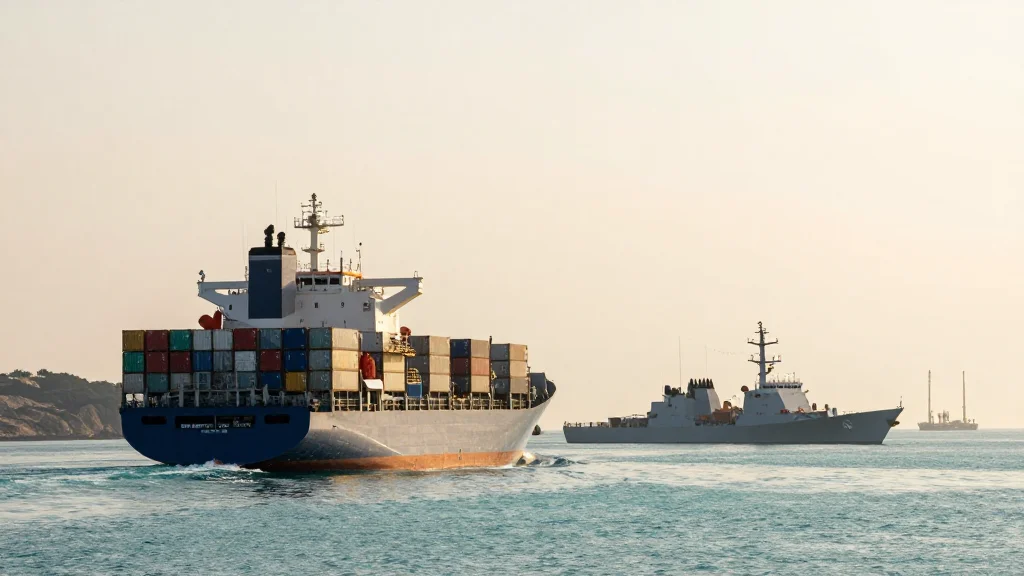
Middle East Crisis Live: Iran ‘Offers to End Chokehold on Strait of Hormuz’
Why It Matters
Reopening Hormuz without nuclear concessions could ease global oil price volatility, yet the stalemate threatens supply‑chain stability and amplifies geopolitical risk for energy markets.
Key Takeaways
- •Iran proposes Hormuz reopening if US lifts blockade, ignoring nuclear demands
- •US President Trump insists Tehran never acquires nuclear weapons
- •Pakistan relays proposal; UK and UN reject Hormuz tolls
- •Russia pledges diplomatic support to Iran amid escalating Middle East tensions
- •Hormuz disruption raises global oil prices and supply‑chain costs
Pulse Analysis
The Strait of Hormuz, a chokepoint through which roughly 20% of the world’s oil passes, has become the latest bargaining chip in the fraught Iran‑US relationship. Tehran’s latest overture—offering to cease its maritime pressure in return for an end to the U.S. blockade—signals a strategic shift, attempting to separate the oil‑shipping issue from the long‑standing nuclear dispute. By routing the proposal through Pakistan, Iran hopes to leverage regional mediation channels while testing whether Washington will entertain a partial de‑escalation without compromising its non‑proliferation red line.
Energy analysts warn that even a tentative reopening of Hormuz could ripple through global markets. Shipping firms have faced soaring freight rates and insurance premiums as vessels reroute around the Arabian Sea, inflating the cost of crude and refined products. The UN’s International Maritime Organization has reiterated that any tolls or fees imposed on trans‑it ships lack legal basis, reinforcing the principle of freedom of navigation. Should the United States maintain its demand for a nuclear‑free Iran, the stalemate may persist, keeping oil benchmarks elevated and pressuring downstream industries already grappling with inflationary pressures.
The diplomatic calculus now extends beyond Washington and Tehran. Russia’s pledge of support to Iran adds a layer of complexity, offering Tehran a counterweight to Western pressure and potentially reshaping the regional balance of power. Meanwhile, European allies, notably the United Kingdom, are urging a multilateral solution that restores unimpeded shipping without rewarding coercive tactics. The coming weeks will test whether a limited, conditional opening of the strait can be achieved, or if the impasse will deepen, further destabilizing energy supplies and amplifying geopolitical tensions in the Middle East.
Middle East crisis live: Iran ‘offers to end chokehold on strait of Hormuz’
Comments
Want to join the conversation?
Loading comments...