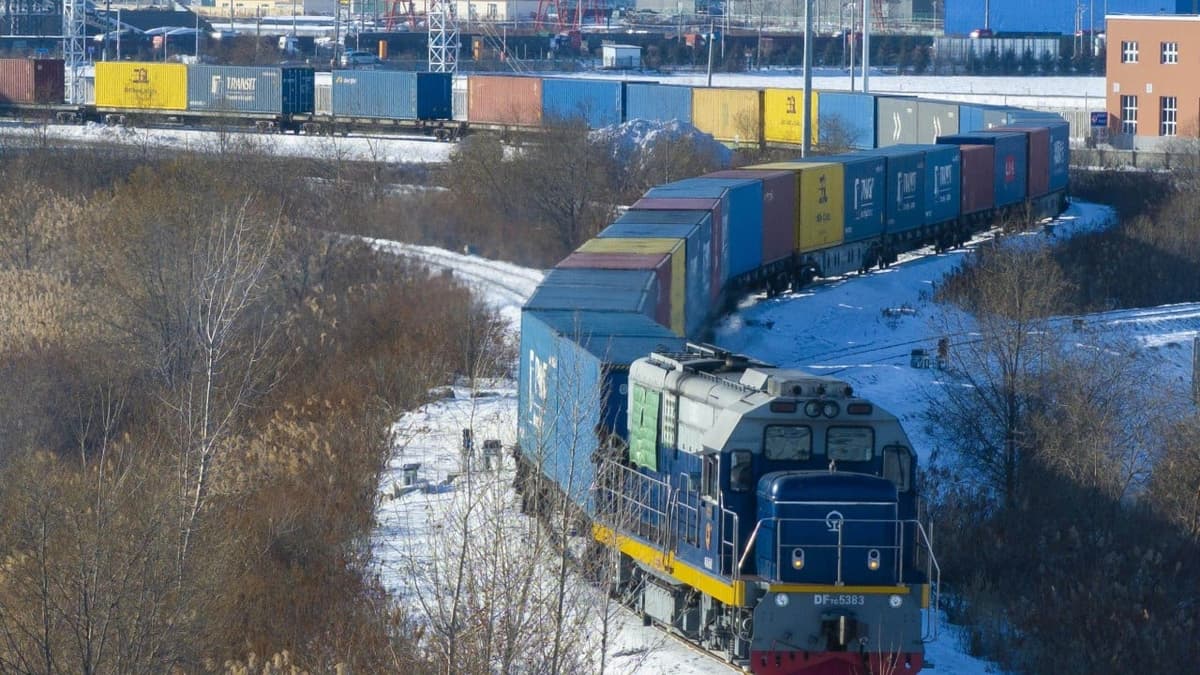
Middle East Shipping Crisis Elevates China-Europe Railway’s Profile
Companies Mentioned
Why It Matters
Rail provides supply‑chain insurers and policymakers a land‑based alternative that reduces exposure to maritime disruptions and sanctions, reshaping Eurasian trade dynamics. Its growth also deepens China’s geopolitical leverage while prompting European scrutiny of dependency risks.
Key Takeaways
- •Rail trips doubled to over 17,000 per year by 2023.
- •Middle Corridor adds resilience, bypassing Russian routes.
- •China‑Europe rail now carries about 1% of total freight volume.
- •European firms view rail as hedge against maritime chokepoint risks.
- •Central Asian ports upgraded, becoming key trans‑Eurasian logistics hubs.
Pulse Analysis
The pandemic acted as a catalyst for the China‑Europe railway, filling gaps left by collapsed air capacity and congested seaports. By 2023, the network handled a record number of freight trains, cementing its reputation for reliability during crises. This surge was supported by harmonised customs procedures, standardized container tracking, and bilateral agreements that streamlined cross‑border operations, turning a logistical curiosity into a viable commercial corridor.
Strategically, the trans‑Caspian Middle Corridor has become the network’s linchpin. Stretching from Kazakhstan’s Aktau port across the Caspian Sea to Azerbaijan, Georgia and Turkey, it sidesteps Russian territory and the vulnerable Malacca Strait. Massive upgrades—modernised ports, expanded Baku‑Tbilisi‑Kars capacity, and new dry ports like Kazakhstan’s Khorgos—have turned Central Asian states into critical transit hubs. For Europe, the corridor offers a diversification tool, allowing firms to de‑risk supply chains without abandoning Chinese markets, while China gains a land‑based conduit that shields trade from naval blockades.
Nevertheless, the rail link faces hurdles. At roughly 1% of total China‑Europe freight volume, its scale remains modest, constrained by differing rail gauges and limited Caspian ferry capacity. Environmental groups question its carbon footprint, and European manufacturers worry about Chinese rolling‑stock competition. Yet, as maritime chokepoints become increasingly weaponised—evidenced by recent Red Sea and Hormuz disruptions—the railway’s strategic value as a resilience insurance grows. Continued investment and gauge‑standardisation could push the rail corridor from niche alternative to essential backbone of Eurasian logistics.
Middle East shipping crisis elevates China-Europe railway’s profile
Comments
Want to join the conversation?
Loading comments...