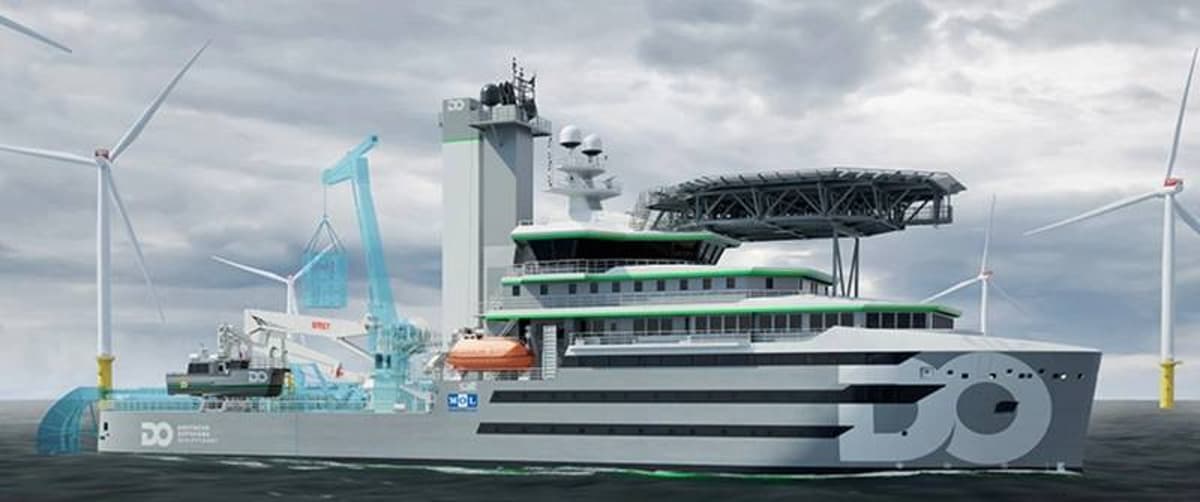
MOL Enters European Offshore Wind CSOV Market
•March 9, 2026
0
Why It Matters
The partnership positions MOL to capture growing demand for offshore wind support vessels in Europe, reducing reliance on volatile bulk‑shipping cycles and enhancing its revenue diversification.
Key Takeaways
- •MOL co‑owns two CSOVs with Schoeller Holdings
- •Vessels slated for 2027 delivery, built in China
- •MOL invests in German operator Deutsche Offshore Schifffahrt
- •Each CSOV holds 120 crew, 96m length, dynamic positioning
- •Expands MOL's offshore wind reach from Asia to Europe
Pulse Analysis
Europe’s offshore wind sector is entering a rapid expansion phase, driven by ambitious renewable targets and a pipeline of multi‑gigawatt projects slated for the next decade. As turbines grow larger and installation windows tighten, the need for specialized support vessels—particularly commissioning service operation vessels (CSOVs)—has surged. CSOVs provide on‑site accommodation, dynamic positioning, and safe crew transfer systems that are essential for the construction, testing, and hand‑over phases of wind farms. Analysts estimate that vessel demand could double by 2030, creating a lucrative niche for maritime operators.
Mitsui O.S.K. Lines’ entry into this niche reflects a deliberate pivot away from its traditional bulk‑carrier focus toward higher‑margin, renewable‑energy‑linked services. By co‑owning two 96‑meter CSOVs with Schoeller Holdings and backing German operator Deutsche Offshore Schifffahrt, MOL secures both asset ownership and operational expertise in a market where local knowledge is critical. The joint venture also spreads capital risk while granting MOL access to European contracts that were previously out of reach. This diversification aligns with the company’s broader strategy to mitigate exposure to cyclical shipping rates and capture stable, long‑term charter revenues.
The partnership could reshape competitive dynamics among offshore‑wind vessel providers, pressuring incumbents to upgrade fleets or form similar alliances. With capacity for 120 technicians and equipped with motion‑compensated gangways, the new CSOVs meet the technical specifications demanded by the latest turbine designs. If European policy incentives remain robust, MOL’s early foothold may translate into additional orders and potential expansion into decommissioning services. Stakeholders should watch how the joint venture leverages the vessels’ versatility across both wind and oil‑and‑gas projects, potentially setting a template for cross‑sector asset utilization.
MOL Enters European Offshore Wind CSOV Market
0
Comments
Want to join the conversation?
Loading comments...