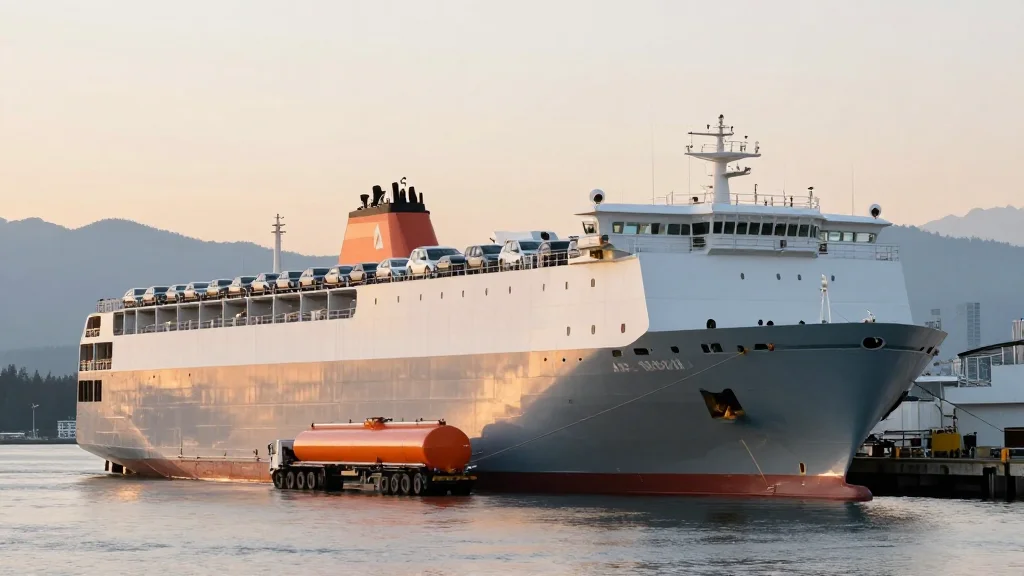
MOL Signs First Annual LNG Bunkering Contract with Seaspan Energy
Why It Matters
The agreement accelerates LNG adoption on the West Coast, helping MOL meet emissions targets while expanding Canada’s LNG bunkering infrastructure. It signals to the broader shipping industry that long‑term, volume‑based LNG contracts are becoming commercially viable.
Key Takeaways
- •MOL's first annual LNG bunkering deal signed with Seaspan Energy.
- •Contract covers car carriers operating out of Vancouver port.
- •First bunkering completed March 1, 2026 on Lake Herman.
- •7,600‑cbm Seaspan Garibaldi supplies LNG to 7,050‑ceu carrier.
- •Deal signals rising demand for low‑carbon marine fuel West Coast.
Pulse Analysis
The maritime sector is under mounting pressure to curb greenhouse‑gas emissions, and LNG has emerged as a transitional fuel that offers a substantial carbon reduction compared with traditional heavy fuel oil. For shipowners like Mitsui O.S.K. Lines, securing a reliable, long‑term supply of LNG is critical to de‑risking fleet conversions and meeting tightening regulatory standards in key markets such as North America and Asia. By locking in an annual contract, MOL not only guarantees fuel availability for its car carriers but also signals confidence in the commercial maturity of LNG bunkering services.
Seaspan Energy’s involvement brings a newly built, 7,600‑cubic‑meter LNG bunker vessel, the Garibaldi, into active service on the West Coast. The vessel’s first delivery to the 7,050‑CEU Lake Herman in early March demonstrated operational readiness and set a precedent for subsequent bunkering cycles through April. Vancouver’s port authority has been investing in on‑shore LNG storage and off‑loading infrastructure, positioning the terminal as a hub for clean‑fuel adoption in the Pacific corridor. This partnership therefore strengthens the local supply chain, reduces turnaround times for vessels, and enhances the port’s attractiveness to environmentally conscious shippers.
Industry analysts view the MOL‑Seaspan contract as a bellwether for broader market trends. As more carriers pursue LNG retrofits, the demand for annualized fuel contracts is expected to rise, prompting additional investments in bunkering fleets and terminal capacity across North America and Europe. While LNG remains a bridge fuel pending the rollout of zero‑emission alternatives like ammonia or hydrogen, the economics of bulk procurement can lower per‑tonne costs, making the transition more financially palatable. In the longer term, the success of such agreements could accelerate the shift toward a more diversified, low‑carbon marine fuel portfolio, reshaping competitive dynamics and influencing future regulatory frameworks.
MOL signs first annual LNG bunkering contract with Seaspan Energy
Comments
Want to join the conversation?
Loading comments...