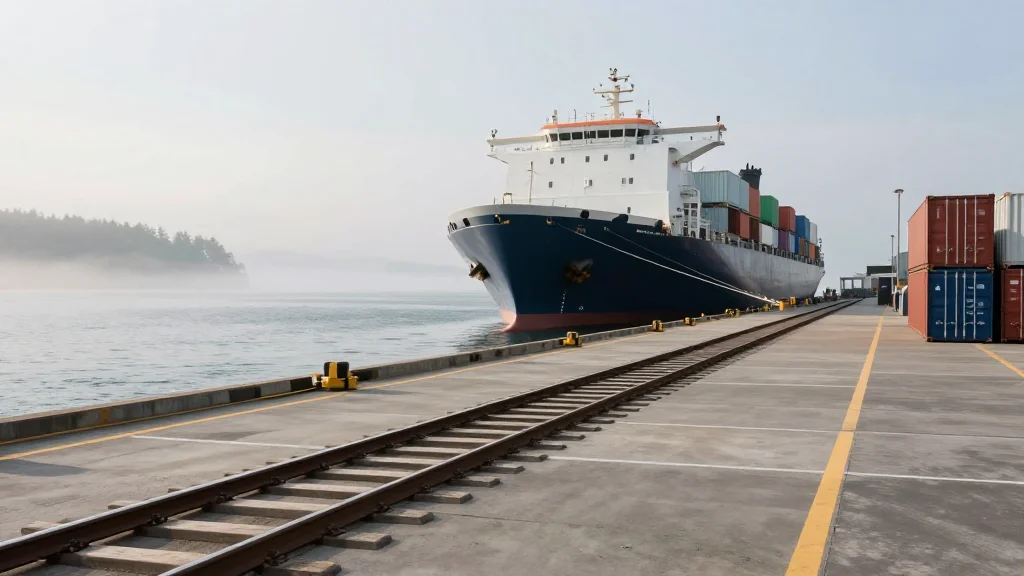
More Federal Funding for Oregon Container Port — and It’s Not in Portland
Companies Mentioned
Why It Matters
The funding bolsters a major freight corridor in rural Oregon, expanding U.S. export capacity and reducing dependence on congested Pacific ports. It also positions Coos Bay as a strategic alternative for shippers seeking resilient, inland‑linked logistics solutions.
Key Takeaways
- •$11.25M federal grant awarded to Coos Bay's PCIP project
- •Project aims to build a ship‑to‑rail terminal 200 mi south of Portland
- •State pledged $100M toward $2.3B total development cost
- •PCIP could generate up to 8,000 supply‑chain jobs
- •Enhances West Coast freight options, reducing reliance on Portland terminal
Pulse Analysis
The Pacific Coast Intermodal Port (PCIP) represents a bold shift in Oregon’s freight strategy, moving the focus from the struggling Port of Portland to a new hub on the South Coast. By leveraging a $11.25 million federal grant and a $100 million state commitment, the project targets a $2.3 billion investment that will upgrade the North Spit rail corridor and integrate the Coos Bay Rail Line. This infrastructure upgrade promises faster, more reliable connections between Pacific shipping lanes and Midwest rail networks, addressing capacity constraints that have plagued traditional West Coast gateways.
Economic analysts view PCIP as a catalyst for regional job growth and supply‑chain diversification. Estimates from local officials suggest the terminal could support as many as 8,000 jobs across construction, operations, and ancillary services. For agricultural exporters and manufacturers, the proximity to empty container pools reduces turnaround times and lowers shipping costs, making Oregon’s products more competitive in global markets. Moreover, the project’s multimodal design offers shippers alternative routing options, mitigating risks associated with congestion at larger ports in California, Vancouver, and Prince Rupert.
Despite its promise, PCIP faces scrutiny over cost overruns and environmental impact. Critics argue that the $2.3 billion price tag may strain public finances, while environmental groups raise concerns about habitat disruption on the North Spit. Nonetheless, bipartisan political backing—from the state’s governor to congressional leaders—underscores the strategic importance of expanding U.S. maritime infrastructure. If realized, the Coos Bay hub could reshape West Coast logistics, providing a resilient, inland‑linked gateway that aligns with evolving global trade patterns.
More federal funding for Oregon container port — and it’s not in Portland
Comments
Want to join the conversation?
Loading comments...