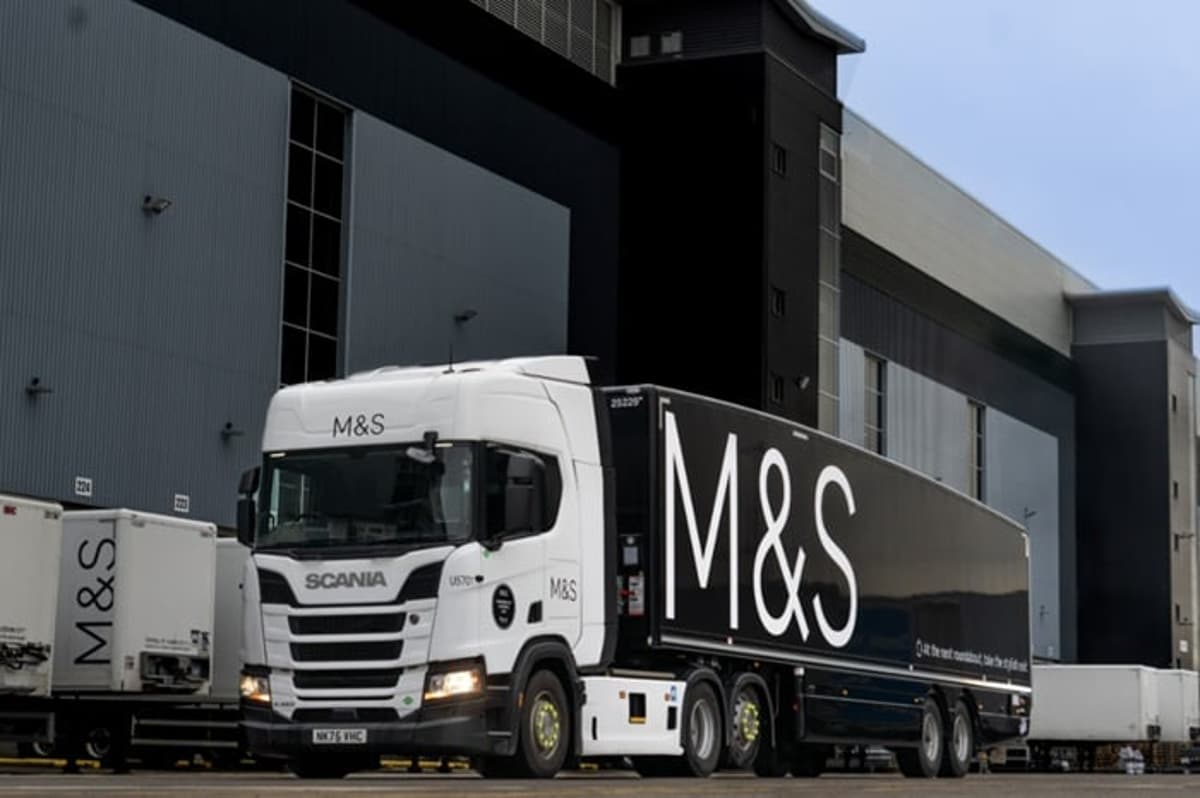
M&S to Expand Low Emission Heavy Goods Vehicle Fleet
Companies Mentioned
Why It Matters
The expansion accelerates M&S’s decarbonisation of logistics, reducing reliance on diesel and lowering supply‑chain emissions. It also showcases a scalable alternative‑fuel model that could prompt broader adoption across the retail sector.
Key Takeaways
- •M&S will have >300 bio‑CNG trucks by March 2027.
- •Bio‑CNG trucks cut CO₂ emissions up to 85% versus diesel.
- •Long‑term deal with CNG Fuels adds mobile refuelling at distribution centres.
- •CNG Fuels network aims to support 20,000 trucks daily by 2028.
- •M&S also runs 13 battery‑electric HGVs and five electric Rigids.
Pulse Analysis
Retail logistics have become a focal point for carbon‑reduction strategies, as transportation accounts for a sizable share of a retailer’s overall emissions. Biomethane, refined into bio‑CNG, offers a drop‑in replacement for diesel with a proven supply chain, allowing companies like Marks & Spencer to cut emissions without overhauling vehicle architecture. By aligning the fleet upgrade with its Plan A Net Zero roadmap, M&S leverages a fuel that delivers up to an 85% reduction in CO₂, bridging the gap between diesel dependence and full electrification.
The fleet expansion hinges on a strategic partnership with CNG Fuels, which will install mobile refuelling stations at M&S distribution hubs. This infrastructure ensures daily refuelling capacity for more than 300 trucks, while the broader CNG Fuels network scales to accommodate 20,000 vehicles per day by 2028. Such a coordinated approach mitigates range anxiety and operational disruption, offering a pragmatic path for large‑scale adoption of low‑carbon fuels in high‑volume supply chains. The inclusion of 13 battery‑electric HGVs and five electric Rigids further diversifies M&S’s decarbonisation toolkit, positioning the retailer to balance immediate emissions cuts with longer‑term electrification goals.
M&S’s move signals a shift for the wider retail and logistics sectors, where the economics of bio‑CNG are becoming increasingly competitive against diesel and, in some cases, battery‑electric solutions. As regulators tighten emissions standards and consumers demand greener practices, retailers that invest early in alternative‑fuel infrastructure can secure cost advantages and brand credibility. The success of M&S’s bio‑CNG rollout may encourage peers to pursue similar partnerships, accelerating the transition toward a lower‑carbon freight ecosystem across the industry.
M&S to expand low emission heavy goods vehicle fleet
Comments
Want to join the conversation?
Loading comments...