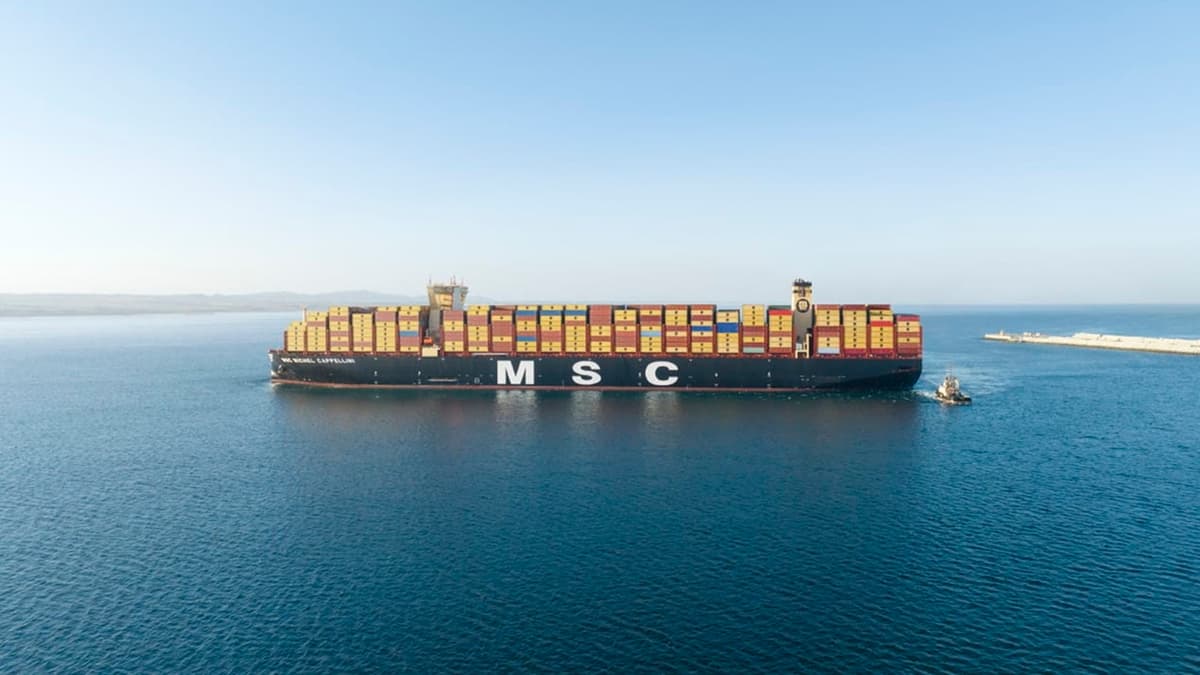
MSC Controls over One-Fifth of the Container Shipping Market
Companies Mentioned
Why It Matters
MSC’s dominance reshapes competitive dynamics, pressuring rivals to rethink fleet and service strategies. The shift could influence freight rates, capacity allocation, and the balance of power in global supply chains.
Key Takeaways
- •MSC holds 21.5% of global container capacity
- •Maersk's share fell to 13.7%, lowest in 20 years
- •MSC's growth outpaces rivals since 2020 pandemic surge
- •Top five carriers now split 66% of market capacity
- •MSC doubled its market share from 2010 levels
Pulse Analysis
MSC’s ascent to a 21.5% share of worldwide container capacity marks a watershed moment for the maritime industry. Historically, the market has been fragmented among a handful of carriers, but MSC’s aggressive post‑pandemic expansion—fuelled by new vessel orders and strategic acquisitions—has pushed it past Maersk’s long‑standing dominance. The milestone not only sets a new benchmark for scale but also underscores the shifting economics of global trade, where larger fleets can leverage economies of scale to offer more competitive pricing and broader service networks.
The ripple effects are already evident. Maersk, once the undisputed leader, trimmed its fleet to roughly 4.2 million TEU and redirected resources toward integrated logistics, aiming to become a supply‑chain orchestrator rather than a pure carrier. This strategic pivot leaves Maersk vulnerable to market share erosion, as customers increasingly favor carriers with extensive capacity footprints. Meanwhile, rivals such as CMA CGM, Cosco and Hapag‑Lloyd must decide whether to pursue similar fleet expansions, form alliances, or double down on niche services to retain relevance in a market now dominated by MSC.
Looking ahead, MSC’s market‑share surge could attract regulatory scrutiny, especially concerning competition and port access. Investors will watch MSC’s balance sheet closely, as continued vessel procurement demands substantial capital. For shippers, the evolving hierarchy may translate into tighter capacity allocation and potential rate volatility, prompting a reassessment of carrier portfolios. Ultimately, MSC’s growth signals a new era where scale, digital integration, and strategic agility will dictate success in container shipping.
MSC controls over one-fifth of the container shipping market
Comments
Want to join the conversation?
Loading comments...