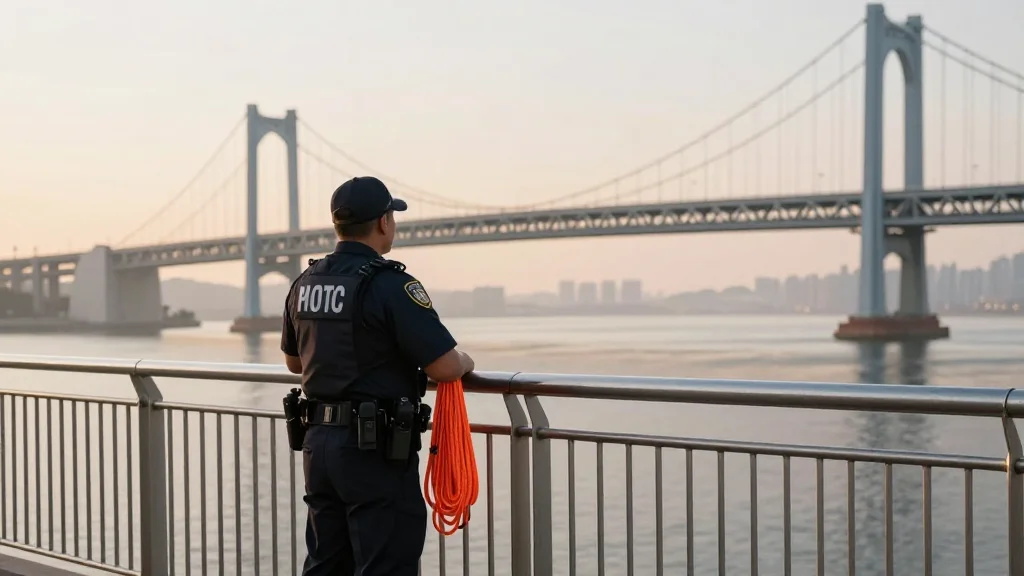
MTA Police Officers Rescue Woman From Whitestone Bridge Ledge

Why It Matters
The rescue illustrates how transportation infrastructure can become a critical venue for emergency response, especially for mental‑health crises. By showcasing the MTA Police’s ability to intervene swiftly, the incident reinforces the importance of integrating crisis‑intervention training into transit‑security protocols. It also raises questions about bridge design safety features, such as the strength of signage that may become a lifeline in emergencies. Beyond the immediate heroism, the event highlights the broader societal responsibility of transit agencies to provide accessible mental‑health resources. The inclusion of crisis‑hotline information in the aftermath signals a shift toward a more holistic approach to commuter safety, where physical and psychological well‑being are treated as interconnected priorities.
Key Takeaways
- •MTA Police officers Raheem Uddin and Jesusalberto Fernandez rescued a woman from the Whitestone Bridge ledge on April 13.
- •The woman was hanging from a flimsy DOT sign; officers engaged her in a five‑minute dialogue before pulling her to safety.
- •MTA Police Benevolent Association President Joseph Pugliese called the rescue "absolutely heroic" and praised the officers' training.
- •The incident underscores the need for mental‑health crisis protocols on transit infrastructure.
- •MTA plans a summer briefing on crisis response and may review bridge signage durability.
Pulse Analysis
The Whitestone Bridge rescue is a vivid reminder that transit systems are more than conduits for movement; they are public spaces where life‑saving interventions can occur. Historically, transit agencies have focused on physical safety—track inspections, structural integrity, and crowd control. This episode forces a recalibration, urging agencies to embed mental‑health expertise within their operational playbooks. The MTA’s swift acknowledgment of crisis hotlines suggests a growing recognition that commuter stressors can manifest in extreme actions, and that transit staff are often the first point of contact.
From a risk‑management perspective, the incident may accelerate reviews of bridge hardware. The officer’s description of the sign as “flimsy” points to a potential liability: signage that can support a person in distress should meet higher load standards. Upgrading such fixtures could become a new line item in capital budgets, especially as cities grapple with aging infrastructure.
Finally, the public praise for the officers highlights a branding opportunity for the MTA. By foregrounding the humane side of its police force, the agency can bolster public trust, which is essential for future projects that require community buy‑in. The upcoming training briefings will likely serve as a template for other transit authorities nationwide, positioning the MTA as a leader in integrating mental‑health response into everyday transit operations.
MTA Police Officers Rescue Woman from Whitestone Bridge Ledge
Comments
Want to join the conversation?
Loading comments...