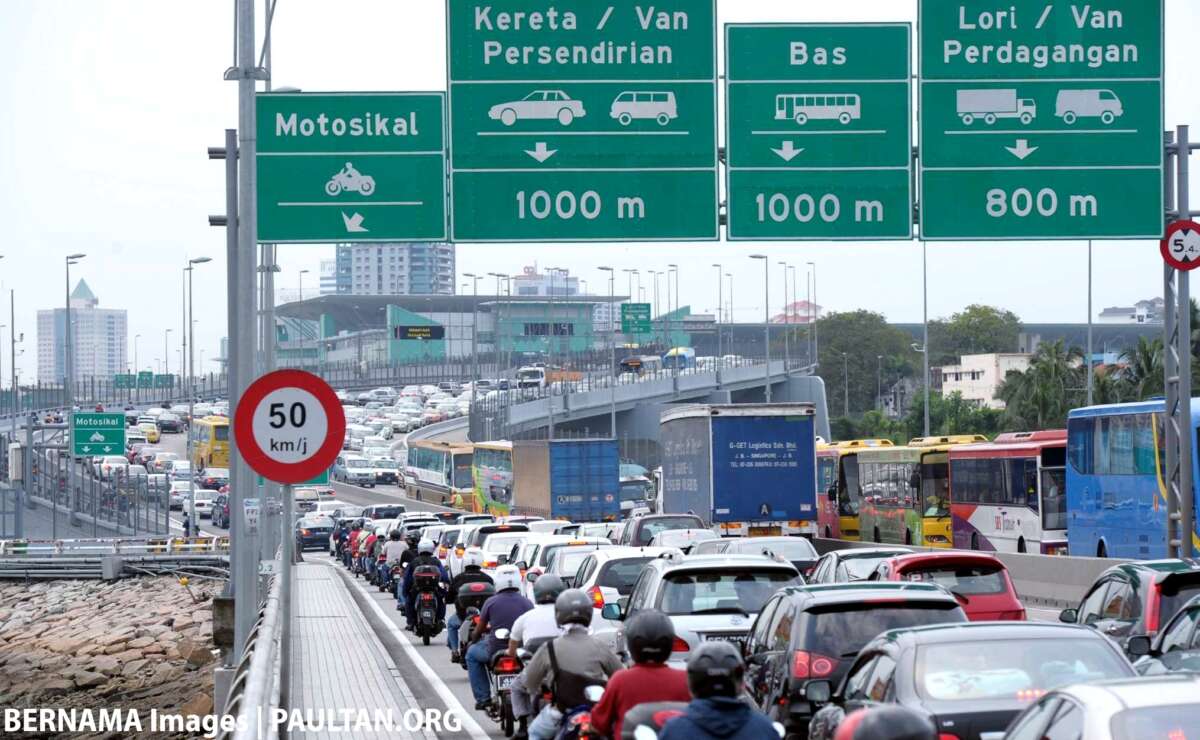
MY-SG Second Link Heavy Vehicle Congestion to Be Brought to the Attention of Home Ministry – Loke
Why It Matters
Prolonged delays threaten cross‑border trade efficiency and increase logistics costs for regional supply chains. Government action could restore fluidity on a key freight corridor between Malaysia and Singapore.
Key Takeaways
- •Heavy‑vehicle lanes at Second Link face up to four‑hour delays
- •Scanning inspections transferred to AKPS, under Home Ministry jurisdiction
- •Drivers sometimes walk 500 metres to submit documents before scanning
- •Johor Causeway Congestion Cabinet Committee will oversee mitigation measures
- •Prolonged bottleneck could raise freight costs for Malaysia‑Singapore trade
Pulse Analysis
The Malaysia‑Singapore Second Link is a vital artery for freight moving between the two economies, handling thousands of lorries daily. Since February, a new mandatory scanning protocol—originally a customs SOP now managed by the Malaysian Border Control and Protection Agency (AKPS)—has created a choke point at the Sultan Abu Bakar Complex. Drivers report queues lasting four hours, with some forced to walk half a kilometre to present paperwork before their vehicles can be scanned, eroding the corridor’s efficiency and prompting complaints from logistics firms.
Transport Minister Anthony Loke’s decision to bring the issue to the Home Affairs Ministry underscores the inter‑agency complexity of border‑crossing operations. While the scanning system aims to tighten security and curb illegal cargo, its implementation has outpaced operational capacity, highlighting a classic trade‑off between safety and throughput. The Home Ministry, through AKPS, now bears responsibility for refining the process, potentially by adding more scanners, streamlining document verification, or introducing pre‑clearance digital tools to reduce physical queuing.
Beyond the immediate inconvenience, the congestion threatens broader economic implications. The Second Link complements the Johor Causeway, together supporting a multimillion‑dollar logistics ecosystem that fuels manufacturing, e‑commerce, and tourism. Persistent delays could push shippers to reroute via longer, costlier paths, inflating freight rates and weakening Malaysia’s competitiveness as a regional hub. The establishment of the Johor Causeway Congestion Cabinet Committee signals a coordinated, high‑level response, aiming to balance security mandates with the need for seamless cross‑border trade, a critical factor for both nations’ growth trajectories.
MY-SG Second Link heavy vehicle congestion to be brought to the attention of home ministry – Loke
Comments
Want to join the conversation?
Loading comments...